

Choosing between a subcompact and a compact tractor comes down to one question: how much tractor do you actually need? Both can handle the everyday work most small-farm owners deal with, but the gap between them shows up fast once you look closely at your land, your workload, and where you might be headed in a few years. If you’ve read through our breakdown of types of tractors for small farms, you already know subcompacts and compacts are built for different jobs. The harder part is figuring out which category actually fits your property.
Maybe you’re working 5 acres and wondering if a subcompact will cut it. Maybe your land is bigger or smaller, and you’re not sure if a compact tractor is more than you need. Or maybe the real question isn’t acreage at all, but whether your tractor can keep up with mowing, loader work, rough terrain, and whatever project comes next without leaving you wishing you’d sized up.
This guide breaks down subcompact vs. compact tractors, where each one earns its keep, and the questions that come up most when making this call, including whether a subcompact can really handle 5 acres, which one wins for mowing and loader work, and how John Deere and Kubota stack up against each other.
What Is a Subcompact Tractor?
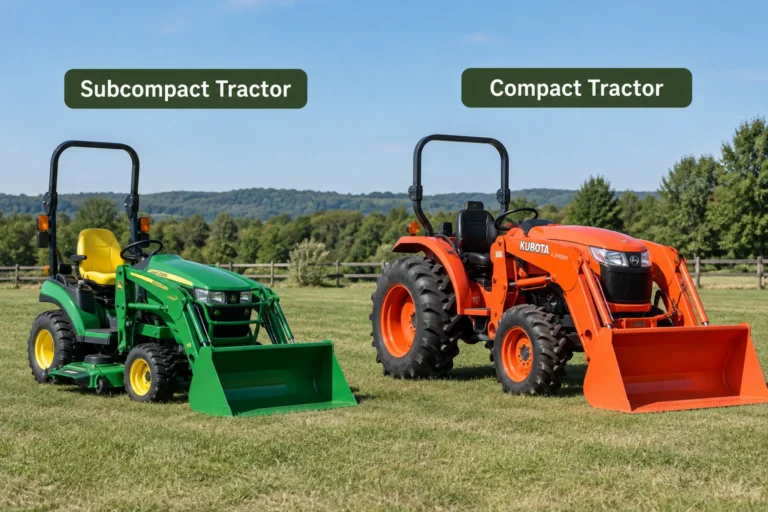
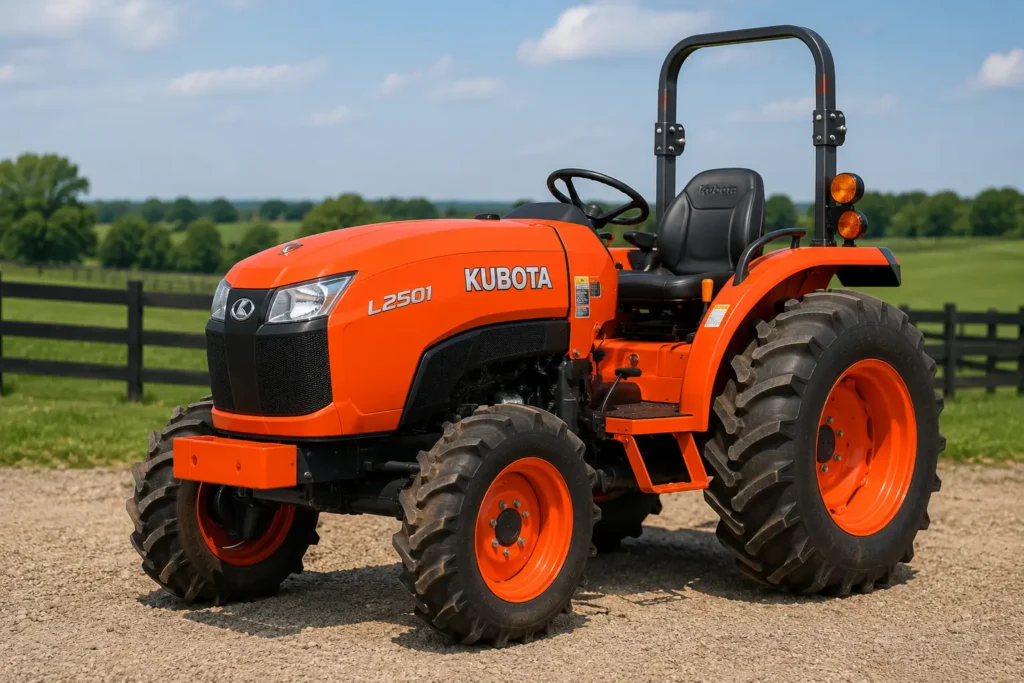
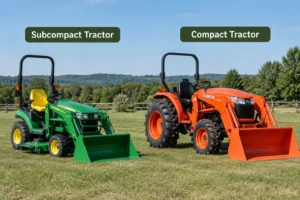
A subcompact tractor is the smallest true tractor category, smaller than a compact, but built with a three-point hitch, PTO, and 4WD, so it’s still a real tractor rather than a mower. Most subcompacts fall somewhere in the 16 to 25 horsepower range, though the exact cutoff varies a bit by manufacturer.
Think of them as purpose-built for mowing and light-duty property work, with just enough loader capability to move mulch, gravel, or a few fence posts around. They’re small enough to fit through a standard garden gate, tight enough to turn around in a suburban-sized yard, and simple enough that most owners can do their own basic maintenance.
If your mental image is “a small green or orange tractor with a mower deck and a little front loader bucket,” you’re picturing a subcompact.
What Is a Compact Tractor?
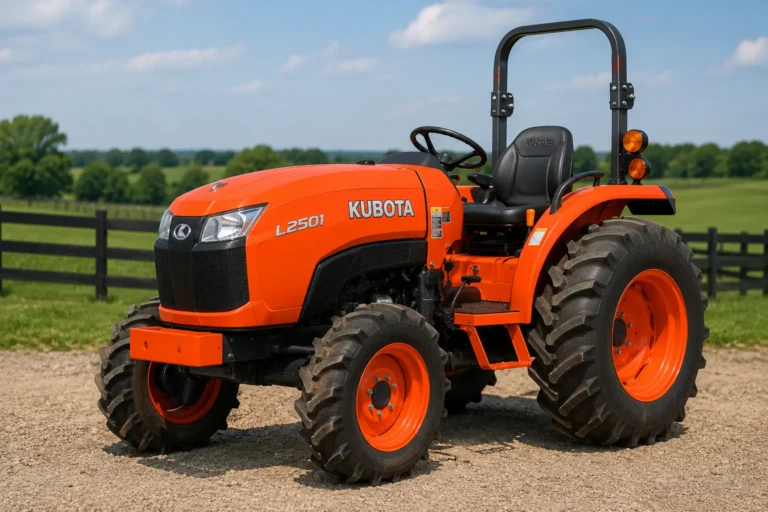
A compact tractor is the next size up, generally in the 25 to 50-plus horsepower range, and it’s built to do more than maintain a property. It’s built to work land.
That extra horsepower and weight translate into real capability: a bigger loader bucket that can lift more per pass, enough power to run a box blade or rotary cutter without bogging, and enough traction to handle rougher or wetter ground. Compact tractors also open up a wider range of implements: post-hole diggers, box scrapers, rear tillers, and larger bush hogs because the tractor has the hydraulic flow and lift capacity to actually run them.
The tradeoff is size. A compact tractor is heavier, wider, and needs more room to maneuver than a subcompact. That matters if your property is tight or your gates are narrow.
Compact vs. Subcompact: What’s the Difference?
The technical difference is horsepower and weight class. The practical difference is what you can get done in an afternoon without the tractor running out of muscle.
| Subcompact | Compact | |
|---|---|---|
| Typical horsepower | ~16–25 hp | ~25–50+ hp |
| Best for | Mowing, light loader work, property upkeep | Loader-heavy work, tillage, brush clearing, grading |
| Implement size | Small mower decks, small buckets, light attachments | Larger buckets, box blades, tillers, bigger rotary cutters |
| Maneuverability | Tighter turns, fits smaller gates and yards | Wider turning radius, needs more room |
| Terrain handling | Fine on flat, maintained ground | Better on rough, sloped, or wet ground |
| Ease of ownership | Simple to maintain, lower fuel use | More capable, but a bigger machine to store and service |
| Room to grow | Limited — you’ll outgrow it if your workload increases | More headroom for adding implements or acreage later |
Can a Subcompact Tractor Handle 5 Acres?
Yes, for the right kind of five acres. If your five acres is mostly grass, a garden, and light-duty upkeep, a subcompact will handle it without much trouble. Mowing is exactly what these machines are designed for, and moving mulch, gravel, or firewood with a small loader bucket is well within their range.
Where a subcompact starts to strain is when those five acres involve real fieldwork. Tilling a large garden expansion, running a heavier rotary cutter through waist-high brush, grading a long gravel driveway, or hauling round bales for livestock will push a subcompact past what it was built for. It’s not that the tractor breaks — it’s that you’ll be making more passes, working slower, and feeling the limits of the loader and PTO more than you’d like.
A useful gut check: if you can describe your five acres as “yard plus garden,” a subcompact is probably enough tractor. If you’d describe it as “small farm,” you may want to look at a compact instead.
How Big of a Compact Tractor Do You Need for 5 Acres?
For most five-acre properties with actual farm-type work, a few animals, a real garden, some brush to keep back, and occasional grading, a compact tractor in the lower-to-mid horsepower range within the compact class is usually enough. You don’t need to jump to the largest compact model available just because you want more capability than a subcompact offers.
The deciding factors are the same ones that pushed you out of subcompact territory in the first place: how heavy your loader work is, how big your implements need to be, and how rough or wet your ground gets. A five-acre pasture with a couple of horses and a run-in shed needs less tractor than five acres of overgrown, uneven ground you’re trying to reclaim for row crops.
It’s worth sizing the tractor to the heaviest job you expect to do regularly, not the occasional one. If you rent a bigger machine once a year for a big project, that’s often cheaper than buying more tractor than your weekly workload needs.
Are Subcompact Tractors Worth It?
For the right buyer, yes — genuinely. If your work is mowing, light loader tasks, and general property maintenance, a subcompact does that job well, costs less to buy and run, is easier to store, and is simple enough that most owners handle their own routine maintenance.
Where subcompacts stop being worth it is when the workload grows past what they’re designed for. If you’re buying a subcompact today but you already know you’ll be clearing land, adding livestock, or taking on heavier fieldwork within a year or two, you may end up trading up sooner than you’d like, and that’s a more expensive path than buying the right size the first time.
The honest test isn’t “can I afford a subcompact?” Most people can. It’s “will this machine still be doing what I need it to do two years from now?” If the answer is yes, a subcompact is a smart, efficient purchase. If you already suspect the answer is no, it’s worth stretching into a compact now.
If you’re weighing tractor ownership in general, financing, maintenance costs, and what actually comes with a “starter” tractor, our complete beginner’s guide to tractors for small farms covers that groundwork.
Which Is Better for Mowing?
For pure mowing, a subcompact is usually the better fit. It’s lighter, has tighter turning, and is easier to maneuver around trees, beds, and obstacles than a compact tractor, and mowing rarely demands more horsepower than a subcompact already has.
A compact tractor can absolutely mow, and if you already own one for heavier work, there’s no reason to buy a second tractor just for the lawn. But if mowing is your primary task and everything else is secondary, a subcompact will get the job done without the extra size and turning radius working against you.
Which Is Better for Loader Work?
This depends on what “loader work” means for you. For light tasks moving mulch, gravel, small loads of dirt, clearing light snow – a subcompact’s loader is plenty. For heavier work moving larger quantities of material, lifting fence posts or landscape timbers, handling heavier round bales, digging- a compact tractor’s loader has meaningfully more lift capacity and bucket size, and it won’t run out of muscle halfway through the job.
Loader work is also where the difference between individual models matters more than the category. Some subcompact models are noticeably more loader-capable than others in the same size class, and the same is true among compacts. If loader work is central to what you’re buying the tractor for, don’t just pick a category — compare lift capacity and bucket capacity across the specific models you’re considering.
John Deere vs. Kubota: Which Subcompact Is Better?
There’s no universal winner here — it genuinely depends on what you value and how you plan to use the tractor.
John Deere’s 1 Series focuses heavily on ease of use and attachment convenience. Models such as the 1025R are designed for small-property work and offer features such as AutoConnect mower decks and quick attachment systems. If you’ll be switching between mowing, loader work, and other attachments regularly, that convenience can make a difference over time.
Kubota’s BX Series takes a similar approach to versatility in a small package. The current BX lineup includes the BX1880, BX2380, BX2680, and BX23S, with models ranging from 16.6 to 23.3 gross engine horsepower. Kubota positions the series for jobs such as gardening, landscaping, property maintenance, snow removal, and light material handling. The BX also offers features designed to make loader and front-implement changes easier, including a single-lever hydraulic connection on the front loader.
So which one is better? That depends more on the specific model and your priorities than on the brand name. If attachment convenience, operator controls, and the John Deere ecosystem matter most to you, the 1 Series may be the better fit. If you prefer the BX’s layout, features, or available attachments, Kubota may make more sense.
And don’t overlook the dealer. A tractor is a long-term purchase, so having a nearby dealer with a good parts and service reputation can matter just as much as the differences between two similarly sized machines. If possible, sit on both, try the controls, and see how the loader and mower attachments work before making your decision.
Compact or Subcompact: Which One Should You Choose?
Run through your actual workload, not your acreage number, and you’ll usually land on the right answer.
A subcompact likely makes sense if:
- Mowing is your main or only regular task
- Your loader work is light – mulch, gravel, small loads, light snow
- Your gates, driveway, or storage space are on the tighter side
- You don’t expect your workload to grow much in the next couple of years
A compact likely makes sense if:
- You’ve got livestock, a large garden, or real fieldwork beyond mowing
- You need to run larger implements – a box blade, tiller, or bigger rotary cutter
- Your ground is rough, sloped, or gets soft and wet
- You expect to take on more land or heavier projects down the road
If you’re torn between the two, it’s usually a sign your workload sits right at the edge, and in that case, sizing up to the smaller end of the compact range tends to age better than sizing down and outgrowing a subcompact within a season or two.
For a broader framework on matching any tractor’s capability to your farm not just this size comparison our guide on what most beginners actually need in a first tractor.
Frequently Asked Questions
Do subcompact tractors have enough power for small farms?
Yes, if the work is mainly mowing, light loader work, gardening, and general property maintenance. A subcompact becomes less suitable when you regularly need heavier implements, substantial brush clearing, extensive grading, or heavier material handling.
Can a compact tractor do everything a subcompact tractor can do?
Generally, yes. A compact tractor can handle mowing and other lighter jobs, but its larger size can make it less convenient in tight spaces. If mowing and maneuverability are your priorities, a subcompact may be the better fit.
Is a compact tractor too big for a small farm?
Not necessarily. A compact can make sense on a small property when the work includes livestock, larger gardens, brush clearing, grading, or heavier implements. The important question isn’t whether the farm is small, but whether the tractor’s capabilities match the work you need it to do.
What attachments can you use with a subcompact tractor?
Depending on the specific model, subcompact tractors can work with attachments such as mower decks, snowblowers, box blades, rear blades, small tillers, and front loaders. Always check the tractor’s specifications and the attachment’s requirements before buying.
Is 4WD necessary on a subcompact or compact tractor?
4WD is useful when you’re working on slopes, soft or wet ground, or doing loader work where traction matters. Many current subcompact and compact tractors offer 4WD, but you should check the specific model and configuration rather than assume it comes standard.
Should I buy a subcompact or compact tractor if I plan to expand my farm?
If you expect your workload, livestock operation, acreage, or implement needs to grow, a compact tractor may be the better long-term choice. Buying a subcompact that you expect to outgrow within a year or two can mean trading up sooner than planned.
Is it better to buy a new or used compact or subcompact tractor?
Either can make sense. A well-maintained used tractor can reduce the purchase cost, while a new tractor gives you a warranty and avoids uncertainty about its previous use. Service records, condition, budget, and your comfort with maintaining older equipment should all factor into the decision.
Final Thought
A subcompact makes a lot of sense when mowing, light loader work, gardening, and general property maintenance make up most of your workload. Its smaller size can also be an advantage when you’re working around trees, buildings, narrow gates, or other tight spaces.
A compact becomes the better choice when you’re moving heavier loads, running larger implements, working rough or wet ground, managing livestock, or expecting your workload to grow. You don’t necessarily need a large compact, either. The goal is to have enough capability for your regular work without buying substantially more tractor than you need.
And if you’re still stuck between the two, look at the jobs you’ll do most often, not just the number of acres you own. Five acres of lawn and garden can be perfectly suited to a subcompact, while five acres of pasture, livestock, brush, and fieldwork may justify a compact.
That’s ultimately the difference between the two: a subcompact is about getting everyday property work done efficiently; a compact gives you more room to take on heavier work and grow into the machine.