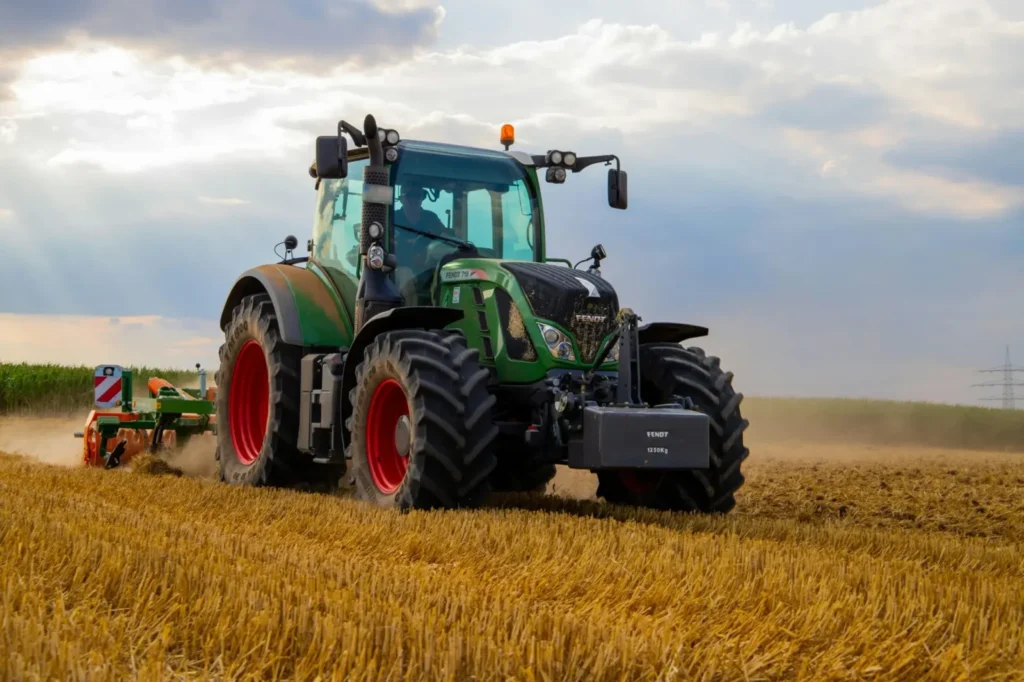


Maybe the property closed last month, and the back forty is still just tall grass and a fence line that needs work. Maybe the land has been in the family for two generations, and it’s finally your turn to decide what happens to it. Or maybe there’s no land yet at all, just a spreadsheet of listings and a growing sense that a rural life might be the right one.
Whatever brought you here, the question remains: what can this land actually support?
It’s a harder question than it looks. Search results are full of confident claims “make six figures on a quarter acre,” “you need at least 40 acres to farm seriously,” and most of them are true in one specific context and misleading in every other. The honest answer is that acreage is only one variable among several: startup capital, physical labor capacity, existing skills, local climate, and, perhaps most overlooked, whether there’s actually a nearby market willing to pay for what’s produced.
This guide draws on university extension enterprise budgets, USDA census and economic research data, and published cost studies to walk through what different acreages can realistically support. It doesn’t rank farming enterprises by how much money they make, because that number depends enormously on the market, skill, and the specific parcel involved. Instead, it lays out what each option requires and what it tends to return, organized by how much land is available, so the trade-offs can be weighed individually.
By the end, there won’t be a single “best” answer that no guide can hand you, since it depends on facts about your life that a website can’t know. What you should have instead is a much clearer picture of what’s realistic, what the common failure points are, and which questions are worth answering before spending money.
Why Acreage Matters (and Where It Doesn’t)
It’s tempting to think of farm acreage the way you’d think of square footage in a house more is simply better, and everything scales up proportionally. Farming doesn’t work that way.
Some enterprises are acreage-bound. Grain and oilseed crops like corn, wheat, and soybeans are grown at a scale where the machinery alone, a combine, a grain cart, drying, and storage, doesn’t make financial sense below roughly 200 acres. Cow-calf beef operations need enough pasture to carry a herd through a full grazing season, which in most regions means several acres per animal. If the land can’t physically hold what an enterprise needs, no amount of skill or capital changes that.
Other enterprises are almost acreage-independent. Microgreens, mushrooms, and beekeeping can all be run from a spare room, a garage, or a single backyard, because the “land” they need is really square footage of controlled indoor space, or in the case of bees, only the footprint of the hives themselves. USDA Economic Research Service data on farms of 10 acres or less bear this out: the small-acreage farms with the highest sales in a given year specialized overwhelmingly in floriculture, nursery stock, mushrooms, and contract livestock production categories where intensive management substitutes for acreage, while field crops that need extensive land were almost absent from that group.
A third category sits in between: intensive vegetable production, cut flowers, berries, and orchard fruit can be scaled to fit almost any acreage from a quarter-acre up, but the economics and the amount of hand labor involved shift along the way. A half-acre of cut flowers, worked entirely by hand, can be more profitable per acre than a poorly managed ten acres of the same crop, because yield per square foot depends more on plant density, succession planting, and harvest timing than on total land available.
The upshot: acreage tells you what’s off the table (large-scale grain, extensive grazing operations) more than it tells you what’s on it. Within the realistic range for most beginning farmers, a fraction of an acre up to about 20 acres, dozens of enterprises are technically possible. What actually separates a viable operation from a frustrating one is usually startup capital, labor availability, and market access, not the acreage line on a deed.
About One Acre or Less
What This Scale Can Support
An acre or a fraction of one sounds too small to take seriously as a farm business, but USDA’s own data says otherwise. In the most recent Census of Agriculture analysis of small-acreage farms, roughly 50,000 U.S. farms operating on 10 acres or fewer had gross sales of $10,000 or more in a single year, and a small number of individual operations on that little land grossed over $500,000. The businesses that pulled this off shared a pattern: they used indoor, vertical, or otherwise intensively managed production rather than relying on open field acreage.
At under an acre, the realistic goals are usually one of three things: testing a farm business idea before committing more land and capital, generating supplemental income alongside off-farm work, or building toward self-sufficiency with a smaller commercial component. Full-time income is possible at this scale for a narrow set of enterprises, but it typically requires either indoor vertical production or an unusually strong direct-market position, a farmers market with little competition, a waiting list of restaurant accounts, or a location suited to agritourism.
Crop and Specialty Opportunities
Microgreens are the clearest example of acreage independence. Grown on vertical shelving in a spare room, garage, or basement, microgreens can generate $30 to $50 in gross revenue per square foot of growing space each month once a system is running smoothly, according to figures reported across multiple microgreens-focused publications and echoed in Penn State Extension’s business-planning guidance for the crop. A 100-square-foot space, roughly the size of a one-car garage bay, is enough to test the model. Startup costs are unusually low: basic equipment, seed, and trays can be assembled for under $1,000, though a more complete small commercial setup with proper lighting and racking runs $2,000 to $5,000. The trade-off is that microgreens have a short shelf life and depend entirely on maintaining consistent buyers, restaurants, and specialty grocers, mostly since farmers market customers alone rarely absorb enough volume to justify the labor.
Mushrooms occupy similar territory. Log-grown shiitake, studied extensively by Cornell Small Farms and Ohio State University Extension, is typically started with a few hundred logs and can generate meaningful income within one to two years, with growers achieving roughly $10 to $18 per pound at wholesale and retail prices. Indoor substrate-grown oyster and lion’s mane mushrooms turn around faster, often in 4- to 6-week cycles, and require only 50 to 200 square feet to start, at an initial cost typically in the $2,000 to $7,000 range, depending on how much equipment is purchased new versus improvised. As with microgreens, the constraint isn’t growing capacity; it’s finding and keeping restaurant and retail buyers willing to pay gourmet prices consistently.
Cut flowers can also work on a fraction of an acre, though they need actual outdoor (or hoop house) growing space rather than a converted room. Virginia Cooperative Extension and several flower-farming educators cite a working figure of $25,000 to $35,000 in potential sales per acre for well-managed field-grown cut flowers, which scales down proportionally on a smaller plot; a well-run eighth of an acre might realistically generate $3,000 to $4,000 in a season for a beginner, climbing as skill and market relationships develop. The minimum practical size cited by extension sources is about a quarter to half an acre, along with a tiller and reliable irrigation.
Beekeeping requires almost no land at all; a suburban backyard can support two to four hives, but it isn’t acreage-limited so much as skill- and risk-limited. Startup costs run $500 to $800 per hive, including protective gear, and a healthy hive can produce $200 to $500 a year in honey sales at local retail prices, plus additional income from pollination contracts or splitting hives to sell as nucleus colonies. A caveat repeated for beekeeping is that annual colony losses of 30% to 40% are common, largely driven by Varroa mites, and profitability generally only becomes consistent once a keeper is managing ten or more hives.
Livestock at This Scale
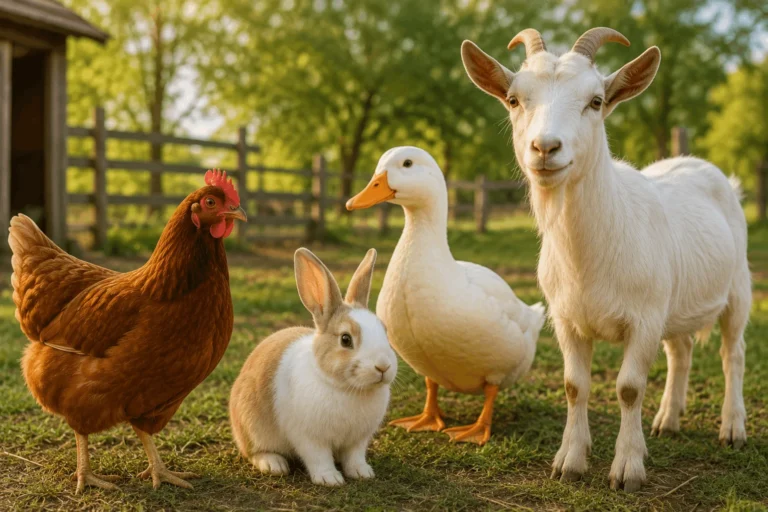
Livestock is difficult to justify economically on less than an acre. A few backyard laying hens for eggs, or rabbits raised in stacked hutches, are the main options that fit in the available space, and both tend to function more as household food production than as a commercial enterprise unless scaled up considerably. Zoning is also a real constraint here many residential and even rural-residential parcels restrict or prohibit livestock outright, which is worth checking with local planning offices before making any purchase.
Startup Considerations, Labor, and Mistakes
Startup capital at this scale is genuinely low compared to any other tier, often under $5,000 to test a concept. The trade-off is labor intensity relative to output: because so much of the value comes from vertical or intensive management rather than acreage, the hours-per-dollar-earned ratio is often higher than on a larger, less intensive operation. A common mistake here is under-investing in marketing and sales while over-investing in growing capacity, building a system that can produce far more than there are buyers lined up to purchase, which leads to spoilage and wasted labor. Another frequent misstep is assuming farmers market sales alone will be enough; most of the highest-earning microgreens, mushroom, and cut-flower operations at this scale depend heavily on standing restaurant or retail accounts rather than one-off market-day transactions.
Beginner Suitability
This is a genuinely low-risk tier to start in, both financially and in terms of time commitment, which makes it a reasonable place for someone still working full-time elsewhere to test whether they enjoy the actual daily work of growing and selling before committing to more land.
| Enterprise | Space Needed | Typical Startup Cost | Time to First Sale |
| Microgreens | 50–150 sq ft indoor | $500–$5,000 | 2–4 weeks |
| Mushrooms (indoor) | 50–200 sq ft | $2,000–$7,000 | 4–10 weeks |
| Cut flowers | 0.125–0.5 acre | $5,000–$8,000 | 1 growing season |
| Beekeeping | Backyard footprint | $500–$800/hive | Roughly 1 year |
Before Moving On
- Does your space, garage, spare room, or yard actually meet the light, humidity, or hive-siting needs of the enterprise you’re considering?
- Does your local zoning allow even backyard-scale production or beehives?
- Have you identified at least two potential buyers before you plant, build, or order stock?
- Can you realistically check on the crop or hives daily, or every other day, given your other commitments?
About 5 Acres
What This Scale Can Support
Five acres is often cited by extension services, including Oregon State University’s small-farms program, as the point where a grower can reasonably justify semi-mechanized production and real crop rotation, rather than relying entirely on hand tools. It’s also large enough to support a genuine mixed operation, some vegetables, some fruit, and a small number of livestock without any single enterprise dominating all the available ground.
Typical goals at this scale range from a serious side income to a full-time livelihood, though a full-time income from 5 acres generally requires either high-value specialty crops sold direct-to-consumer or a diversified operation stacking two or three income streams.
Crop Opportunities
Market gardening – intensive vegetable production for CSA, farmers market, or restaurant sales is the classic five-acre enterprise, though most successful market gardens use only 1 to 2 of those acres in active cultivated beds at any one time, leaving room for rotation, pathways, and infrastructure. Documented examples of small, well-managed market gardens report gross revenues in the range of $40,000 to $60,000 per cultivated acre using intensive bed systems, though these figures come from experienced growers with established markets; a first- or second-year operation should expect substantially less while the growing and selling systems are being worked out.
Garlic fits comfortably at this scale. Oregon State University Extension notes that garlic can be grown on plots as small as an acre using hand labor, with roughly 5 acres considered the point where mechanization and a full crop rotation become worthwhile. Reported gross revenue for a well-managed acre of specialty or organic garlic sold direct-to-consumer ranges from about $15,000 to over $30,000, though seed stock, irrigation, and labor costs eat meaningfully into that figure. Net profit per acre is more commonly cited in the $5,000 to $15,000 range.
Lavender requires more patience; plants typically take two to three years to reach full production, but an established acre can generate $10,000 to $30,000 annually from dried bundles and essential oil, with the higher end of that range typically reflecting farms that add agritourism, value-added products, or on-site sales. Startup costs are meaningful: per-acre establishment costs of $10,000 to $25,000 are commonly cited once soil preparation, plant stock, and irrigation are included.
Livestock Opportunities
Meat goats are a genuine fit for 5 acres. Enterprise budget built around 25 does rotationally grazed on exactly 5 acres, a useful benchmark for what this scale can carry. Kids are typically sold at 70 to 90 pounds through farm-gate sales, farmers’ markets, or auctions; farm-gate sales command a real premium but require the producer to also handle marketing.
Small-scale poultry pastured layers or broilers also work well here, though the economics depend heavily on scale and sales channel. University of Minnesota Extension’s comparative analysis of two pastured broiler systems found gross sales averaging $13.26 to $25.07 per bird depending on the production system, with $3.76 to $13.48 remaining after variable costs like chicks, feed, and processing. A widely cited pasture-poultry model, 10,000 birds raised across a six-month season on 20 acres, nets roughly $25,000, a figure that illustrates both the potential and the real scale of labor required to reach meaningful income from poultry alone.
Small sheep flocks are another option; the University of California’s Small Farms Network notes that a 30-ewe flock can be started for roughly $190 to $235 per ewe, with the caveat, repeated across sheep extension literature, that profitability depends on lambing rate; a flock has to consistently produce more than one lamb per ewe to be worthwhile.
Startup Considerations and Equipment
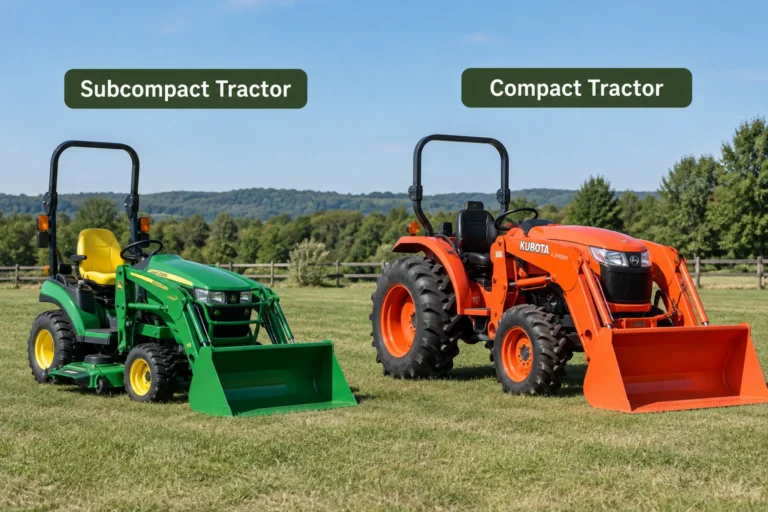
Five acres is typically the point where a walk-behind tiller or small compact tractor starts to make financial sense, though many successful five-acre operations still rely primarily on hand tools and human labor for vegetable production, reserving mechanization for mowing, tillage, or feed handling. Fencing becomes a real budget line if livestock are part of the plan. Perimeter fencing alone commonly runs several dollars per linear foot before labor.
Common Mistakes at This Scale
A frequent misstep is planting more acreage in a single crop than the grower can actually harvest, wash, pack, and sell at peak season. Labor bottlenecks at harvest are one of the most common reasons small crop enterprises underperform their potential. Another is under-budgeting for irrigation; extension sources consistently list reliable water delivery as a top factor separating profitable market gardens and specialty crop operations from struggling ones.
| Enterprise | Land Used | Est. Annual Gross Potential | Establishment Time |
| Market garden vegetables | 1–2 cultivated acres | $40,000–$60,000/acre (experienced) | Same season |
| Garlic | 1–5 acres | $15,000–$30,000/acre gross | 8–9 months |
| Lavender | 1+ acres | $10,000–$30,000/acre (mature) | 2–3 years to full production |
| U-pick strawberries | 1–5 acres | $10,000+ net/acre | 1 year (June-bearing) |
| Meat goats (25 does) | 5 acres rotational | Varies with kid crop and market | 8–10 months per kid crop |
Before Moving On
- Do you have reliable irrigation, or a funded plan to install it, before you plant at this scale?
- Is there a viable outlet nearby, CSA members, a market, or a restaurant that accounts for what you’d actually produce?
- If livestock is part of the plan, does your fencing and shelter budget reflect real per-acre costs, not a rough guess?
- Have you planned for the labor bottleneck at harvest, not just the labor needed to plant?
About 10 Acres
What This Scale Can Support
Ten acres is a meaningful inflection point in USDA’s own small-farm research. The Economic Research Service’s analysis of “small acreage” farms, defined as 10 acres or fewer, found that while most such farms produce very little, the roughly 17% that reported $10,000 or more in annual sales tended to specialize heavily in floriculture, nursery and tree production, and various forms of contract livestock production. Farms in this highest-performing group with sales of $500,000 or more were almost entirely confined poultry and hog operations working under production contracts a very different model from the diversified, direct-market small farm most beginners picture, and one that typically requires a contract with an integrator rather than independent marketing.
For a beginning farmer without access to that kind of contract arrangement, 10 acres more commonly supports a diversified operation: a market garden or orchard block on part of the land, pasture-based livestock on the rest, and possibly a value-added or agritourism component.
Crop Opportunities
Small orchards become genuinely viable at this scale. University of California Cooperative Extension cost studies on tree fruit show establishment costs in the $10,000 to $20,000-plus per acre range once land preparation, trees, and early-year care are included, with commercial yields typically not beginning until year three or four and full production several years after that. Minnesota fruit research programs note that an acre of dwarf apple trees can yield 16,000 pounds or more of fruit at maturity, priced anywhere from roughly $0.10 per pound wholesale to $1.00–$1.25 per pound through pick-your-own or on-farm retail, a difference that makes direct marketing central to orchard profitability. The long lag between planting and full income is the defining feature of this enterprise: extension sources and grower forums alike caution that an orchard is typically the slowest-paying enterprise on a diversified farm, sometimes operating at a loss for its first five to seven years.
Nursery and greenhouse production shows up disproportionately often among the higher-earning small-acreage farms in USDA’s data, alongside floriculture. These enterprises benefit from growing under cover, which extends the effective season and allows more production cycles per year than open-field crops, but they also carry higher upfront infrastructure costs for structures, benching, and irrigation.
Livestock and Mixed Opportunities
Ten acres supports larger versions of the meat goat, sheep, and pastured poultry enterprises described in the 5-acre section, generally scaled up proportionally; for instance, a rotationally grazed herd larger than 25 does, or a flock in the 50-to-100-ewe range, assuming pasture quality supports it. It’s also enough land to combine two or three enterprises without one crowding out the others: a market garden on 1 to 2 acres, an orchard block on 2 to 3 acres, and pasture-based livestock or hay on the remainder is a common diversified layout suggested by extension small-farm planning guides.
Season Extension and Infrastructure
At this scale, season-extension infrastructure, high tunnels, sometimes called hoop houses, start to pay for themselves. USDA’s Natural Resources Conservation Service offers cost-share funding for high tunnels through the Environmental Quality Incentives Program (EQIP), typically covering a meaningful share of construction costs, with per-square-foot cost-share rates commonly falling in the $5 to $12 range depending on the state and the applicant’s status as a historically underserved or beginning farmer. A high tunnel doesn’t require heating or powered ventilation; it works by trapping solar heat and can extend a growing season by six to eight weeks on each end, which matters enormously for the economics of any of the crop enterprises described above.
Common Mistakes at This Scale
The most consistent mistake extension resources point to at this scale is treating diversification as automatically safer than specialization. Running four or five small enterprises poorly, each starved of the labor and capital it needs, is generally worse than running one or two enterprises well. A related error is underestimating the years-long establishment period for perennial crops like orchards and lavender; cash flow needs to come from somewhere else (savings, off-farm income, or a faster-cycling enterprise like vegetables or poultry) while those investments mature.
Before Moving On
- Have you mapped out which acres go to which enterprise, with room left for rotation?
- If you’re planting a perennial crop, do you have a funding plan for the years before it produces income?
- Have you checked whether NRCS cost-share programs, like EQIP or the Organic Initiative, apply to what you’re planning?
- Are you choosing two or three enterprises deliberately, or just accumulating ideas because the land is there?
20 Acres and Up
What This Scale Can Support
Once acreage climbs into the 20-plus range, the calculus shifts again. This is enough land to run genuinely pasture-based livestock at a meaningful scale, to combine several of the smaller-acreage enterprises described above without any of them competing for space, or to move toward more extensive systems like hay production or larger orchards. It’s also, importantly, still well short of what’s needed for commodity grain and oilseed farming to pencil out. Corn, soybean, and wheat production generally isn’t cost-competitive below roughly 200 acres because of the machinery investment required, so 20 acres doesn’t unlock that category any more than 5 acres does.
Landowners with 20 acres or less is candid on this point: most enterprises that make sense at this scale are approached as part-time ventures rather than sole full-time income, and the same publication notes that livestock production specifically is difficult to make profitable on small acreage once the full cost of fencing, shelter, and purchased feed is accounted for a caution worth taking seriously before assuming that more land automatically makes livestock easy money.
Crop and Specialty Opportunities
Everything described in the 5- and 10-acre sections scales up here, generally with improving unit economics as fixed costs (irrigation systems, a tractor, packing infrastructure) get spread across more production. Cut flower operations that have outgrown a quarter-acre startup phase often expand into the 1-to-2-acre range within a 20-acre parcel, which, based on the $25,000 to $35,000-per-acre figures cited by extension sources for well-managed operations, represents a meaningful full-time income if execution and marketing keep pace with production. Larger-scale mushroom and nursery operations can also make sense here if capital allows for a dedicated building, though, as with the smaller versions of these enterprises, the limiting factor tends to be market access rather than growing capacity.
Livestock Opportunities
This is the scale where pastured poultry can move from a side enterprise toward something closer to a primary income stream, following a rotational model of moving mobile pens across open pasture; as noted earlier, that model at its most intensive (10,000 birds across a season) uses roughly 20 acres and nets in the range of $25,000 for a six-month season a useful data point, though one that assumes significant operational skill built up over time, not a first-year result. Larger meat goat or sheep flocks, sized up from the 25-doe or 30-ewe benchmarks discussed earlier, are also more comfortably supported here, with more room for rotational grazing paddocks that improve both animal health and pasture quality over time.
Diversification and Agritourism
Twenty-plus acres is also the scale at which agritourism becomes a realistic value-added layer: a pick-your-own orchard block, a lavender field open for photos and on-site sales, or a farm stand drawing on multiple enterprises at once. Multiple sources on lavender and cut flower economics specifically note that farms combining direct production with agritourism, workshops, or event hosting report substantially higher per-acre revenue than production alone, though this requires a different skill set hospitality, marketing, and liability management than growing does.
Common Mistakes at This Scale
The most common trap at 20-plus acres is treating “more land” as a substitute for a clear plan. Extension guidance consistently emphasizes starting with a defined goal and a written business plan rather than acquiring land first and figuring out what to do with it afterward, land carrying costs (taxes, insurance, maintenance) accrue whether or not the land is generating income, and a clear enterprise plan matched to actual market demand matters more at this scale than at any smaller one, simply because more capital is typically at stake.
Comparing Enterprises Side by Side
The table below draws together the enterprises discussed above, along with several others common on small and beginning farms, using the same framework across each: how much land it realistically needs, what it costs to start, how long before the first real income arrives, how labor-intensive it is, and who it tends to suit. Figures are drawn from the university extension and USDA sources cited throughout this guide and should be treated as planning ranges, not guarantees. Actual results depend heavily on climate, market access, and management skill.
| Enterprise | Ideal Acreage | Typical Startup Cost | Time to First Income | Labor Demand | Who It Tends to Suit |
| Microgreens | Under 0.01 acre (indoor) | $500-$5,000 | 2-4 weeks | High, short cycles | Urban/limited-land growers wanting fast cash flow |
| Mushrooms (indoor) | Under 0.01 acre (indoor) | $2,000-$10,000+ | 4-10 weeks | Moderate-high, contamination-sensitive | Detail-oriented growers with restaurant contacts |
| Mushrooms (log shiitake) | Woodlot, any acreage | $1,000-$17,000 | 1-2 years | Low-moderate, seasonal | Landowners with existing woodland |
| Beekeeping | Negligible | $500-$800/hive | About 1 year | Low-moderate, seasonal | Anyone with yard space and tolerance for hive losses |
| Cut flowers | 0.25-2 acres | $5,000-$15,000/acre | 1 growing season | High during peak bloom | Growers who enjoy design/marketing as much as growing |
| Garlic | 0.25-5 acres | $4,000-$10,000/acre | 8-9 months | Moderate, concentrated | Growers wanting a low-perishability storage crop |
| Lavender | 1-10 acres | $10,000-$25,000/acre | 2-3 years to full production | Low-moderate once established | Patient growers open to agritourism/value-added |
| Strawberries (u-pick) | 1-5 acres | $12,000-$20,000/acre | 1 year (June-bearing) | High at harvest, low otherwise | Growers near a strong local customer base |
| Market garden vegetables | 0.5-2 cultivated acres | $10,000-$30,000 | 1 growing season | Very high, near-daily | Growers wanting diversified, weekly cash flow |
| Tree fruit orchard | 3-20+ acres | $10,000–$25,000+/acre | 3-7 years to full production | Low-moderate, seasonal spikes | Long-horizon growers, often paired with other income |
| Nursery/greenhouse stock | 0.5-10 acres | $15,000-$50,000+ | 1-4 years | Moderate-high, skilled | Growers with plant propagation experience |
| Pastured poultry (meat) | 1-20+ acres | $5,000-$15,000 (small scale) | 8-12 weeks/flock | High, daily moves | Growers comfortable with processing logistics |
| Laying hens | 0.25-5 acres | $2,000-$10,000 | 5-6 months to lay | Moderate, daily | Beginners wanting a steady, familiar product |
| Meat goats | 5-20+ acres | $10,000-$20,000 (25-doe herd) | 8-10 months/kid crop | Moderate, seasonal | Growers with ethnic-market or direct-sale access |
| Sheep (small flock) | 5-20+ acres | $190-$235/ewe | 8-10 months/lamb crop | Moderate, seasonal | Growers wanting both meat and fiber income |
| Rabbits | Under 1 acre | $500-$2,000 | 3-4 months | Moderate, frequent | Space-constrained growers wanting fast-turning meat |
| Hydroponic greens | Under 0.5 acre (greenhouse) | $10,000–$50,000+ | 4-8 weeks | Moderate, technical | Growers comfortable monitoring equipment/systems |
| Aquaponics | Under 0.5 acre (greenhouse) | $50,000-$250,000+ | 6-12 months | High, technical | Well-capitalized growers targeting premium markets |
| Organic vegetables | 0.5–10 acres | Base cost + certification | 1 season + 3-yr transition | Very high | Growers targeting a price premium, willing to document practices |
A few patterns are worth pulling out of this table. First, land requirement and startup cost don’t move together in a straight line; some of the least land-hungry enterprises (aquaponics, indoor mushrooms) are among the most capital-intensive, while some of the most land-hungry (pastured poultry, orchards) can be started with comparatively modest cash if labor is supplied by the operator. Second, “time to first income” varies by nearly two orders of magnitude, from a few weeks for microgreens to several years for orchards and lavender, a critical planning variable for anyone who needs the farm to contribute to household income soon rather than eventually. Third, almost every enterprise on this list depends more on direct-market access, farmers markets, CSA, restaurant accounts, u-pick customers, or agritourism for its higher-end profitability figures than on wholesale channels, which is worth keeping in mind when evaluating whether the top of a given range is realistic for a specific location.
A Few Cost Factors That Cut Across Every Enterprise
Certification and cost-share programs. For growers considering organic production, USDA’s Organic Certification Cost Share Program reimburses up to 75% of certification costs, capped at $750 annually, a meaningful offset against the $600 to $800 many small operations pay each year to maintain certification. Separately, NRCS’s EQIP program funds a range of conservation practices relevant to almost any enterprise on this list, from high tunnels to irrigation systems to rotational grazing infrastructure, and is worth investigating before assuming a given piece of infrastructure has to be paid for entirely out of pocket.
Land tenure. Leasing land rather than buying it lowers the barrier to entry substantially. Cropland rental rates commonly run $150 to $500 per acre annually, depending on region and soil quality, a small fraction of outright purchase, which averaged around $5,570 per acre nationally as of 2024, according to USDA figures, with substantial regional variation. Leasing carries its own risk (the lease could end, discouraging investment in soil-building or infrastructure), but it’s a legitimate way to test an enterprise before committing capital to land ownership.
Off-farm income. USDA’s own household income research on small-acreage farms found that most farm households, especially at the smaller end of the sales spectrum, rely on off-farm income as their primary source of household earnings. The farm business itself typically becomes the dominant income source only once annual sales climb well into six figures. This isn’t a failure state; it’s the normal pattern for the large majority of small and beginning farms, and it’s worth planning around rather than treating as a temporary phase to escape as quickly as possible.
A Decision Checklist Before You Commit
Before settling on an enterprise, it’s worth working through a few questions that extension small-farm planning guides return to again and again:
- What does the land actually have – soil type, drainage, water access, sun exposure, existing structures, and how well does that match what the top candidate enterprises need? A soil test and a look at the USDA Web Soil Survey for the parcel answer most of this.
- How much labor can be personally supplied, and on what schedule? Daily-care enterprises like laying hens, pastured poultry, and intensive vegetables demand a very different weekly rhythm than seasonal enterprises like orchards or garlic.
- How much capital can be risked if the first year or two underperforms, which is common across nearly every enterprise in this guide?
- Who would actually buy what gets produced, and at what price? A farmers market thirty minutes away with six existing vegetable vendors is a very different market than one with none.
- What’s the realistic timeline for needing income from this land this year, in three years, or is the farm a long-term project alongside other income?
- What do local zoning and land-use rules allow? Some enterprises, particularly livestock, are restricted or banned outright in certain zoning classifications.
None of these questions has a universally right answer. They’re meant to narrow the enterprises in the tables above down to the two or three that actually fit a specific situation, rather than the ones that happen to be trending in a farming forum this year.
Final Thought
Choosing an enterprise is genuinely just the first decision in a long series of them. Every option described in this guide, from a single high tunnel of microgreens to twenty acres of rotational pasture, still requires learning to manage pests and disease, building relationships with buyers, keeping financial records, and adjusting course when a season doesn’t go as planned. USDA’s own research on small-acreage farms found that most such operations produce very little in a given year, and among those that do generate meaningful sales, a healthy share still run at a loss once the operator’s own labor is properly valued. That’s not a reason to avoid farming; it’s a reason to go in with realistic expectations and a plan for the years it takes to build both skill and market relationships.
The land itself sets some real boundaries a two-hundred-acre grain operation isn’t happening on five acres, and a quarter-acre of vegetables isn’t going to replace a full-time salary in its first season. Within those boundaries, though, there’s more flexibility than most beginners assume. The small-acreage farms in USDA’s data that generated real income did it by matching an intensively managed enterprise to the land they actually had, not by waiting for more acreage to make the decision easier.