

Yes, Farming does still make money. But that doesn’t mean your farm will make money next year, or even in your first five years.
The honest answer sits between those two facts. In 2024, the median U.S. farm household actually lost money on farming itself. However, that same household still came out ahead overall, because most farm income in America comes from somewhere other than the farm. That single statistic explains more about whether you should start a farm than almost anything else in this guide.
Profitability in farming isn’t about whether farming “works.” It’s about whether you pick an enterprise that fits your land, control your costs from day one, and have realistic expectations about how long it takes to turn a profit. Get those three things right, and the data says you have a real shot. Get them wrong, and you’ll have to subsidize your farm with a second job.
What Best Describes You?
Pick whichever fits, then keep reading. Every path below leads to the same question: what does it actually take to make this profitable for your situation?
☐ I’m thinking about starting a farm.
☐ I already own farmland.
☐ I already operate a small farm.
☐ I’m curious about farming.
Wherever you’re starting from, the rest of this guide walks through how farm income actually works, which enterprises tend to pay off on which acreage, and what separates the farms that make money from the ones that don’t.
The Reality of Farm Profitability
Start with the number that matters most: in 2024, the median income from farming for U.S. farm households was -$1,830. Half of all farm households lost money on the farm business itself that year, according to USDA’s Economic Research Service (ERS).
But the same households had a median off-farm income of $86,900, and a median total household income of $102,748, which is actually higher than the median income for all U.S. households ($83,730). So farm households, taken as a whole, are doing fine financially. They’re just not making that money from farming.
Where Farm Household Income Actually Comes From (Median, 2024)

Off-farm income makes up the large majority of total household income for the typical U.S. farm household. Farm income itself was negative at the median. Farm income was negative at the median, so no bar is shown for it.
Source: USDA, Economic Research Service, Farm Household Income Estimates, 2024 data.
That number hides a lot of variation, and the variation is the part you actually need to understand. USDA splits farms into three groups based on gross cash farm income (GCFI) and whether the operator farms full-time: residence farms, intermediate farms, and commercial farms.
Residence farms are run by people whose main occupation is something else, or who are retired. In 2024, only 35% of residence farms had positive farm income at all, and even among those, farm income made up just 8% of total household income at the median. For most residence farm households, farming is closer to an expensive hobby with tax benefits than a business.
Intermediate farms are run by people who call farming their primary occupation but haven’t crossed into commercial-scale income. Here, 42% had positive farm income, contributing 27% of household income at the median. Better than residence farms, but still a long way from “this farm pays the bills.”
Commercial farms, those with $350,000 or more in gross cash farm income, are a different story. 84% had positive farm income in 2024, and for those households, farming supplied 80% of total household income at the median. Their median farm income was $174,933.
The takeaway isn’t “don’t farm unless you’re already commercial-scale.” It’s that profitability tracks closely with scale and specialization, and most small and beginning farms should plan around supplemental income at least at first, rather than assume the farm alone will replace a salary in year one.
Scale isn’t the whole story, though. Where you farm and what you farm both matter. USDA’s nine farm resource regions show wide swings in profitability: in recent years, only the Northern Great Plains and Heartland regions posted consistently positive median farm income for farm households — $8,190 and $5,630, respectively, in 2024. Most other regions hovered near zero or negative at the median.
And the structural picture is sobering at the national level: about 86% of all U.S. farms are small family farms (under $350,000 in GCFI). These farms operate 40% of U.S. agricultural land but produce only 17% of the total value of agricultural production. Meanwhile, large-scale family farms, just 5% of all farms, produce half of the country’s agricultural output.
None of this means small farms can’t be profitable. It means the small-farm profitability math is different from the commercial-farm math, and you need to plan accordingly, which is exactly what the rest of this guide is for.
Types of Farming and Their Income Opportunities
If farming can make money, the next question is: what type of farming? The enterprise you choose affects everything downstream, startup costs, how fast you can sell product, how much labor it demands, and how forgiving it is of mistakes in year one.
Vegetable Farming
How it makes money: Sells direct to consumers (farmers markets, CSA, restaurants) or wholesale to grocery and food service. Margins are highest when you cut out the middleman.
Best for: Farmers on 1–10 acres who want income within the first year and don’t mind hands-on, labor-intensive work.
- Advantages: Fast crop turnaround (many vegetables are ready in 30–90 days), works on small acreage, strong direct-market demand in most regions.
- Disadvantages: Labor-intensive, perishable product means unsold inventory is a total loss, and weather risk hits every season.
Grain Farming
How it makes money: Sells into commodity markets (corn, soybeans, wheat) priced by the bushel, often through contracts or local elevators.
Best for: Farmers with 50+ acres, access to grain-scale equipment, and a tolerance for thin per-acre margins made up in volume.
- Advantages: Mechanized and low labor per acre once equipped, established markets, and crop insurance is widely available.
- Disadvantages: Requires significant acreage and equipment investment to be viable, margins are commodity-price dependent, and often thin for small operations.
Fruit Farming (Orchards & Berries)
How it makes money: Sells fresh fruit direct, wholesale, or value-added (jams, cider, dried fruit) once trees or bushes reach bearing age.
Best for: Farmers willing to wait several years before first harvest in exchange for a long-term, often higher-margin crop.
- Advantages: Long productive lifespan once established, premium pricing for fresh and value-added fruit, strong agritourism potential (U-pick, cider days).
- Disadvantages: Multi-year wait before any income (tree fruit especially), high upfront establishment cost, pest and disease pressure can wipe out a season.
Livestock (Beef, Sheep, Goats)
How it makes money: Sells weaned calves/kids or finished animals, either at auction, to a processor, or direct to consumers as freezer meat.
Best for: Farmers with pasture and the patience for a slower-cycling business gestation, growth, and finishing all take months.
- Advantages: Pasture-based systems can use marginal land unsuited to row crops, and direct-to-consumer meat sales carry strong margins.
- Disadvantages: Long production cycles before sale, fencing and water infrastructure are real upfront costs, and feed costs swing with the market.
Poultry
How it makes money: Sells eggs, broilers, or both directly at markets and online, or through contract growing for an integrator.
Best for: Farmers on small acreage who want a fast cash cycle; broilers can go from chick to market in about 8 weeks.
- Advantages: Low acreage requirement, short production cycle for meat birds, and eggs provide a steady, recurring income.
- Disadvantages: Predator pressure and biosecurity require constant attention, processing regulations vary by state, and can be a real bottleneck for direct meat sales.
Dairy
How it makes money: Sells fluid milk to a processor or co-op, or processes on-farm into cheese, yogurt, or bottled milk for direct sale.
Best for: Farmers ready for a daily, twice-a-day milking commitment and the capital for a parlor and cooling equipment.
- Advantages: Reliable, near-daily cash flow once running, on-farm processing can add a significant margin over raw milk prices.
- Disadvantages: Among the highest startup and infrastructure costs of any enterprise, virtually no days off, milk pricing is volatile and often outside your control.
Specialty Crops
How it makes money: Sells niche, high-value products, herbs, cut flowers, garlic, mushrooms, and microgreens often direct to chefs, florists, or specialty retailers.
Best for: Farmers on very limited acreage who can command premium prices through quality and direct relationships rather than volume.
- Advantages: Can start on under an acre, often faster to first revenue than field crops, and less competition from large-scale commodity producers.
- Disadvantages: Markets are thinner and more relationship-dependent, scaling up often means finding new buyers rather than just planting more.
Value-Added Farming
How it makes money: Takes a raw farm product and turns it into something that sells for more per unit, such as jam from berries, flour from grain, soap from goat milk.
Best for: Established farms looking to capture more margin from crops or animals they’re already raising.
- Advantages: Significantly higher margin per unit of raw product, extends shelf life of perishable crops, differentiates you from commodity sellers.
- Disadvantages: Requires separate licensing and often a commercial kitchen, adds a manufacturing and marketing layer on top of farming itself.
Here’s how these enterprises stack up when you put startup cost, profit potential, and time to profit side by side.
| Farm Type | Startup Cost | Profit Potential | Time to Profit | Best For |
| Vegetables (diversified) | $5,000-$30,000 | Moderate-High (direct market) | 1-3 years | 1-10 acres, hands-on growers |
| Grain (corn/soy/wheat) | $100,000+ (equipment-heavy) | Low-Moderate per acre | 1 year, but capital payback takes longer | 50+ acres, equipment access |
| Orchard / Berries | $10,000-$50,000+ | Moderate-High once bearing | 3-7 years to first real harvest | Patient growers, long-term land tenure |
| Beef Cattle | $15,000-$75,000+ (land/fencing/herd) | Low-Moderate per acre | 1-2 years per sale cycle | Pasture acreage, 20+ acres ideal |
| Poultry (eggs or meat) | $2,000-$15,000 | Moderate (direct sales) | 8 weeks (meat) to a few months (eggs) | Small acreage, fast cash flow needs |
| Dairy | $50,000-$200,000+ | Moderate, volatile pricing | Ongoing, near-immediate cash flow once milking | Committed, well-capitalized operations |
| Specialty Crops | $1,000-$20,000 | Potentially High per acre | Months to 2 years | Under 5 acres, niche markets |
| Value-Added Products | $5,000-$25,000+ (kitchen/licensing) | High margin per unit | Varies – builds on existing production | Farms already producing the raw input |
Profitable Farming Opportunities Based on Your Land Size
Acreage doesn’t determine profitability by itself, but it does determine which enterprises are realistic. Here’s how to think about your options at three common scales.
If You Have 1-5 Acres
Small acreage rewards intensity over scale. The goal isn’t to compete with a 500-acre grain farm on cost per bushel; it’s to generate high revenue per square foot through direct sales and crops that don’t need much room.
- Mushrooms – grown indoors or in a controlled space, so acreage barely matters; the constraint is climate control and contamination management, not land.
- Microgreens – fast turnaround (7-14 days per crop) makes this one of the quickest paths to recurring revenue on minimal space.
- Garlic – low labor once planted, stores well, and commands a premium at farmers’ markets compared to grocery-store garlic.
- Broccoli and other fast-cycling vegetables – multiple plantings per season on the same bed footprint.
- Herbs – high value per square foot, especially sold fresh-cut to restaurants or as living plants.
- Cut flowers – strong direct-to-consumer and florist demand, with margins that often beat vegetables on the same footprint.
- Poultry (eggs or pastured meat birds) – works well paired with any of the above, since birds need relatively little space.
These enterprises work on small acreage because they’re either grown intensively (high yield per square foot) or grown indoors/in controlled environments where land area isn’t the limiting factor. The trade-off is that all of them rely heavily on direct marketing, farmers’ markets, CSA, and restaurants since there’s not enough volume for wholesale commodity pricing to make sense.
If You Have 5-10 Acres
This range opens up diversification. You have enough room to run multiple enterprises at once, which spreads risk and smooths out cash flow across the season.
- Diversified vegetable farming – a wider crop mix than is practical on 1-2 acres, with succession planting to extend the harvest season.
- Poultry at a larger scale – enough room for rotational pasture systems that improve both bird health and soil.
- Sheep – smaller-bodied than cattle, so 5-10 acres can support a modest flock for meat or wool.
- Goats – similar acreage logic to sheep; works well for meat, dairy, or browsing/land management contracts.
- Berries – blueberries, raspberries, and strawberries scale well in this range and pair naturally with U-pick or farm-stand sales.
- Small orchards – enough space for a meaningful planting without the multi-decade land commitment of a large commercial orchard.
- Mixed farming – combining two or three of the above (vegetables plus eggs plus a small flock, for example) to diversify income sources.
If You Have 20+ Acres
More acreage opens the door to enterprises that simply don’t work on smaller parcels, but more land doesn’t automatically mean more profit. It means more options and more ways to either diversify wisely or overextend.
- Beef cattle – pasture-based cow-calf or stocker operations typically need meaningful acreage to support even a small herd through the grazing season.
- Hay – a practical use of land you’re not actively cropping, with established local markets in most farming regions.
- Grain – corn, soybeans, and wheat become realistic at this scale, though true commodity-scale profitability usually needs far more than 20 acres.
- Orchards – larger plantings can support wholesale alongside direct sales, spreading risk across multiple buyers.
- Mixed livestock – running cattle alongside sheep or poultry on rotational pasture can improve land use and add income streams.
- Agritourism – pumpkin patches, corn mazes, farm stays, and U-pick operations become viable once you have the space (and parking) to host visitors.
More acreage creates more business options, but it also brings more fixed costs like taxes, insurance, equipment scaled to the land, and often more labor. A 20-acre farm running one enterprise well will frequently out-earn a 60-acre farm running three enterprises poorly. Acreage is a tool, not a guarantee.
How Long Does It Take to Break Even?
Every farming enterprise has its own runway before it turns a profit. Some, like microgreens or broiler chickens, can show a return within months. Others, like orchards, ask you to invest years before the first meaningful harvest. Knowing your enterprise’s typical timeline up front keeps you from panicking in year one when a slow-to-profit business is actually right on schedule.
| Enterprise | Typical Time to Break Even | Why |
| Mushrooms | 6-18 months | Fast cycle once growing space is set up; the biggest variable is contamination control and finding consistent buyers. |
| Vegetables (diversified) | 1-3 years | Direct-market vegetable farms often grow steadily more profitable for a decade or more as systems and customer base mature. |
| Poultry | Months (meat) to about 1 year (laying flock) | Meat birds turn over every 8 weeks; egg flocks need time to reach full lay rate and build a steady customer base. |
| Beef Cattle | 2-4 years | Building a herd, then waiting through gestation and growth before the first real sale cycle, takes time. |
| Dairy | 1-3 years, high upfront cost | Cash flow can start almost immediately once milking, but it takes time to pay down the parlor and herd investment. |
| Orchards | 3-7+ years | Tree fruit in particular requires patience; berries bear sooner than tree fruit, but still need a season or two to establish. |
These are general ranges, not guarantees; your actual timeline depends on your market access, how much you can invest upfront, and how steep your learning curve is in year one. A useful study of direct-market vegetable farms in the Northeast found that most farms became more profitable the longer they operated, with net income climbing steadily as growers refined their systems and most exceeded their state’s median household income within about 12 years of starting. Patience and iteration matter as much as the enterprise you pick.
Why Some Farmers Make Money While Others Don’t
The data backs up something most successful farmers will tell you directly: profitability is less about luck and more about a handful of decisions made early and revisited often.
- Choosing the right enterprise: Pick a business that matches your market, not just your interests. Loving heritage tomatoes doesn’t matter if your area’s farmers’ markets are already saturated with tomato growers. Before committing, find out what’s selling, what’s missing, and what you can realistically produce better or cheaper than the farm down the road.
- Matching enterprise to acreage: A grain operation on 8 acres or a market garden crammed onto a postage stamp both fight the math instead of using it. Section 3 above exists because the acreage-to-enterprise match is one of the most common and most fixable mistakes new farmers make.
- Soil quality: Two farms with identical acreage and identical crops can have wildly different profitability if one sits on well-drained loam and the other on compacted clay. A soil test before you plant anything tells you what you’re actually working with and what it’ll cost to fix.
- Direct marketing: Selling direct to the end customer, farmers’ markets, CSA, farm stand, and restaurant accounts captures the margin that would otherwise go to a wholesaler or distributor. It’s also more labor (marketing, customer relationships, logistics), so it’s a trade of time for margin, not a free upgrade.
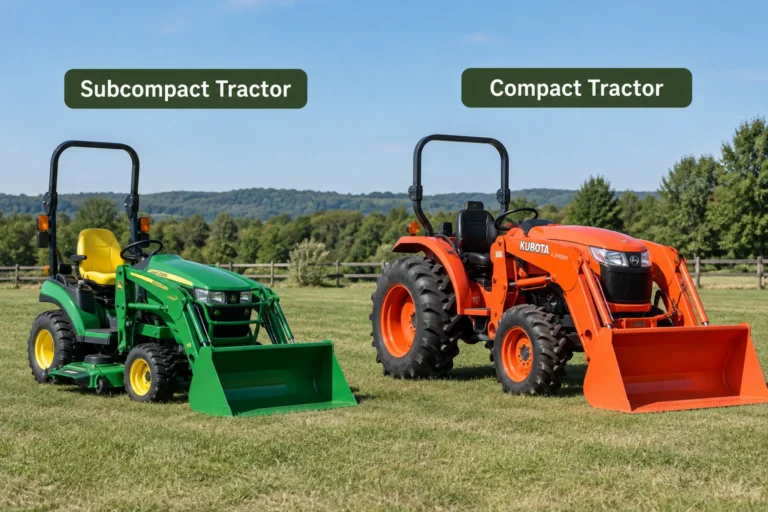
- Controlling equipment costs: Buying new, full-size equipment for a small operation is one of the fastest ways to turn a profitable enterprise into an unprofitable one. Used equipment, shared equipment, or right-sized walk-behind and compact tools usually pencil out better on small acreage than scaled-down versions of commercial machinery.
- Keeping accurate records: You can’t fix what you don’t measure. Farmers who track actual costs per crop or per animal, not just total farm revenue, are the ones who catch a money-losing enterprise early instead of three seasons in.
- Diversifying income: Running two or three complementary enterprises smooths cash flow across the season and protects you if one crop fails or one market dries up. It also matches the broader pattern in the data: most farm households, even profitable ones, draw income from more than one source.
- Building gradually instead of expanding too quickly: The farms that survive their first five years tend to grow at the pace their cash flow and experience can support, not at the pace their ambition wants. Adding acreage, animals, or equipment before the current operation is solidly profitable is one of the most common ways a promising farm runs into debt trouble.
Our Top Pick
| Goal | Our Top Pick |
|---|---|
| Fastest first harvest | Microgreens & Mushrooms |
| Most beginner-friendly | Diversified vegetables |
| Most reliable recurring income | Poultry |
| Highest revenue per acre | Specialty crops |
| Best long-term investment | Orchards |
| Best for 20+ acres | Beef cattle or mixed farming |
Frequently Asked Questions
Do farmers actually make good money?
Some do, most don’t, at least not from farming alone. USDA data shows the median U.S. farm household had negative income from farming in 2024, relying on off-farm income to stay afloat. But commercial-scale farms (those with $350,000 or more in gross cash farm income) had a median farm income of $174,933 that same year. The honest answer is that farm income varies enormously by scale, enterprise, and region. There’s no single number that represents “what farmers make.”
What kind of farming makes the most money?
Per acre, intensively grown specialty crops and direct-marketed vegetables tend to generate the highest revenue density. Per overall farm income, large-scale commodity operations (grain, big cattle herds) generate the most total dollars but require far more acreage and capital to get there. “Most money” depends on whether you’re measuring per acre, per dollar invested, or total farm income, and the right answer changes depending on which one matters to you.
How profitable is owning a farm?
It depends almost entirely on farm type and scale. About 86% of U.S. farms are small family farms, and a large share of them report negative net farm income in any given year. For many, farming functions more like a lifestyle choice subsidized by off-farm income than a primary profit center. Larger, more specialized operations post stronger and more consistent profitability, but they also carry more financial risk and capital investment.
How much land do I need to make a living farming?
There’s no fixed number; a one-acre intensive vegetable or flower operation with strong direct-market sales can outearn a 50-acre commodity grain farm on a per-dollar-invested basis. What matters is matching your enterprise to your acreage rather than assuming more land automatically means more income.
Can I start farming part-time while keeping my regular job?
Yes, and the data suggests most successful small farms start this way. Off-farm income covers living expenses while the farm enterprise builds toward profitability, which removes the pressure to be cash-flow positive in year one. Many residence and intermediate farm operators run their farms this way indefinitely, by choice.
Final Thought
Farming is a business, even when it doesn’t feel like one. The farms that become profitable are usually the ones that make deliberate decisions: what to produce, where to sell it, how much to invest upfront, and how fast to grow.
None of that requires a degree in agricultural economics. It requires picking an enterprise that fits your land and your market, controlling costs early, tracking your numbers honestly, and giving the business time to mature instead of judging it after one season.
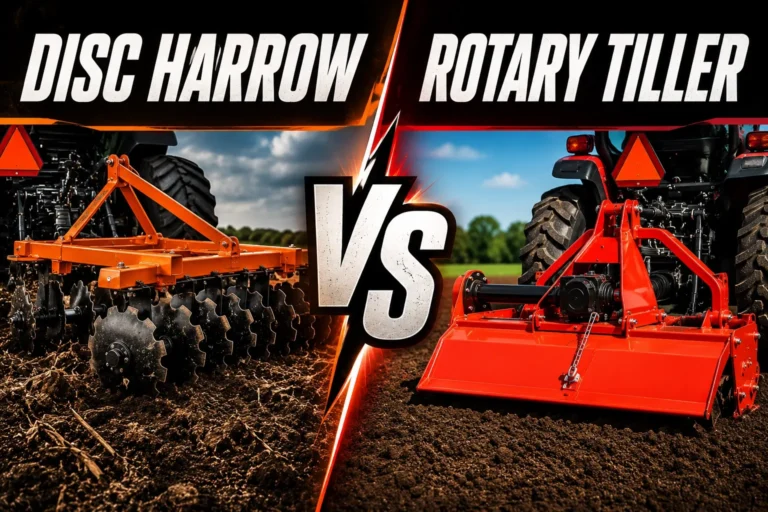
If you’re still mapping out what your operation will need on the ground, our Small Farm Equipment Guide: What You Actually Need for 2–50 Acres and Soil Preparation Equipment for Small Farms is a good next step. Matching your tools to your acreage is one of the cost-control decisions that compounds for years.