

Most people choose the wrong tractor type, not because they didn’t research, but because they focused on the wrong things. They look at horsepower numbers, compare price tags, and end up with a machine that’s either too small to do the work or too big to fit where the work actually happens.
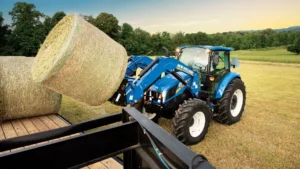
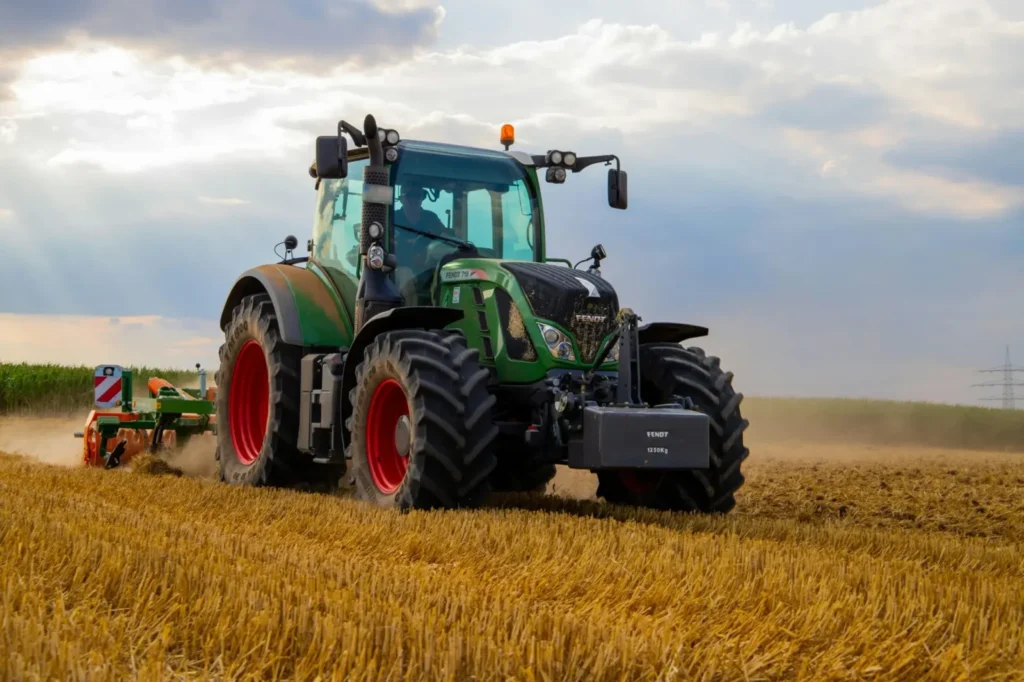
Source: New Holland
This guide cuts through that. By the end, you’ll know which tractor type fits your land, your workload, and your plans for the next few years, and you’ll know why.
If you’re unsure which tractor category actually fits your land and long-term plans, read our complete guide on tractors for small farms before choosing a machine.
Quick Answer: Which Tractor Type Do You Need?
If you’re in a hurry, here’s where most small farms land:
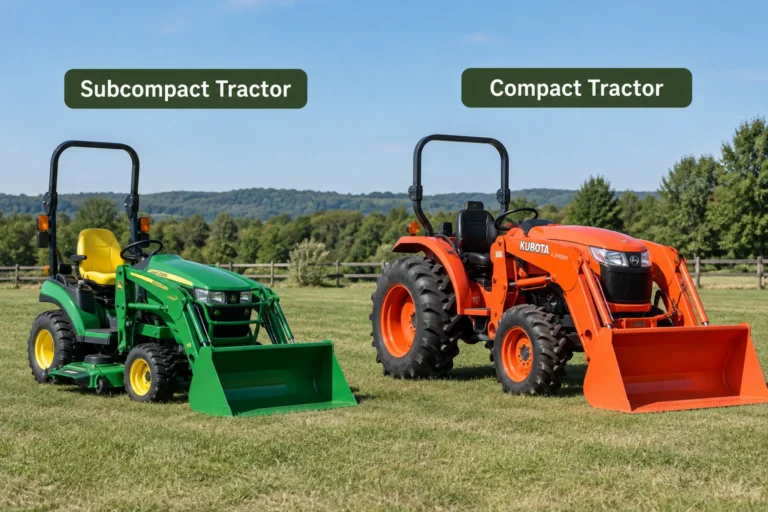
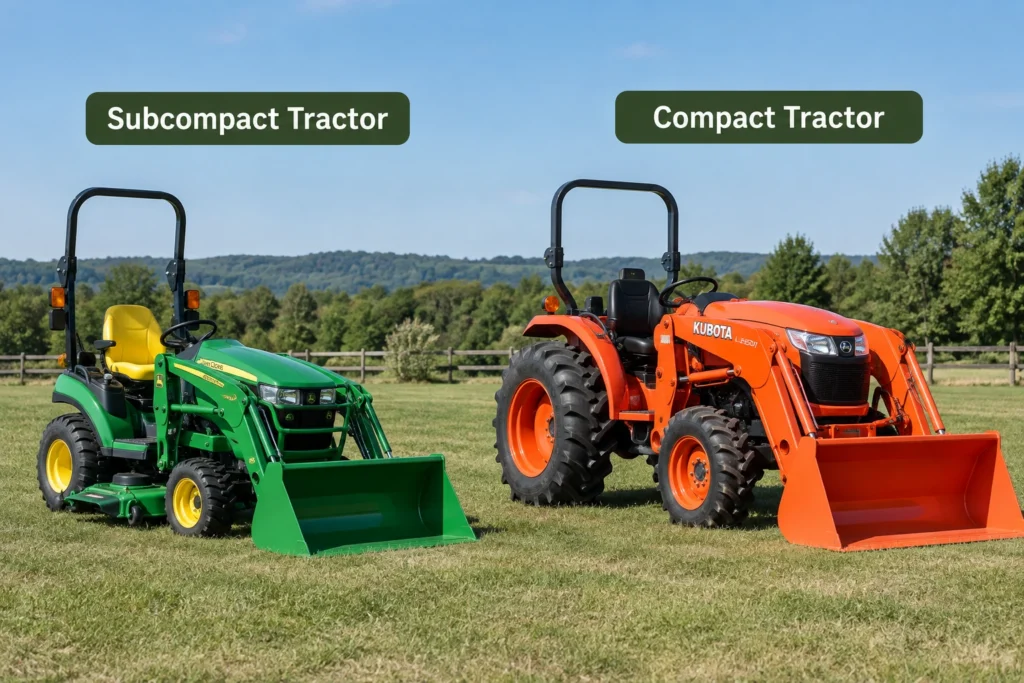
- 1–3 acres: Sub-compact. It’s the right size for tight spaces, light implements, and properties where a bigger machine would spend half its time working around its own turning radius.
- 3–10 acres: Compact. This is the default choice for most small farms, enough power for real work, small enough to stay maneuverable.
- Heavy-duty work or serious expansion: Utility. But only if your land and workload actually justify it, which, for most small farms, they don’t.
That’s a starting point, not a final answer. Your actual choice depends on what you’re doing, how your land is laid out, and where you’re realistically headed. That’s what the rest of this guide is for.
Sub-Compact Tractors: Small Machine, Real Capability
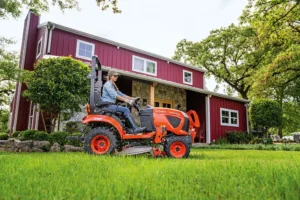
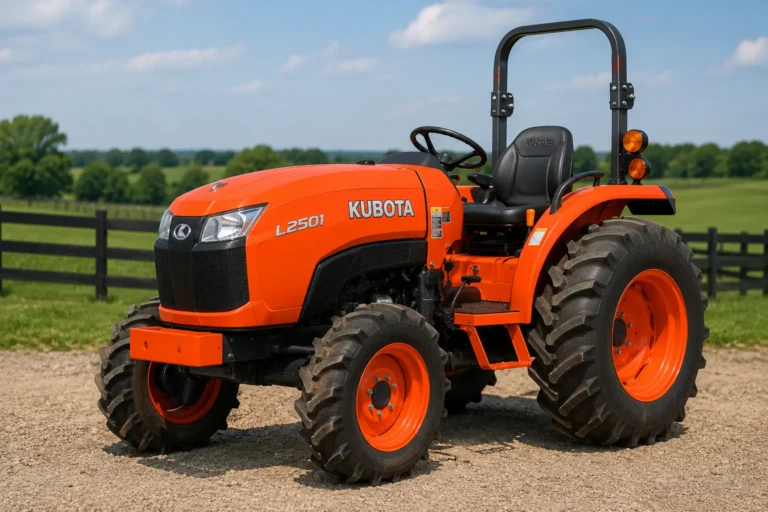
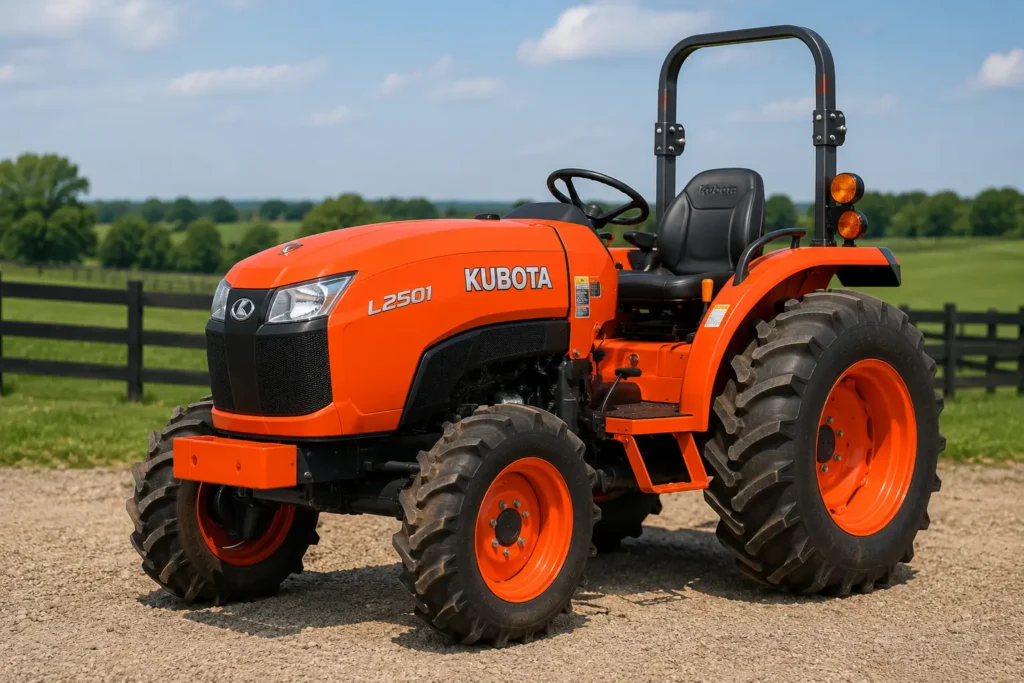
source: Kubota
Best for
Sub-compacts shine on properties under 3 acres where tight maneuvering matters. Orchard rows, paddocks, fenced garden blocks, and small acreage homesteads are exactly what these machines were built for. They handle mowing, light loader work, tilling a kitchen garden, and small box blade jobs without drama.
They’re also the right call if your land is broken up into small patches, gated fence lines, or areas where you need to turn around frequently. A bigger machine in those spots costs you 20 minutes every hour just maneuvering.
Where they struggle
Sub-compacts run out of steam fast in heavy work. If you’re tilling compacted soil, moving heavy material with the loader, or running large implements, you’ll quickly feel the limits. They’re also not built for extended PTO (power take-off, the rotating shaft that drives implements) work with heavy attachments.
The other limitation is the rear lift capacity. Sub-compacts typically lift far less than compacts, which means some three-point implements won’t work or won’t perform well.
Who should NOT buy a sub-compact
- Anyone on more than 3 acres doing regular field work
- Farmers planning to add large implements in the next few years
- Operations with heavy soil conditions that require sustained torque
Compact Tractors: The Right Tool for Most Small Farms
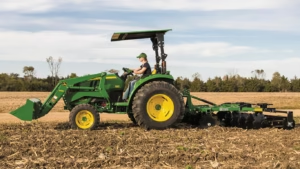
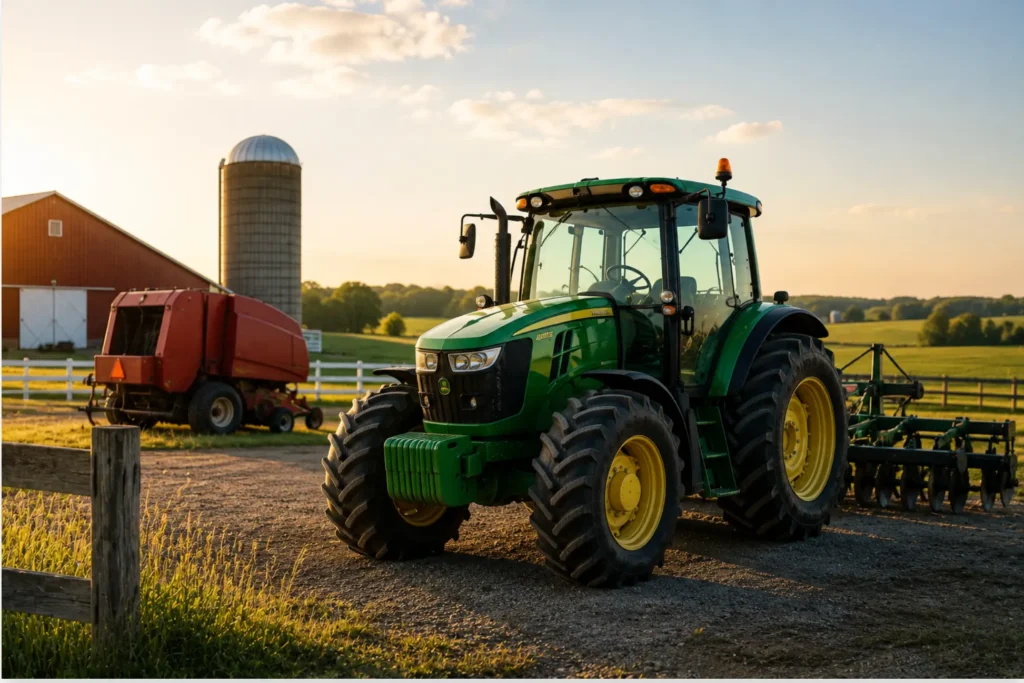
Source: John Deere
Best for
Compacts are the workhorse of the small farm world for good reason. On 3–10 acres, they handle almost everything: field cultivation, haying on a small scale, bush hogging, loader work, post-hole digging, and box blade grading. They have enough power to run mid-size implements without bogging, and they’re still small enough to work in spaces where a utility tractor would be a liability.
If you’re not sure which type to buy and your land is anywhere in the 3–10 acre range, the compact is almost always the right answer. It’s the default for a reason.
Why they’re the default choice
Compacts hit the overlap between capability and practicality better than anything else in the tractor world. You get a real three-point hitch with meaningful lift capacity, a proper PTO shaft, and enough engine to power most farm implements without running at redline. And you can still fit through a standard farm gate.
Parts availability is also better for compact tractors than almost any other category. The major brands have deep dealer networks, and there’s a large used market if budget is a constraint.
Where they struggle
Compacts have limits on large-scale work. Running a 60-inch tiller or a large rotary cutter on a compact will push the engine harder than it was designed for. They’re also not ideal if you’re moving significant quantities of gravel, topsoil, or manure regularly. The loader capacity is real but not commercial. And if your property is under 2 acres, a compact may actually be more machine than the space requires. Turning radius matters more than people expect.
Utility Tractors: When You Actually Need the Big Machine
Best for
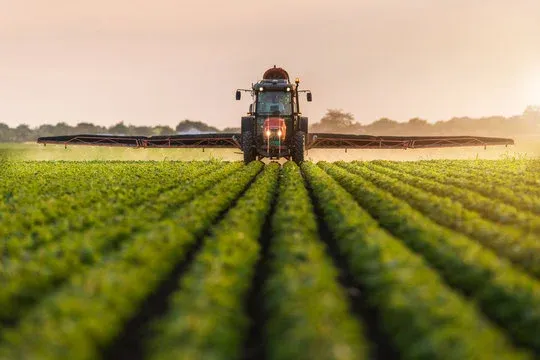
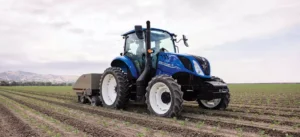
Utility tractors (60+ hp) are the right call for large acreage operations, commercial hay production, heavy tillage on big fields, and serious earthmoving. If you’re running a 20-acre row crop operation, cutting and baling multiple fields, or doing land clearing at scale, a utility tractor is the right tool.
They also make sense if you’re on terrain that demands steep grades, deep tillage in hard clay, or situations where you’re regularly working at the edge of what a compact can handle.
When they are overkill
For most people reading this guide, small farm operators on under 20 acres, a utility tractor is too much machine. You’ll spend more time managing the tractor’s size than doing productive work. They don’t fit easily into tight spots, they cost significantly more to purchase and maintain, and their fuel consumption will surprise you.
Who actually needs one
- Farms over 20 acres doing regular field-scale work
- Operations with confirmed, near-term expansion plans that justify the investment
- Anyone regularly running implements that genuinely require 60+ PTO hp
Where Most People Get It Wrong
These are the four mistakes that show up over and over in tractor buying decisions. Avoid them, and you’ll be ahead of most first-time buyers.
- Buying based on horsepower instead of tasks. Horsepower is one metric. What actually matters is whether the machine can run your specific implements, fit your specific spaces, and handle your specific soil. A 60-hp tractor that’s too wide for your paddock gate isn’t useful; it’s a liability.
- Choosing too big “just in case.” This is the most common mistake. A bigger tractor doesn’t just cost more upfront; it costs more in fuel, maintenance, and daily frustration when it doesn’t fit where you need it. Buy for your actual workload.
- Ignoring maneuverability. Turning radius is the spec most buyers never look at. In a fenced paddock, an orchard, or a property with multiple small spaces, the turning radius determines how much of your time is spent doing useful work versus repositioning. Test-drive on land similar to yours before you buy.
- Underestimating the attachment factor. A tractor is only as useful as what you can attach to it. Before you buy a machine, list every implement you plan to run current and near-term. Then verify that your tractor type can run them at a reasonable load. A sub-compact pulling an implement designed for a compact is a recipe for mechanical problems and slow work.
Should You Buy a Bigger Tractor for Future Growth?
This question comes up in almost every tractor-buying conversation, and it’s worth giving a real answer.
When it makes sense
- You have confirmed expansion plans within the next 1–2 years, a lease signed, land purchased, or a specific operation ready to start
- Your near-term workload genuinely pushes the limits of the smaller type
- Your land has the space and layout to use the bigger machine effectively right now
When it’s a mistake
- “Maybe someday,” thinking if the expansion isn’t confirmed, don’t buy it.
- Your current land is small, and the bigger machine won’t have room to work properly
- Tight maneuvering spaces where a larger machine is genuinely harder to use
The principle: Buy for the next 2–3 years, not the next 10.
A lot of folks buy bigger, thinking they’ll grow into it. Most end up working around a machine that’s too big for their land or selling it at a loss when the expansion they planned never materialized. The right tractor for your operation today is almost always the right starting point.
Side-by-Side Comparison
|
Type |
Best For |
Avoid If |
|
Sub-compact (under 25 hp) |
1–3 acres, mowing, light tilling, loader work, tight spaces like orchards or paddocks |
You need serious tillage, heavy loader work, or you’re planning to expand past 5 acres |
|
Compact (25–60 hp) |
3–10 acres, most small farm tasks, tractor-run implements, moderate terrain |
Your land is under 2 acres, and you don’t have the turning room or the budget |
|
Utility (60+ hp) |
Large acreage, heavy tillage, commercial hay production, and serious earthmoving |
You’re on under 20 acres, doing typical small farm tasks, this is overkill |
Which Type Should You Choose?
Here’s how to apply all of this to your situation.
- On 1–3 acres with mixed tasks (mowing, light tilling, loader work): Sub-compact. You don’t need the extra horsepower, and you’ll appreciate the maneuverability every single day.
- On 3–10 acres running real implements: Compact. This is the most versatile option for the widest range of small farm work. If you’re in this acreage range and undecided, start here. See our guide to compact tractors for small farms for a deeper breakdown.
- On rough or hilly terrain under 10 acres: Compact with a heavier frame. Terrain matters more than acreage. A compact with good weight distribution will outperform a sub-compact on steep slopes every time.
- On 10+ acres with regular field work: Utility, but only if the workload justifies it. If you’re unsure, a high-horsepower compact is often the better call than stepping up to a full utility tractor.
- Planning confirmed expansion in the next 2 years: Buy one step up from your current need. If you’re on 3 acres now and signing a lease on 8 more, buy the compact, don’t wait. But get specific about what “expansion” actually means before you spend the money.
Frequently Asked Questions
What size tractor is best for a 5-acre farm?
For most 5-acre farms, a compact tractor is the best balance of power, maneuverability, and implement compatibility. It’s large enough to handle loader work, rotary cutting, grading, and tilling without becoming difficult to maneuver around smaller properties. If your work is very light, mostly mowing and gardening, a sub-compact may still be enough.
Is a compact tractor enough for a small farm?
Yes, for most small farms under 10 acres, a compact tractor is more than enough. Compact tractors are considered the “default choice” because they handle a wide range of farm tasks while still fitting through gates, working in tighter areas, and running common implements efficiently.
Should I buy a bigger tractor for future expansion?
Only if the expansion is real and near-term. Buying a larger “just in case” is one of the most common tractor-buying mistakes. A better approach is to buy for the next 2–3 years of confirmed work, not a hypothetical future operation.
Are utility tractors too big for small farms?
In many cases, yes. Utility tractors are ideal for large acreage, commercial hay production, and heavy tillage. But on smaller farms, they can become difficult to maneuver, more expensive to maintain, and unnecessary for the actual workload.
What tractor type is best for hilly land?
Compact tractors with a heavier frame are usually the best choice for hilly or uneven terrain. Their additional weight and stability make them safer and more capable on slopes compared to smaller sub-compact tractors.
Is buying a used tractor a good idea for small farms?
Buying used can be a smart option for small farms, especially if the budget is limited. Many compact tractors hold their value well and can provide years of reliable work if properly maintained. The key is checking service history, hours, tire condition, hydraulic performance, and dealer support before buying.
The Bottom Line
The tractor type you need isn’t determined by what sounds impressive or what the biggest operation in your county runs. It’s determined by your acreage, your terrain, and the work you’re doing in the next few years.
Sub-compacts are underestimated. Utility tractors are overkill for most small farms. And compacts are the default for good reason.
Get that decision right, and the rest of the buying process gets a lot simpler. If you’re comparing specific models within a type, check our guide to sub-compact vs. compact tractors or start with what size tractor for 5 acres to dial in your requirements before you shop