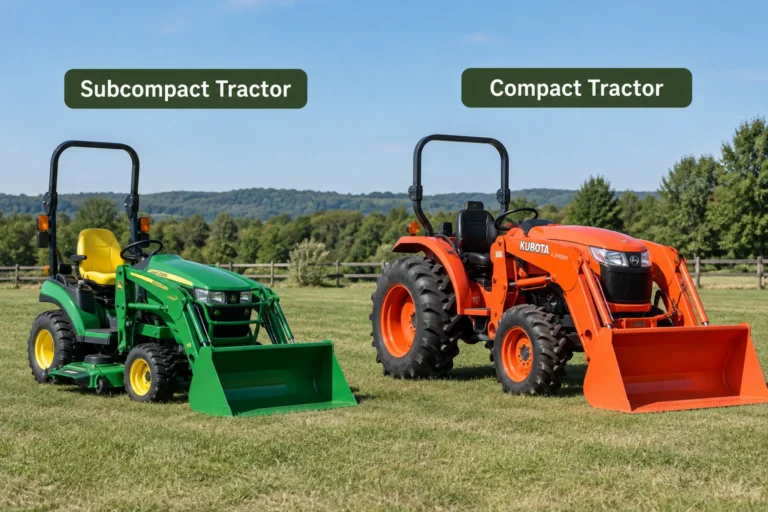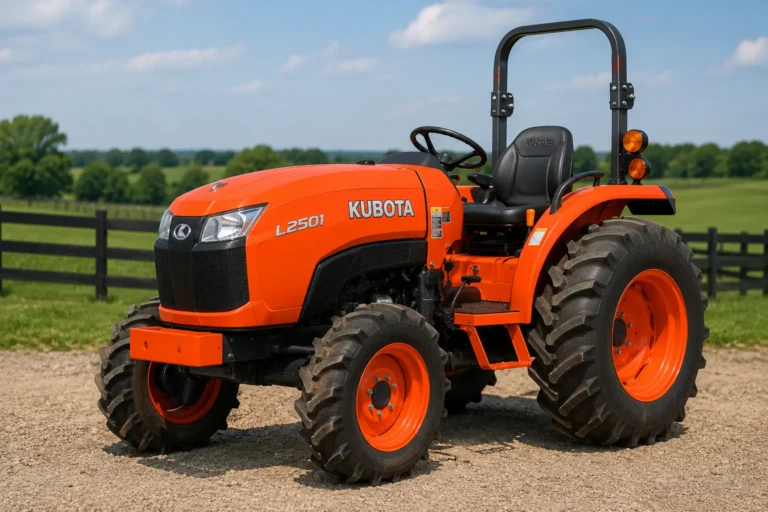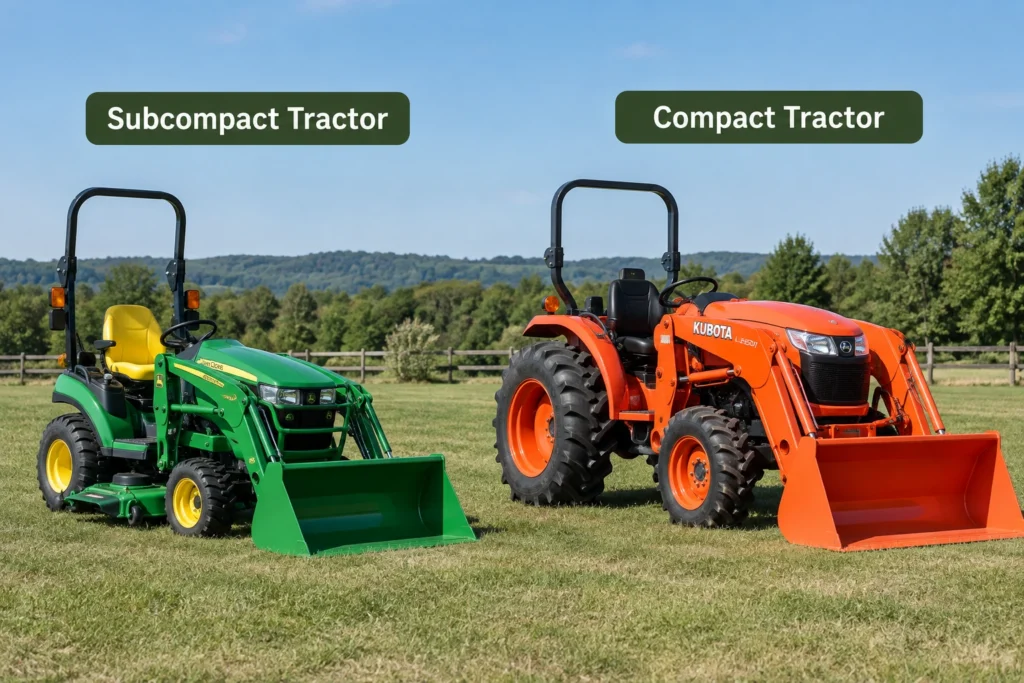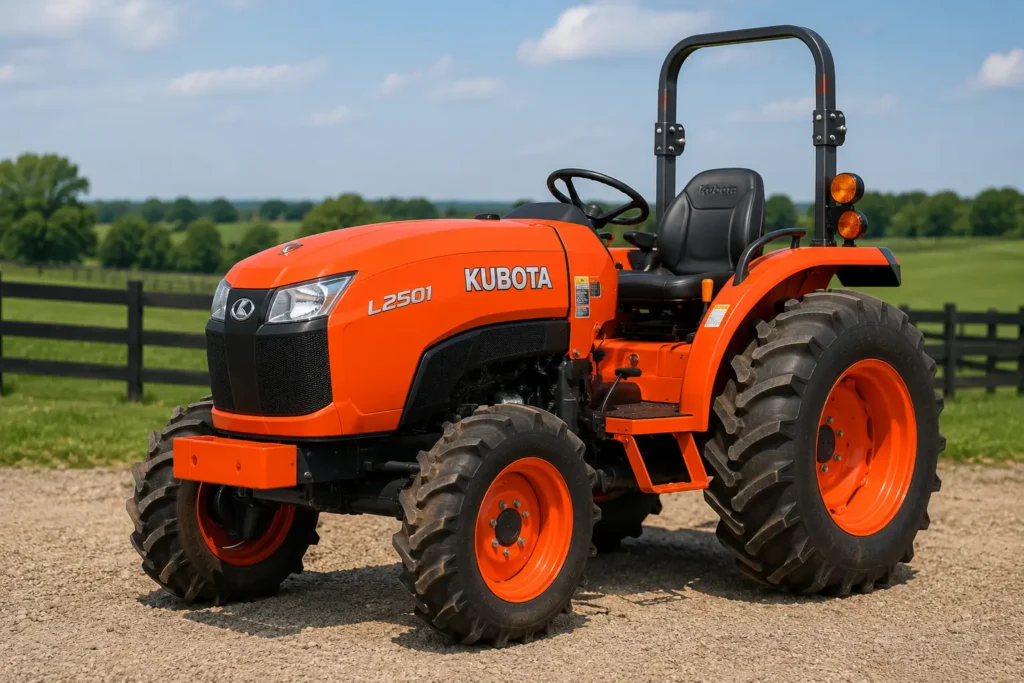


Most people spend all their budget on the tractor and forget the tools that actually do the work. It’s one of the most common and expensive mistakes new small farm owners make. You bring home a brand-new compact tractor, pull it off the trailer, and realize, now what? The tractor just sits there without the right implements attached.
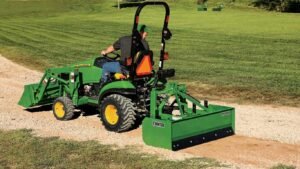
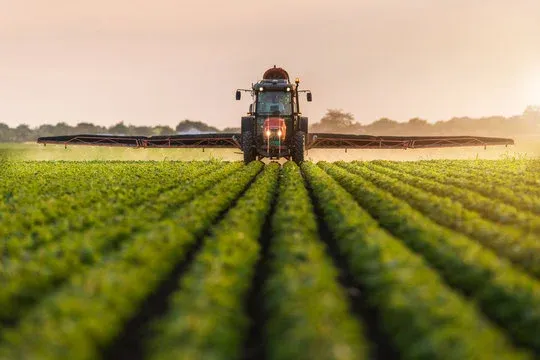
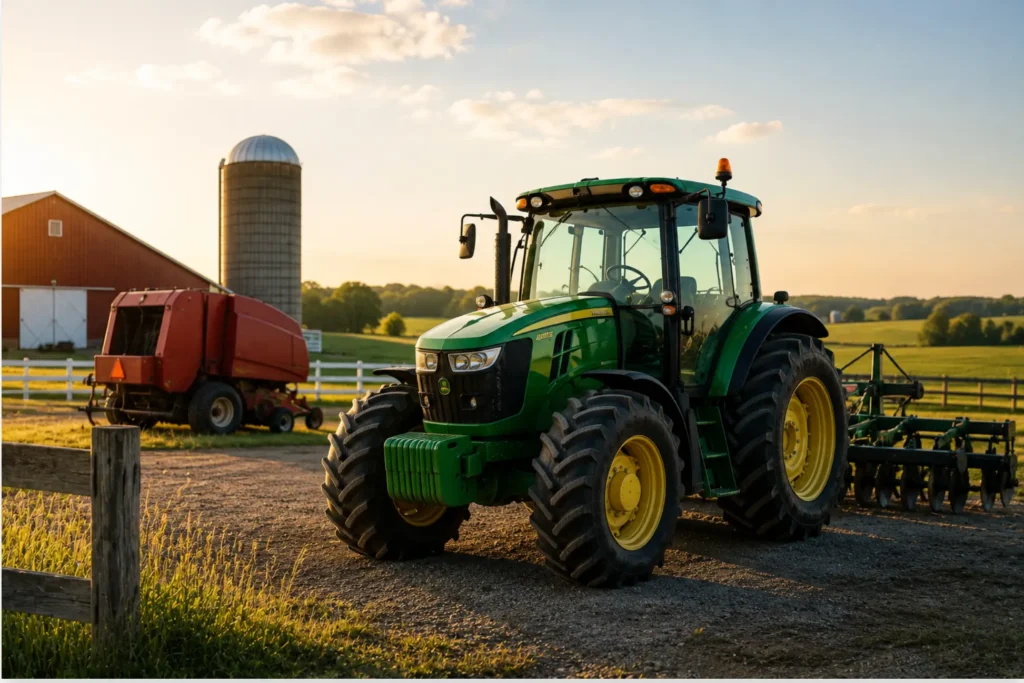
source: John Deere
This guide isn’t a master list of every attachment you can buy. It’s a priority guide. After reading it, you’ll know exactly which implements to buy first, which ones can wait, and how to match your choices to what your land and operation actually need.
If you haven’t bought your tractor yet, see our guide to choosing the right tractor for a small farm before you come back here. The implement budget conversation starts before you sign anything at the dealership.
If You Only Buy a Few Implements, Start Here
Here’s the short version for anyone who doesn’t want to read the whole guide:
- 1 – Front-End Loader: The most versatile implement on a small farm. Moving dirt, compost, gravel, round bales, and debris. If your tractor came without one, budget for it immediately.
- 2 -Rotary Cutter (Bush Hog): If you have open pasture, field edges, or brush to manage, this gets used every season. It’s not glamorous, but it’s essential.
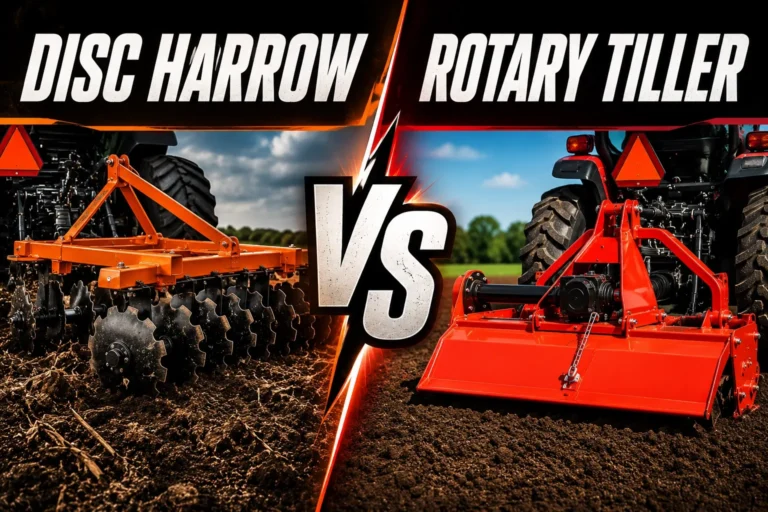
- 3 -Tiller or Box Blade: Which one depends on your operation. Gardening and row crops? Tiller. Driveway and drainage work? Box blade. Most small farms don’t need both to start.
Most small farms don’t need more than this to start
The farmers who buy six implements in year one usually end up selling two of them by year three. Buy what your land needs now, then add from there.
|
Implement |
Best Land Type |
Primary Task |
Skip It If… |
|
Front-End Loader |
Any |
Moving material |
You have no lifting or grading needs |
|
Rotary Cutter |
Pasture/fields |
Cutting brush & grass |
No open land to maintain |
|
Tiller |
Garden/crop rows |
Seedbed prep |
You’re not growing crops |
|
Box Blade |
Driveway/grading |
Leveling, drainage |
Flat land, no driveway work |
The Core Implements – What Each One Actually Does
-
Front-End Loader
A front-end loader bolts to the front of your tractor and lets you scoop, carry, lift, and dump material. It’s the implement that turns a tractor into a workhorse on a small farm.
You’ll use it for moving compost and manure piles, hauling gravel for driveway repairs, stacking or moving round bales, clearing debris after a storm, and backfilling around fence posts. The list goes on. No single attachment comes close to covering that range.
When you actually need it: If your farm involves any kind of material handling, and virtually all of them do, this is the right implement.
When it’s not necessary: If you’re running a pure market garden on flat, clean ground with no heavy material to move. That’s a narrow situation. Most small farms eventually wish they had one.
-
Rotary Cutter (Bush Hog)
A rotary cutter, most farmers call it a bush hog, regardless of brand, is a heavy-duty mower that connects to your tractor’s PTO (power take-off: the rotating shaft at the rear of the tractor that drives implements) and cuts thick grass, weeds, and light brush that a lawn mower would choke on.
If you have pasture, field edges, or any land that grows up fast in summer, you’ll use this two to four times a year at a minimum. It handles the kind of growth that’s too much for a string trimmer and too rough for a finish mower.
When you actually need it: Anytime you’re managing open land pasture, hayfields, ditch banks, fence lines. If you have five or more acres of open ground, budget for this early.
When it’s not necessary: Heavily wooded lots, pure vegetable operations with no open land, or farms where a walk-behind brush mower covers everything. If you’re managing under an acre of growth, a dedicated walk-behind machine may be more practical than a tractor attachment.
-
Tiller
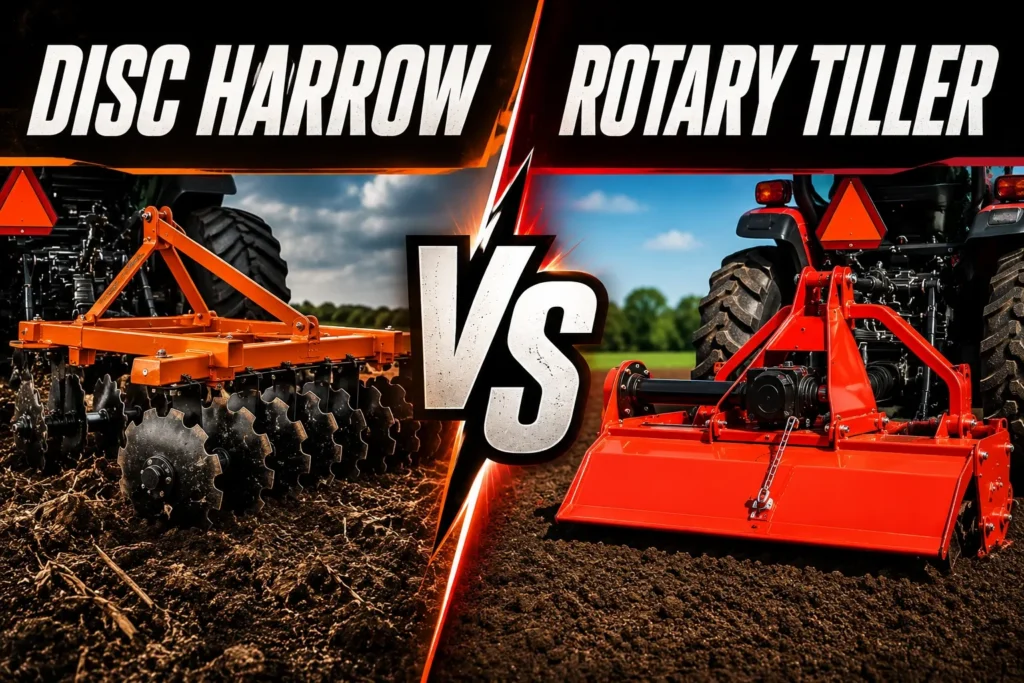
A tractor tiller connects to the three-point hitch (the rear mounting system on your tractor) and breaks up soil for planting. It’s the right tool for seedbed preparation, breaking new ground, incorporating cover crops, and working in compost before planting.
The size matters here. Match your tiller width to your row spacing and tractor horsepower. Running a 72-inch tiller on a 25 hp tractor is a recipe for a bogged-down machine and torn-up belts.
When you actually need it: You’re growing crops. Market garden, vegetable field, truck patch, anything where you’re preparing rows every season.
When it’s not necessary: Pasture management, hay production, timber, or any operation without annual soil preparation. A tiller sitting in the shed for 11 months a year is expensive dead weight.
A box blade is a three-point hitch attachment with a steel box and cutting edge that grades, levels, and moves material. You drag it forward to push dirt or backward to pull and level. It’s the right tool for driveway maintenance, smoothing out rutted pasture gates, cutting drainage ditches, and leveling building pads.
It’s not flashy. But if you have a gravel driveway that needs work every spring or a low spot that floods the barn lot, a box blade earns its cost in the first season.
When you actually need it: Any time you have grading, leveling, or drainage work that happens more than once a year. Gravel driveways, culvert approaches, rutted gates, building pads.
When it’s not necessary: Flat land with no gravel or drainage challenges. If your ground is flat and your driveway is paved, this sits more than it works.
Where Most People Get It Wrong
These are the four mistakes that cost small farm owners the most money in the first two years.
- Spending everything on the tractor. A $35,000 tractor with no implements isn’t worth $35,000 to your farm. Decide what implements you need before you set your tractor budget, not after. The implements are part of the purchase, not an afterthought.
- Buying too many implements in year one. You don’t know yet how you’ll actually use the tractor. Buy the two or three you’re certain about, work the land for one season, and add from there. Used implements in good shape are almost always available within 30 miles of any small farm. You don’t need to own everything on day one.
- Choosing the wrong implement size. Bigger isn’t always better. A 7-foot rotary cutter needs at least 50 PTO horsepower to run cleanly. An undersized tractor dragging an oversized implement wears out both machines faster. The general rule: match implement width and weight to the lower end of your tractor’s rated capacity, not the upper end.
- Ignoring PTO compatibility. Most small farm tractors run a 540 RPM PTO. Some implements require 1,000 RPM. Check the spec sheet before you buy. An implement that won’t run on your tractor’s PTO speed is a paperweight, no matter how good the price was.
Budget Strategy: Your Tractor Budget Must Include Implements
Here’s a real-world example. Say you have $30,000 to work with.
Option A: Spend $28,000 on a shiny new compact tractor. Have $2,000 left for implements. That buys you almost nothing useful.
Option B: Spend $22,000 on a solid used compact tractor with low hours. Have $8,000 left for a front-end loader ($2,500–$4,000 used), a rotary cutter ($1,200–$2,000 used), and still have money for a tiller or box blade down the road.
Option B gets more work done every week of the year. The fancier tractor in Option A sits waiting for attachments you can’t afford yet.
A smaller, capable tractor with the right implements is more productive than a larger, newer tractor with nothing to hang on it. That’s not an opinion, it’s just how farms work.
What You Need Based on What You’re Doing
Match your implement priorities to your actual work. This is the fastest way to avoid buying the wrong thing first.
|
What You’re Doing |
Start With |
Why |
|
Managing pasture or open land |
Rotary Cutter |
You’ll use it every season. It handles the bulk of your land maintenance. |
|
Vegetable or market garden |
Tiller |
Nothing else preps a seedbed as fast. Match size to your row spacing. |
|
Moving compost, gravel, and topsoil |
Front-End Loader |
This is the most versatile attachment on the farm. Hard to justify skipping. |
|
Driveway, drainage, leveling |
Box Blade |
One pass with a box blade saves hours of handwork. Worth it if grading is a regular chore. |
|
Mixed land — some of everything |
Front-End Loader first |
Then add a rotary cutter. Cover the most ground with two attachments before buying more. |
Implement Sizing: Match the Tool to the Tractor
The most common sizing mistake: buying an implement sized for the next tractor up. It feels like a good deal until the machine bogs down on every pass.
The basic rule: An implement should require 80–90% of your available PTO horsepower at most. If your tractor puts out 30 PTO hp, don’t buy an implement rated for 35–40 hp. You’ll lose power, wear parts faster, and fight the machine constantly.
- Rotary cutter sizing: A 5-foot cutter pairs well with a 25–35 hp tractor. A 6-foot cutter needs 35–45 hp. A 7-foot cutter is a 50 hp implement. Don’t round up.
- Tiller sizing: Match tiller width to your row layout first, then check horsepower requirements. A 48-inch tiller is a practical choice for a 25–30 hp compact tractor. A 60-inch tiller needs 35+ hp to run properly in anything harder than sandy loam.
- Box blade sizing: Width matters less than weight here. A heavier box blade cuts and levels more effectively. Just make sure your three-point hitch has the lift capacity to handle it. Check your tractor’s Category I or II hitch rating before buying.
- Front-end loader: Bucket size should match your tractor’s lift capacity, not your wish list. Your dealer or the loader manufacturer’s spec sheet will tell you the max payload. Overloading a loader stresses the front axle and frame; it’s not just a power issue.
Bigger implements cost more, weigh more, and need more power. Start with the right size for your tractor and your land. You can always step up when your operation grows.
Frequently Asked Questions
What is the most useful tractor implement for a small farm?
For most small farms, the front-end loader is the most useful implement. It handles moving compost, gravel, dirt, manure, debris, and feed tasks that show up constantly on small properties. If your tractor didn’t come with a loader, it’s usually the first attachment worth budgeting for.
What are 3-point tractor implements?
3-point tractor implements are attachments that connect to the tractor’s three-point hitch system at the rear of the machine. Common examples include tillers, box blades, rotary cutters, and post-hole diggers. The three-point hitch helps transfer weight efficiently and gives the operator better control over the implement while working.
Can a small tractor handle heavy implements?
Only within its rated limits. Small tractors can safely run many implements, but oversized or overweight attachments can overload the PTO system, stress the frame, and reduce traction. Matching the implement to the tractor matters more than simply buying the largest attachment available.
What’s the difference between a tiller and a box blade?
A tiller is used for breaking and preparing soil for planting. It’s common on vegetable farms, gardens, and crop rows. A box blade is used for grading, leveling, driveway maintenance, and drainage work. The better choice depends entirely on the kind of work your farm actually does.
Is it better to buy used tractor implements?
In many cases, yes. Used implements can save thousands of dollars and are often easier to find locally than people expect. Heavy-duty attachments like box blades and rotary cutters usually hold up well if properly maintained. Always check for excessive rust, worn PTO shafts, bent frames, and gearbox leaks before buying used equipment.
Final Thought
If you need a decision today, here’s where to start:
- Front-end loader first – if your tractor didn’t come with one, this is the single most useful implement you can add. Most small farm work involves moving something.
- Rotary cutter next – if you have open land to manage. Pasture, field edges, and brush lines need this every season.
- Tiller or box blade – choose based on your operation. Growing crops? Tiller. Grading and driveway work? Box blade. Not sure yet? Wait a season, then decide with real data.
Don’t let the implement list intimidate you. Most small farms run well on two or three attachments for the first few years. Get those right, learn how your land works, and add from there.
If you’re still comparing machines, our guide to the best tractors for small farms breaks down which tractor types fit different acreage sizes and workloads.