

There’s a moment every small farmer knows well, you’re standing at the edge of a field, back already aching from yesterday’s work, staring at soil that either needs to be broken open or cleaned up between rows. You know you need a machine. You’re just not sure which one.
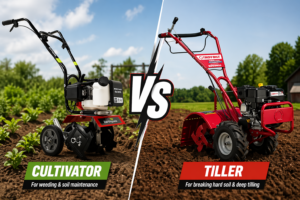
The cultivator vs. tiller debate comes up constantly, and it trips people up because the names are thrown around interchangeably at hardware stores and in YouTube videos aimed at backyard hobbyists. But small farmers have different stakes. Your time, your fuel budget, and your soil health actually matter.
Quick Answer – Cultivator vs Tiller
- Use a tiller when you need to break new or hard soil before planting.
- Use a cultivator when your crops are already growing, and you need to control weeds or maintain the soil.
- Use a tiller if your ground isn’t ready to plant
- Use a cultivator if your crops are already in the ground
If you’re still sorting out your broader equipment needs, this guide on soil preparation equipment for small farms will give you the full picture. And if you’re zeroing in on tillers specifically, I’ve also put together a detailed breakdown of the best rototillers for small farms under $1,000 in 2026 that’s worth a look once you’ve finished here.
Now let’s break this down the right way for real working small farms, not weekend gardens.
Quick Comparison: Cultivator vs Tiller
Feature | Tiller | Cultivator |
Primary Purpose | Break and turn new or hard soil | Weed control and soil maintenance |
Tilling Depth | 6–12+ inches | 1–4 inches |
Power Needed | High (gas engine, often rear-tine) | Low to moderate (electric or small gas) |
Best Use Case | Starting new land, deep bed prep | Between established rows |
Labor Savings | Massive for new ground | Significant for weed management |
When to Use It | Before planting season | During growing season |
Risk to Crops | High if used near plants | Low when used correctly |
What Is a Tiller? (And When Do Farmers Actually Use One)
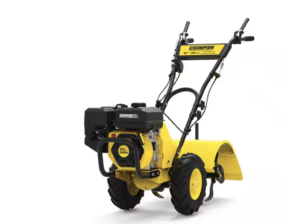
A tiller, sometimes called a rototiller, is a heavy-duty machine with rotating tines that dig deep into the earth. We’re talking 6 to 12 inches or more. It’s built to do what takes a crew with hand tools days to accomplish: breaking apart compacted soil, turning under cover crops, incorporating compost, and creating a proper seedbed from scratch.
For small farmers, a tiller shows up in a few specific situations:
Starting a new plot. You’ve cleared a section of land that’s never been farmed. The ground is dense, possibly clay-heavy, full of root systems and hardpan. A rear-tine tiller is the tool that makes the ground farmable in a day instead of a week.
Spring bed preparation. After a hard winter, the soil compacts and loses its structure. Running a tiller before planting breaks everything open and lets roots breathe.
Incorporating amendments. If you’re working compost, lime, or fertilizer into the soil, a tiller blends it throughout the profile rather than leaving it sitting on top.
A tiller is not subtle. It’s aggressive by design. That’s exactly what you need when the ground isn’t ready for crops yet.
What Is a Cultivator? (And Why It’s Not Just a Smaller Tiller)
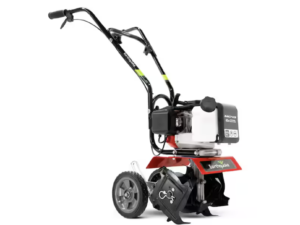
Source: Home Depot
A cultivator looks like a tiller’s little sibling, but it works completely differently. It’s lighter, shallower, and designed to work between plants rather than before them.
The tines on a cultivator scratch and loosen just the top 1 to 4 inches of soil. That’s intentional. At that depth, you’re cutting off weed roots without disturbing the soil structure or damaging the root systems of your crops.
Cultivator machines are beneficial for farmers because they can help reduce manual labour and increase work efficiency on agricultural land.
On a working small farm, a cultivator earns its keep in a few ways:
Weed control between rows. This is the big one. A cultivator run between your rows every 10–14 days during the growing season can eliminate 70–80% of your hand weeding. That’s hours of labor saved per week on even a 1-acre vegetable plot.
Breaking soil crust. After a hard rain, soil can crust over and reduce germination rates. A quick pass with a cultivator breaks that crust and improves water infiltration.
Aeration mid-season. Compaction doesn’t only happen before planting. Foot traffic, equipment, and irrigation can compact the top layer during the growing season. Cultivating loosens it without disturbing your plants.
The cultivator isn’t replacing the tiller; it’s doing a completely different job at a completely different time.
The Key Differences That Actually Matter on a Farm
1. Soil Depth
This is the foundational difference. A tiller works from 6 to 12-plus inches deep enough to restructure the entire growing zone. A cultivator works from 1 to 4 inches, just enough to disrupt weed growth and loosen the surface.
Using a cultivator on unbroken ground is like trying to shave a beard with nail clippers. Using a tiller near established crops tears up roots and can kill your plants.
2. Timing in the Growing Cycle
Tillers work before planting. Cultivators work after.
A tiller’s job is done by the time your first seeds go in the ground. From that point forward, if you run a tiller through your field, you’re done. The cultivator takes over from germination through harvest, making runs between rows on a rotating schedule.
3. Labor Savings, and Where Each Tool Pays Off
A tiller saves you the most labor in one concentrated burst at the start of the season. That single day of tilling can replace three to five days of hand-breaking soil.
A cultivator saves labor continuously across the entire growing season. The time savings add up differently; it’s not one dramatic workday saved, it’s 30 minutes here and an hour there, every week, multiplied across four to five months.
Both create meaningful labor reductions. They just do it at different points in your operation.
Which One Should You Choose?
Choose a Tiller If:
- You’re breaking new ground for the first time
- Your soil is compacted, clay-heavy, or hasn’t been worked in years
- You’re prepping large beds before planting season
- You need to incorporate deep amendments like compost or lime
- You’re dealing with heavy clay or sod that needs serious mechanical help
Choose a Cultivator If:
- Your crops are already in the ground
- Weed pressure is your primary problem
- You have established rows that need regular maintenance
- You want to reduce hand weeding without equipment that risks crop damage
- Your soil is already in reasonable shape from prior seasons
Do Small Farmers Need Both? Here’s the Real Answer
Yes, but not necessarily at the same time, and not necessarily at the same cost.
Here’s how it typically plays out: In Year 1, when you’re breaking new land, a tiller is non-negotiable. You either own one, rent one, or hire it out. That ground doesn’t open without serious mechanical effort.
By Year 2 and beyond, if you’ve maintained your soil structure, you may only need the tiller for one or two passes per season, or not at all if you’re using no-till practices. The cultivator, on the other hand, becomes your most-used tool from May through September.
A lot of small farmers start by renting or borrowing a tiller for initial ground prep, then invest in a quality cultivator as their primary recurring tool. That’s a smart sequence. It matches the tool investment to the frequency of use.
If budget isn’t a constraint and you’re farming 2 acres or more, owning both is the right call. If you’re starting and money is tight, prioritize based on where you are in the farming cycle.
Farm Size Breakdown: What You Actually Need
Under 1 Acre
A front-tine or mid-tine tiller handles initial prep just fine. Pair it with a small cultivator, and you’ll cover nearly everything without overspending.
1–5 Acres
This is where efficiency starts to matter. A rear-tine tiller saves serious time during bed prep, and a reliable cultivator will cut your weekly weeding workload significantly.
5+ Acres
At this point, walk-behind tools become limiting. Tractor-mounted tillers and row cultivators are more practical and pay for themselves quickly through labor savings.
Soil Type Guide: How Your Ground Changes the Decision
Clay Soil
Clay is the toughest scenario. It compacts hard, drains poorly, and doesn’t forgive light equipment. A rear-tine tiller with serious horsepower is the right call for initial prep. For cultivating, work when the soil is slightly moist, not wet, not bone dry, so you cut through the crust without smearing the clay deeper.
Sandy Soil
Sandy ground is easier to break but harder to keep structured. A tiller pass is faster and less demanding here, but you’ll find the soil crusts over quickly between rains. Regular cultivation passes help maintain surface structure and prevent the sandy crust from baking hard in dry spells.
Loamy Soil
The farmer’s ideal. Loam responds well to both tillers and cultivators, holds its structure longer after working, and gives you more timing flexibility. If you have loamy ground, maintain it; it’s an asset. Regular cultivation keeps it loose and productive without overworking it.
Cost vs Value
A tiller costs more upfront, but you use it less often. A cultivator costs less, but you’ll use it constantly.
That’s the real difference.
If you only look at price, the cultivator wins. But if you look at what each tool replaces in labor:
- A tiller replaces days of back-breaking work upfront
- A cultivator replaces hours of weeding every single week
The smartest investment isn’t the cheaper tool; it’s the one you’ll use the most at your current stage.
For a deeper look at how to choose between models, resources like Lowe’s tiller and cultivator buying guide can walk you through the mechanical specs to compare.
The Biggest Mistake Small Farmers Make With These Tools
The most common one I see: using a cultivator on ground that hasn’t been properly tilled first. A farmer starts a new plot, skips the tilling step to save time or money, tries to run a cultivator over hard ground, and either burns out the machine or barely scratches the surface. Now they’ve spent an afternoon accomplishing nothing, and possibly damaged their equipment.
The second most common mistake: tilling too deeply too often. Repeated deep tilling destroys soil structure, kills beneficial organisms, and can create a hardpan layer below the tilling depth. Tilling is a tool for specific situations, not a routine you should run every time you walk by a field.
The third one worth mentioning: cultivating too close to crops. Even a shallow-tine cultivator can cut feeder roots if you’re running it within 4–6 inches of your plants. Keep your spacing honest and give your crops some breathing room.
Frequently Asked Questions
Can a cultivator replace a tiller?
No, not for initial ground prep or hard, compacted soil. A cultivator is a maintenance tool, not a breaking tool. If your soil hasn’t been worked, a cultivator won’t have the power or depth to do what a tiller does. Use the right tool for the right stage of your growing cycle.
Do I need both a tiller and a cultivator?
For most small farms: yes, eventually. But the timing of when you buy each matters. A tiller is essential when you’re starting new ground. A cultivator becomes your most-used tool once your crops are growing. If the budget is tight, prioritize based on where you are in your operation. As The Spruce notes in their breakdown of these tools, the two tools serve distinct purposes, and most serious growers end up needing both.
Which is better for weed control?
The cultivator, without question. It’s purpose-built for this job. A tiller used for weed control after planting will do more damage to your crops than the weeds ever would. Run a cultivator between your rows on a regular schedule, and you’ll dramatically reduce the weed pressure without endangering what you’ve planted.
Which is easier to use?
A cultivator. It’s lighter, more maneuverable, and requires less physical effort to operate. A rear-tine tiller, especially on hard or rocky ground, demands real attention and some physical work to manage. Cultivators are generally more forgiving for newer operators and can be run by a wider range of people on your crew.
How do I know which one to buy first?
Ask yourself one question: Is my ground ready to plant? If yes, get a cultivator. If no, get a tiller (or rent one). Your current stage in the farming cycle tells you everything you need to know.
Conclusion
Tillers and cultivators aren’t competing products. They’re sequential ones. One opens the ground before the season starts; the other maintains it while the season runs.
For small farms, the practical path usually looks like this: break your ground with a tiller, keep it clean with a cultivator, and don’t confuse one for the other’s job.
The farmer who understands that distinction saves time in spring, saves labor all summer, and puts money back in their pocket by not fighting their own soil with the wrong machine.
Husqvarna’s guide on the differences between garden tillers and cultivators covers some of the mechanical side, if you want to dig further into specs and engine types.
But for making the right call on your farm? You’ve got what you need right here.