Reaching fruit shouldn’t mean risking a fall. Here are the tools that actually work for backyard hobbyists, serious home orchardists, and everyone in between.
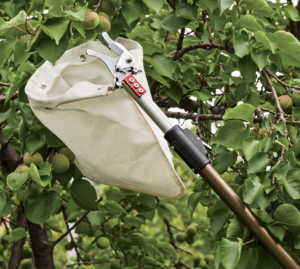
If you’ve ever climbed a ladder with one hand on a branch, trying to grab a stubborn apple before it drops and bruises, you already know the problem. Ladders are awkward, time-consuming to reposition, and genuinely dangerous on uneven ground. Climbing the tree itself is even worse. And yet, without the right tool, that’s often what people do.
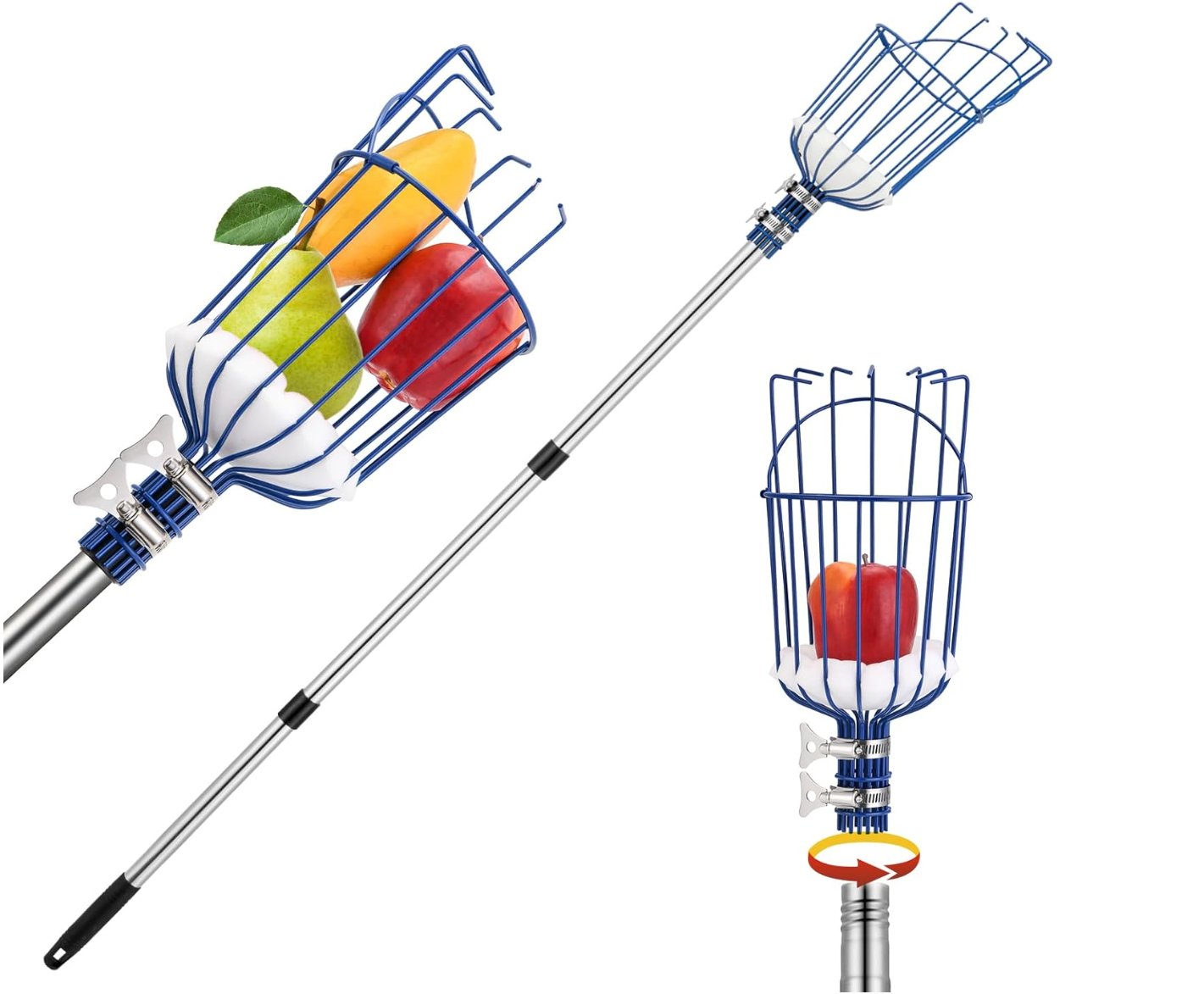
A good fruit picker pole solves this simply. You stay on the ground, extend the pole, and bring the fruit to you. No risk, no ladder shuffling, no crushed peaches at the bottom of a bucket. The concept has been around for years, but the quality gap between a good picker and a bad one is enormous, and with so many options flooding the market, it’s easy to spend money on something that bends, loses its basket mid-harvest, or simply can’t reach the fruit you need.
We spent considerable time reviewing, comparing, and stress-testing over 300 fruit picking tools from cheap pole-and-basket kits to premium telescoping designs with professional-grade components. What follows are the ones worth your money, matched to specific needs so you can pick the right tool for your trees.
Our Picks
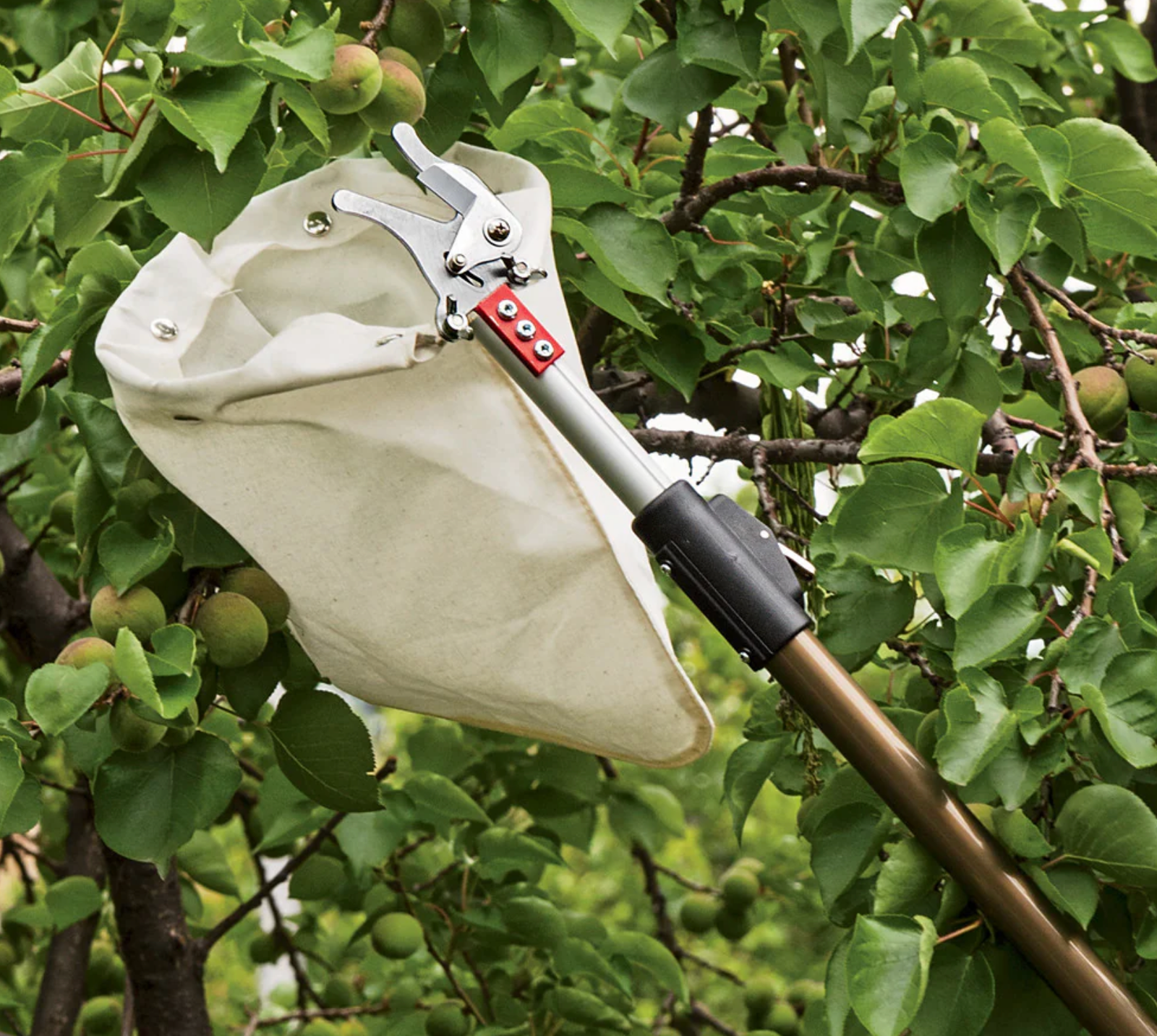
A note on apple picking: Garrett Wade and Fiskars both handle apples beautifully. If apples are your primary crop, either is worth the investment over a budget alternative. The cutter mechanism on the Garrett Wade is particularly well-suited to apples they detach cleanly without the yanking and dropping that can bruise the fruit.
Buying Guide for Fruit Picker Poles
Before you buy, it helps to think through what you actually need, not just what sounds good on paper. Here are the factors that matter most in practice.
Pole length
A rough rule: your tree height minus 5–6 feet equals the pole length you need (because you’re standing and already 5–6 ft tall). A 15 ft tree typically needs 9–10 ft of pole reach. Don’t go by tree height alone; account for canopy spread too.
Basket vs. cutter
Basket-style pickers catch fruit as it detaches gently, but passively. Cutter-style (like the Garrett Wade) actively severs the stem, giving you more control. For soft fruit like peaches, a basket is safer. For firm fruit like apples, cutter mechanisms give cleaner results.
Weight and fatigue
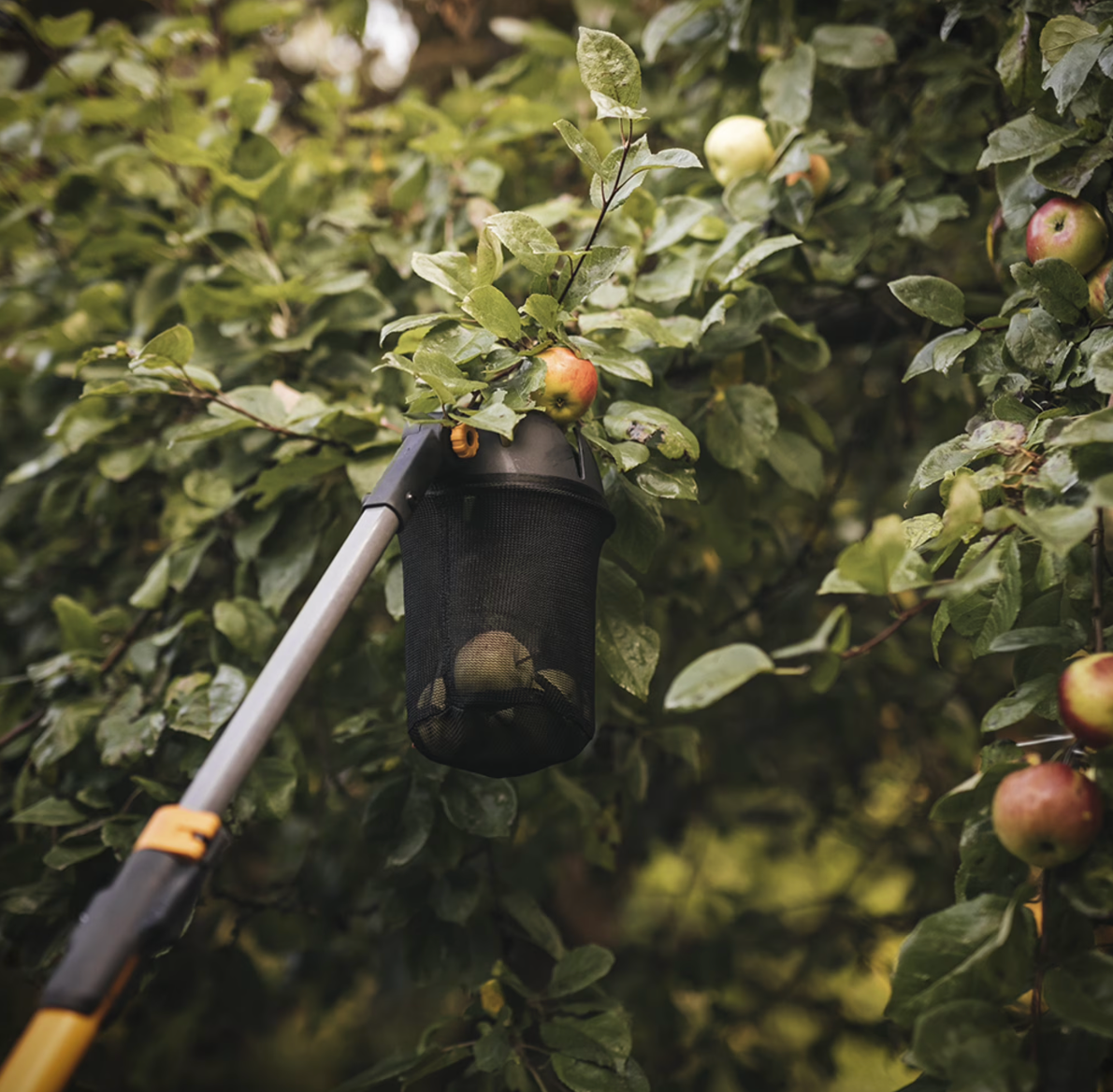
An extra half-pound feels trivial at ground level, but if you’re harvesting for 30+ minutes at a stretch, prioritize weight over everything else. 2.2 lbs is comfortable. 3+ lbs overhead gets tiring fast.
Fruit type compatibility
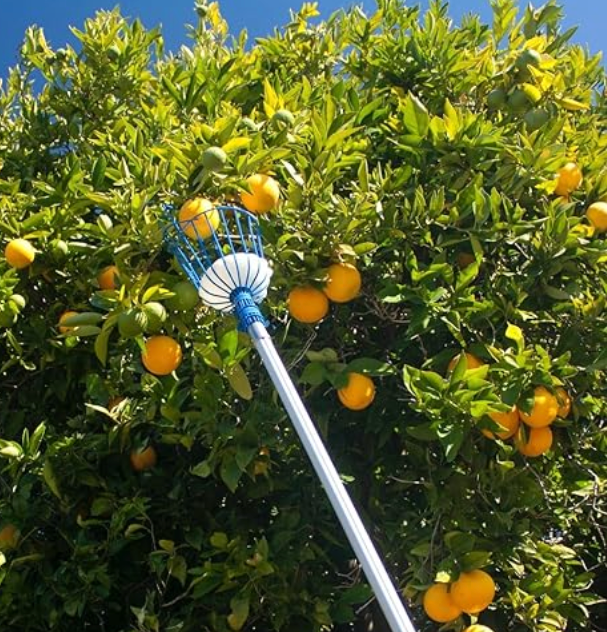
Basket diameter matters. A 5.5″ basket handles most fruit from small citrus to large apples. Avocados and mangoes can push the upper limit. Check the maximum fruit diameter before buying, not just the pole length.
Aluminum vs Stainless vs Fiberglass
Aluminum is light but can flex under load. Stainless steel is heavier but very rigid. Fiberglass (like the Fiskars) splits the difference strong, rigid, and reasonably light, but more expensive. For occasional use, stainless is fine. For frequent use, fiberglass is worth the premium.
Basket quality
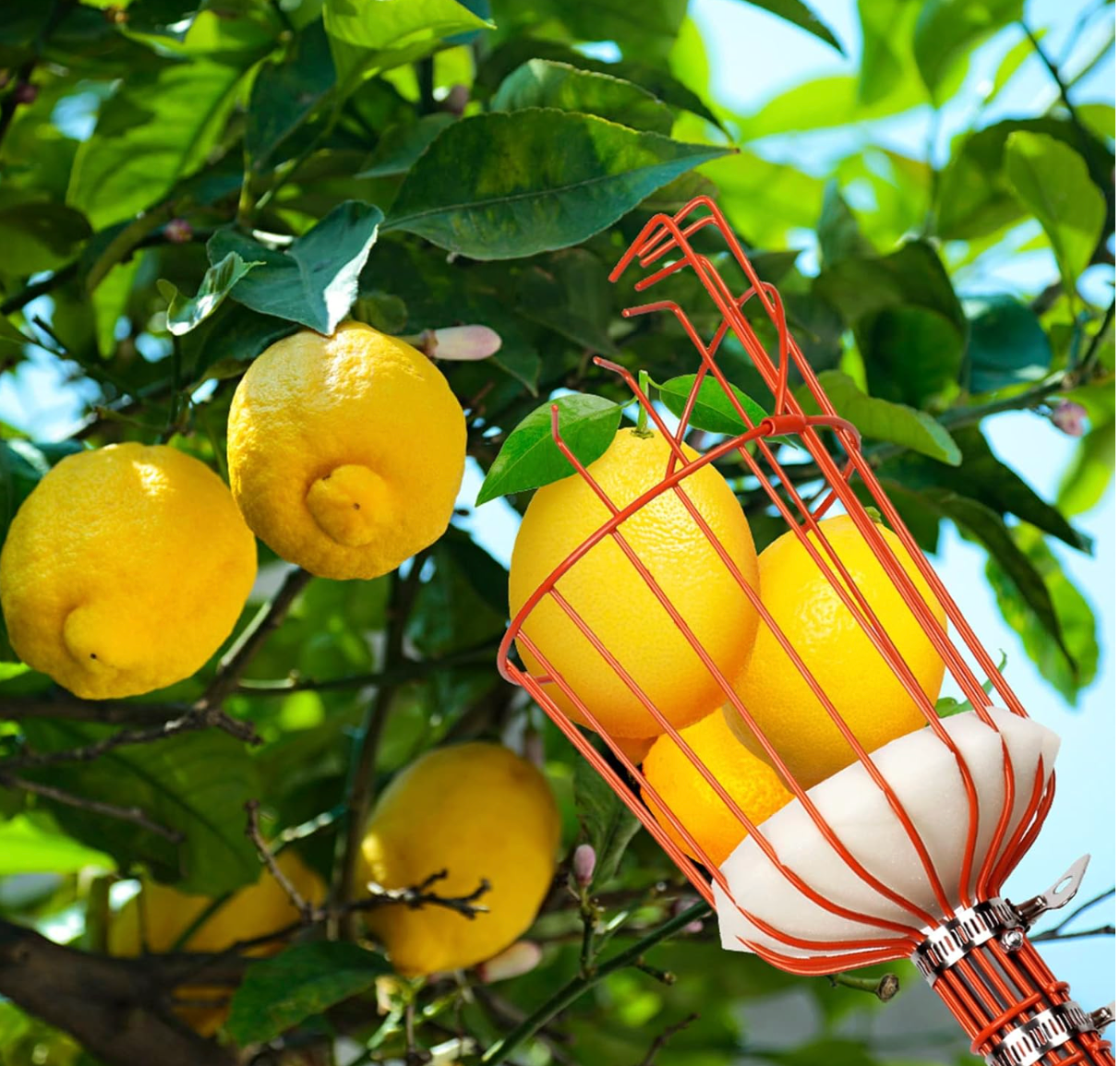
Foam padding is almost non-negotiable if you care about fruit quality. A hard metal basket drops bruises even on firm apples. Look for foam-lined or mesh baskets; they add very little weight but make a real difference in how the fruit arrives at the bottom.
Real-world usage scenarios
If your tree is over 15 ft tall…
Most standard pickers cap out around 12 ft of reach. The Oak Leaf is one of the few affordable options that gets to 20 ft, but expect some flex at full extension. If this is a regular situation, a stable step stool plus a 12 ft picker often works better than a 20 ft pole at its limit.
If you’re picking soft fruit like peaches or plums
Use a padded basket design, not a cutter. Peaches bruise easily, and any rough handling during harvest shows up as brown spots within a day. Gentle basket designs that let the fruit tumble softly onto foam padding are the right call here.
If you’re harvesting for long periods
Weight becomes your biggest enemy, not reach. A 2.2 lb pole at 8 ft is dramatically easier on your arms than a 3 lb pole at the same extension. The Walensee is built specifically for this use case and is the one we’d hand to someone complaining of arm fatigue.
If you’re picking avocados or mangoes
The size and weight of the fruit demand a sturdy basket and a rigid pole. The Fiskars or Oak Leaf are better choices here than lightweight designs. Large fruit landing in a flimsy basket can warp or detach it. Check that the basket opening comfortably fits your largest fruit before buying.
If you have a small home orchard with multiple tree types
The Twist-On Basket or Walensee offers the best versatility. Their adjustable length and mid-range basket diameter (5.5 inches) cover most tree heights and fruit sizes without needing a second tool for different crops.
Frequently asked questions
Is a fruit picker pole actually worth it?
For anyone with a mature fruit tree, yes, without question. The time savings alone are significant, but the real value is in fruit quality. Fruit picked gently with a proper tool bruises far less than fruit grabbed and yanked by hand, or dropped from a height. And the safety benefit of staying off a ladder isn’t trivial.
What pole length should I buy?
Measure your tree’s typical fruit height, then subtract 5 to 6 feet (your standing reach). That’s the minimum pole length you need. For most backyard trees in the 12–16 ft range, an 8–10 ft pole is sufficient. Go longer only if you know you need it longer. Poles are harder to control precisely.
Do fruit pickers damage the fruit?
A quality picker with a padded basket should cause zero damage. Where people run into trouble is with hard metal baskets, sharp tines, or letting fruit drop too far. The soft-basket and mesh designs we’ve recommended here are specifically chosen because they minimize contact damage.
Basket vs. claw — which is better?
It depends on what you’re picking. Basket-style is gentler and better for soft or delicate fruit. Claw or cutter styles give you more precise control over when and how the fruit detaches. They’re better for firm fruit like apples, where stem-cut precision matters. Most home orchards benefit from a basket design unless you grow apples primarily.
Can one fruit picker work for all my trees?
Often, yes, if you pick carefully. A mid-range adjustable picker in the 8–13 ft range with a 5.5-inch basket handles the majority of common backyard fruits: apples, pears, plums, oranges, lemons, and peaches. You’d only need a specialized tool if you’re regularly picking very large fruit (avocados over 5 inches) or very small fruit (cherries, small figs) that fall through or don’t fit a standard basket.
Final Thought
The right fruit picker comes down to three things: how high your fruit hangs, what kind of fruit you’re picking, and how often you’re out there harvesting.
For most people, one or two backyard trees, a mix of apples or citrus, picking a few times per season, the Garrett Wade Telescopic is the one to get. It’s well-built, works well, and you won’t be thinking about replacing it in a few years.
If you have taller trees or need more reach, the Oak Leaf gets you there at a budget price, while the Twist-On Basket strikes a better balance of reach and quality. For heavy-duty or frequent use, the Fiskars is worth every extra dollar, especially with that lifetime warranty. And if weight is your main concern, the Walensee is the one you’ll still be happy picking with after an hour.
No single tool is perfect for everyone. But any of these will get you off that ladder and back on the ground where you belong.
Do you want to learn more about farming? Read our full guide on the best rototillers for small farms under $1000 in 2026. Visit Small Farmers Resource for more expert agricultural tips!