

Choosing the right soil preparation equipment is one of the first steps to creating a productive farm. Whether you’re breaking new ground, preparing a seedbed for planting, or improving neglected soil, the equipment you choose can make the job faster, easier, and more efficient while helping you avoid unnecessary expenses.
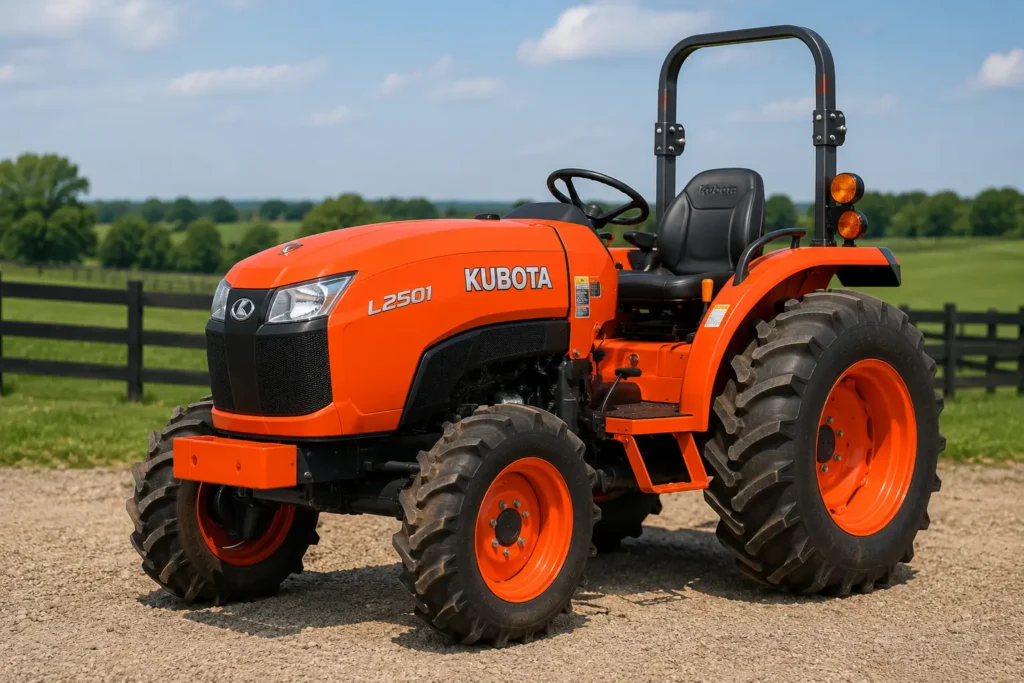
The challenge for many small farmers is knowing which equipment they actually need. The right implement depends on your acreage, soil type, crops, and the tractor you’ll be using. A tractor that’s too small may struggle with heavier tillage implements, while a larger tractor can safely handle more demanding equipment. That’s why choosing the right tractor and soil preparation equipment often goes hand in hand.
In this guide, you’ll learn about the essential soil preparation equipment for small farms, what each machine is designed to do, when you need it, and how to choose the right equipment for your land without spending money on tools that don’t fit your operation.
Quick Guide: Which Soil Preparation Equipment Do You Need?
| Equipment | What It Helps You Do | Best For | Buy, Rent, or Skip? |
|---|---|---|---|
| Plow | Break and turn soil before planting | New ground, compacted soil, or fields with heavy residue | Rent or buy if needed regularly |
| Harrow | Break clods, smooth soil, and prepare the surface | Finishing soil after deeper preparation | Buy if you’ll use it regularly |
| Cultivator | Loosen surface soil and manage weeds | Row crops and maintaining already-worked soil | Buy if it fits your cropping system |
| Rotary Tiller / Rototiller | Loosen and mix soil while creating a finer seedbed | Smaller vegetable and specialty-crop areas | Good buy for many small farms |
| Garden/Digging Fork | Loosen and aerate soil manually | Small plots, beds, and areas where machinery isn’t necessary | Affordable option for very small plots |
Your Crop’s Performance Improves
Proper soil preparation helps,
- According to the Natural Resources Conservation Service(USDA), healthy soils support root growth and improve nutrient cycling, which helps produce healthy, high-yielding crops.
- Water infiltrates for consistent moisture availability
- Soil controls weeds by disturbing the early growth cycle
- Reducing unnecessary field passes increases fuel efficiency
- Influence prevents your equipment from breaking due to poor soil conditions
- Balanced aeration and structure support the soil’s long-term health.
Poor Preparation’s Cost
When soil is not properly managed, your farms often face,
- Wasted fuel and labor from repetitive passes
- Soil compaction
- Seedbeds remain uneven
- Germination rates become lower
- Weed pressure increases
Therefore, the right soil preparation technique reduces labor, protects your equipment, and creates consistent and profitable growing conditions every year.
What Does Your Farm Need?
First, carefully assess your small farm’s operations before buying soil preparation equipment for small farms. Farmers invest and then plan, making it one of the most expensive mistakes.
Understand Your Soil Type
Your soil determines how strong your tillage tools need to be,
- Sandy – It’s easier to work with. Sandy soil drains quickly and requires lighter machines.
- Clay – This is dense and easily compacts. It requires firmer tillage tools and careful timing to avoid working in wet ground.
- Loam – Flexible and balanced. Loam works well with moderate equipment setups.
Match tools with your small farm’s soil to prevent unnecessary strain on machinery.
Identify Your Crop Requirements
Different crops also demand different seedbed conditions. Vegetables require smooth seedbeds for uniform germination. Hay and grains require proper firming and leveling. Minimal tillage usually benefits orchards as it protects the soil structure.
Define Your Tillage System
A clear tillage system stops overspending and protects long-term profitability.
Conventional – Does it have the usual plow, disc, and harrow?
Reduced – If your tillage system has shallow cultivation.
No-Till – There is minimal disturbance using specialized tools.
Soil Preparation Equipment’s Core Categories
When evaluating small farm tillage tools and machinery, small operators work within four main categories. Each supports a different stage of preparing the ground for plantings. For soil preparation equipment for small farms, choose the right tools to save time, fuel, and labor while protecting soil health.
- Primary tillage
- Secondary tillage
- Bed preparation tools
- Specialty soil tools
Primary Tillage
It breaks compacted soil. Also manages heavy residue and resets field structure. Not all small farms require deep tillage every year, but when they do, the correct application makes your work effective and cost-efficient.
Moldboard Plow
This tool is best for heavy clay soils, thick residue, and land restoration. The moldboard plow provides deep residue burial and suppresses strong weeds. Sadly, it has high fuel consumption, disturbs soil biology, and poses a risk of erosion. You can use it in neglected or clay ground, but not regularly.
Chisel
A chisel plow is best for breaking compaction with limited soil inversion. The soil preparation equipment for small farms has a lower erosion risk and offers a better soil structure. The tool is a good all-round choice for 10-50 acres.
Subsoiler
Small farms use it to correct hardpan and improve drainage. A subsoiler breaks deep compaction without surface inversion, but covers slowly and in narrow widths. It provides high value where compaction limits growth.
Secondary Tillage
After primary tillage, these tools are best suited to refine your soil. The secondary equipment breaks clods and smooths the surface to prepare seedbeds.
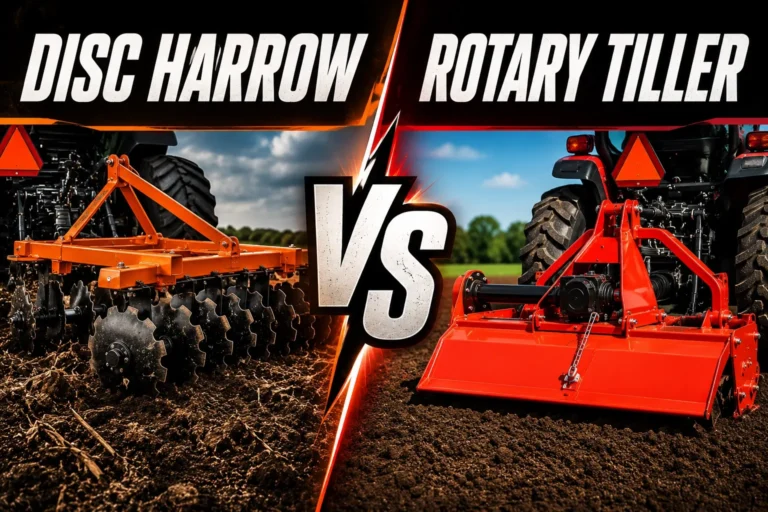
Disc Harrow
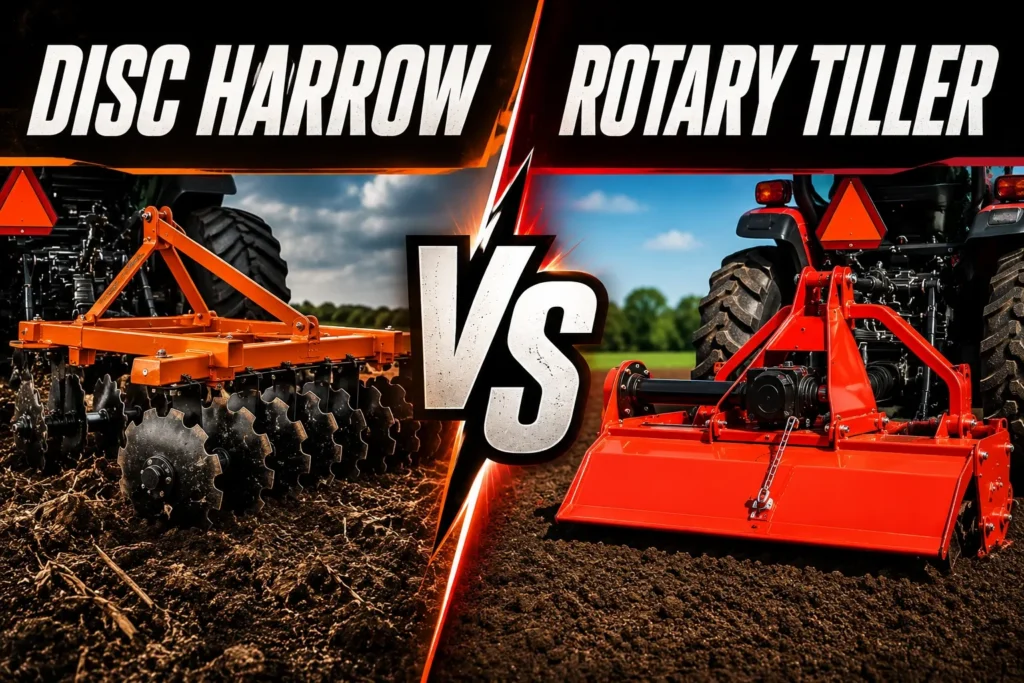
This is viewed as the basic investment in small farm tillage tools and machinery. The disc harrow breaks clods and mixes residue with fertilizer. Yes, it may require multiple passes, which cause shallow compaction. It’s excellent for farms greater than 10 acres.
Rotary Tiller
A rotary tiller is best for 2-10-acre vegetable or specialty farms. This tool creates a fine seedbed in one pass and is easy to operate. It has a risk of over-pulverizing the soil. Use it for finely prepared beds.
Spring Tooth
A spring tooth, also known as a drag harrow, is an inexpensive tool for small farms. However, its limited depth doesn’t make it ideal for heavy clay.
Bed Preparation and Finishing Tools
The final bed shaping is necessary for consistency, especially in vegetables and direct-seed crops.
Power Harrow
A power harrow produces a fine, level seedbed without full soil inversion, making it ideal for high-value vegetable farms. While it’s more expensive and requires regular maintenance, it provides excellent results where seedbed quality is a priority.
Cultivators
This targets weed control and improves aeration. But requires a precise setup. Furthermore, the equipment is practical for row crops and in-season care.
Specialty Soil Tools
Roller
A roller is best for cover crop termination in reduced-till systems. A roller lowers soil disturbance and maintains residue cover. But it requires cover crop planning. For small farms, a roller is ideal for transitioning to reduced tillage.
Spike Tooth Roller
This specialty soil tool is best for light seedbed leveling and pressing residues. Yes, it does limited-depth work. You can use this $79 spike tooth roller for small grains and light finishing.
Strip Till Units
The strip till units are perfect for conservation tillage strip preparations. This tool combines shaping, loosening, and residue management. The sad part? It can also be expensive on a per-acre basis. But also a strong option for precise row crop systems.
Soil Corers
These are for renovating pastures and compacted spots. Soil corers improve root growth and infiltration. However, its slow coverage can discourage you from buying the tool. It can also be used as an excellent targeted tool for problematic areas.
How Does It All Come Together?
Once you understand the role of each category, you build a tailored soil strategy rather than overspending on redundant tools. The right mixture of small farm tillage tools and machinery turns hours of work into productive results.
Real-World Decision Framework for Small Farms
Smart investments in soil preparation equipment for small farms follow a clear decision ladder that protects soil health and cash flow.
Identify Compaction Issues
Start with your soil. Select a subsoiler or chisel plow if you observe drainage issues, hardpan layers, or restricted root growth. Otherwise, skip primary deep tillage and avoid unnecessary wear and fuel. Deep tillage is justified only when compaction exists.
Match Equipment to Crop Type
Unlike pasture or grain, vegetable systems demand finer seedbeds. Therefore, use a rotary tiller or power harrow. If there are no vegetable systems, disc plus harrow is often enough. So, select small farm tillage tools and machinery based on precision needs and crop value.
Scale to Acreage
For a small farm between 2-10 acres, use a rotary tiller with a drag harrow. If you have a farm of 10-25 acres, consider a disc harrow and cultivator and a chisel plow with a disc and harrow.
Protect Your Budget
Your equipment payments should stay within 10-15% of annual gross farm revenue. In this way, you can keep soil preparation equipment for small farms sustainable in the long term.
Cost Considerations & Budget Strategy
When investing in soil preparation equipment for small farms, look beyond the sticker price. Smart farmers calculate the total cost of ownership before committing capital.
Begin with the upfront cost, but don’t let it drive your complete decision. A lower price may cost more long-term, especially if it wears out quickly or underperforms. Therefore, match equipment size to acreage and tractor’s horsepower to avoid overspending.
Fuel is another ongoing expense. Heavy or oversized implements increase diesel use and reduce profit margins. Get efficient small farm tillage tools and machinery to balance performance with a manageable fuel demand.
Blades, PTO shafts, bearings, and wear parts add up. Keep 5 to 10% of equipment value for maintenance to prevent downtime.
If your chosen equipment decreases labour hours, it also improves return on investment.
Good quality soil preparation equipment for small farms retains value. This protects your long-term capital.
New versus Used Equipment
Buying Used Pros
- Lower upfront cost
- Easier ROI
Buying Used Cons
- Unknown wear
- Possible hidden repairs
Buying New Pros
- Warranty
- Reliability
- Financing options
Buying New Cons
- Higher upfront cost
- Faster depreciation
Costly Mistakes Small Farmers Make
You need to avoid the following common mistakes for smart investments in soil preparation for small farms:
Buying Oversized Implements – Larger isn’t better, especially on 2-50 acres of land. An oversized machine increases fuel use, compaction, and upfront costs without proportional returns.
Ignoring Tractor Compatibility– The implements must match weight, horsepower, and PTO capacity. Mismatched small farm tillage tools and machinery reduce efficiency.
Over-Tilling Soil Annually– This damages soil structure, increases erosion, and lessens long-term productivity.
Skipping Soil Testing– Without complete soil data, you risk unnecessary deep tillage.
Consider Soil Health
Today’s small farms must balance productivity with sustainability. Over-tillage causes loss of organic matter, compaction layers, and increased erosion. Therefore, reduced-till systems are becoming famous among 10-50 acre farms.
Different Scenarios
5-Acre Vegetable Farm
For a five-acre vegetable farm with a 35 HP tractor and sandy loam soil, a rotary tiller, drag harrow, and row cultivator are recommended. But avoid heavy plow systems.
30-Acre Mixed Crop Farm
A chisel plow, disc harrow, and harrow finish are recommended for a 60 HP tractor and clay soil. However, avoid using excessive rotary tillage.
When to Rent
Rent if you
- Use equipment less than five days a year
- Are you experimenting with a new crop
- Occasionally need deep tillage
Maintenance Checklist for Longevity
Proper maintenance gives you reliable and profitable soil preparation equipment for small farms. These farmers ignore routine care, which is important for protecting their soil and budget.
Regularly Grease Fittings
Read your manufacturer’s recommendations to regularly grease all pivot points and moving parts. This habit reduces friction and prevents premature wear.
Inspect Bearings
Check the equipment’s bearings for noise, wear, or play. If you find any worn-out ones, immediately replace them.
Sharpen Blades
Cutting edges on discs, plows, and tillers must stay sharp. Dull blades reduce soil penetration efficiency.
Check Gearbox Oil
Monitor oil levels and quality. Replace oil to prevent mechanical failure.
Store Under Cover
It’s best to cover equipment. Exposing it to rain, sun, and moisture impacts functionality and shortens its lifespan. This routine care guarantees that your small farm tillage tools and machinery deliver consistent performance.
Frequently Asked Questions
What is the most essential soil preparation equipment for small farms?
For most small farms, a rotary tiller and a drag (spring tooth) harrow are enough to prepare established soil for planting. If you’re breaking new ground or working with compacted soil, you may also need a moldboard plow, chisel plow, or disc harrow.
Do I need a plow or is a rotary tiller enough?
It depends on your land. A rotary tiller is ideal for maintaining gardens and established fields, while a moldboard plow is better suited for breaking new ground or turning heavily compacted soil. Many small farms rarely need to plow every year.
Should I buy or rent soil preparation equipment?
Buy equipment you’ll use regularly, such as a rotary tiller or drag harrow. For specialized implements like moldboard plows or subsoilers that may only be needed occasionally, renting is often the more cost-effective option.
What size tractor do I need for soil preparation equipment?
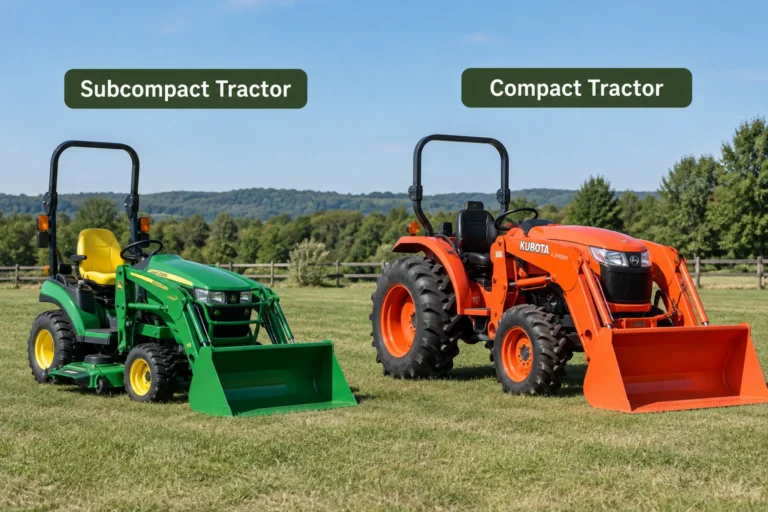
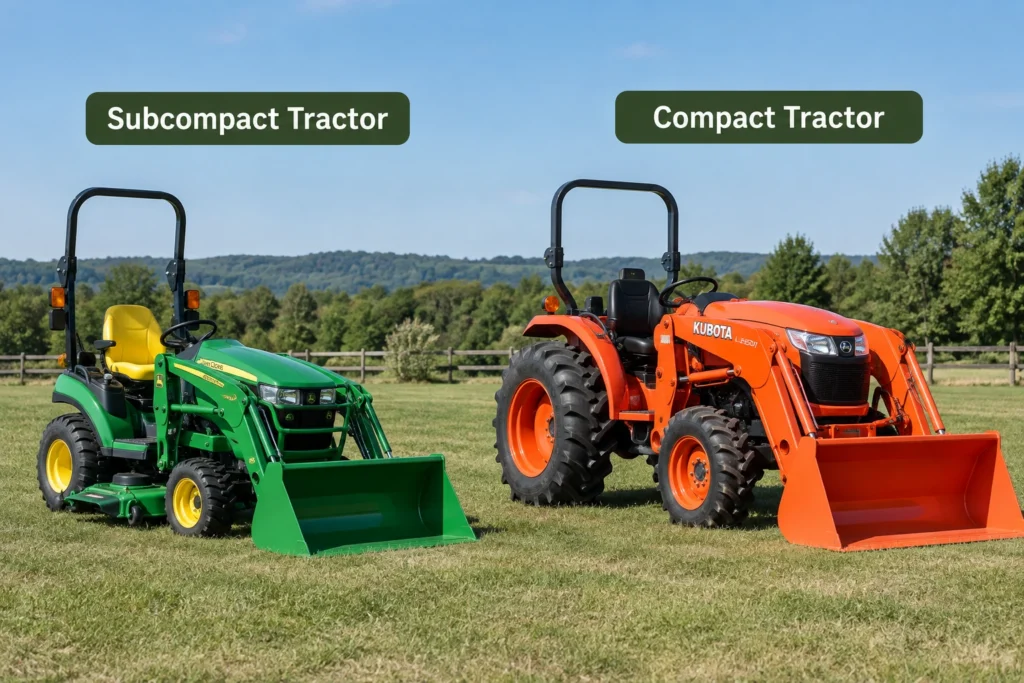
The right tractor depends on the size and weight of the implement you’re using. Most 2–50 acre farms can operate common soil preparation equipment with a compact or utility tractor, but always make sure your tractor has enough horsepower and lifting capacity for the implement you choose.
Is buying used soil preparation equipment a good idea?
Yes. Buying quality used equipment can significantly reduce startup costs for small farms. Before purchasing, inspect the frame, discs, tines, bearings, and hitch points for excessive wear or damage to avoid costly repairs later.
Can I prepare my soil without owning every tillage implement?
Absolutely. Most small farms don’t need every piece of soil preparation equipment. Start with the tools that match your acreage, soil conditions, and crops, then add specialized implements only as your operation grows.
Final Thoughts
Choosing the right soil preparation equipment for small farms is about buying the right tool for your soil type, acreage, cropping system, and budget. The goal is to reduce passes, protect soil health, and increase consistency. A thoughtful investment in small farm tillage tools and machinery provides more profits.