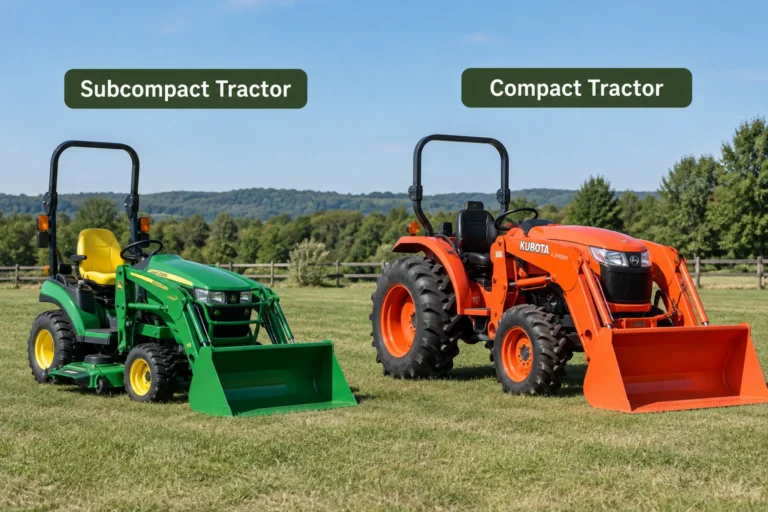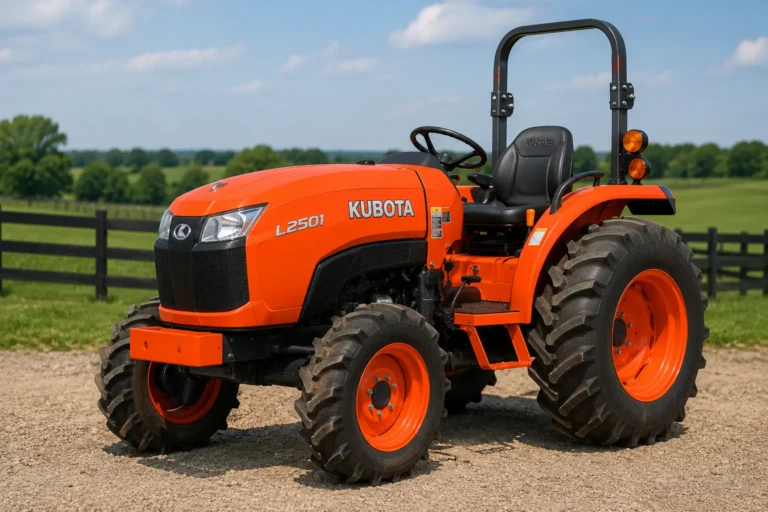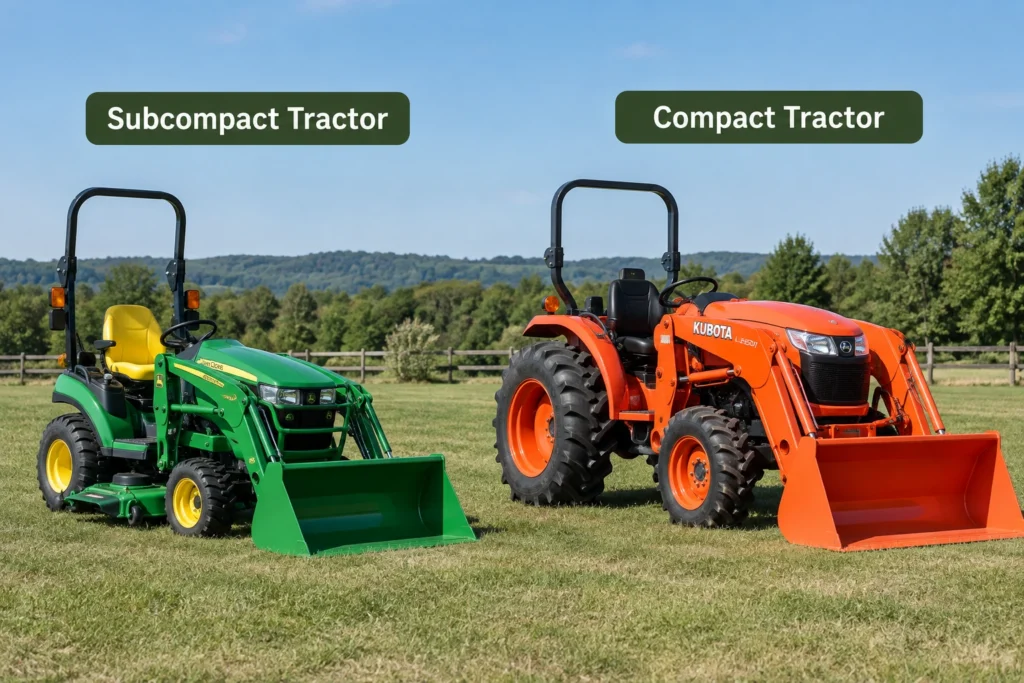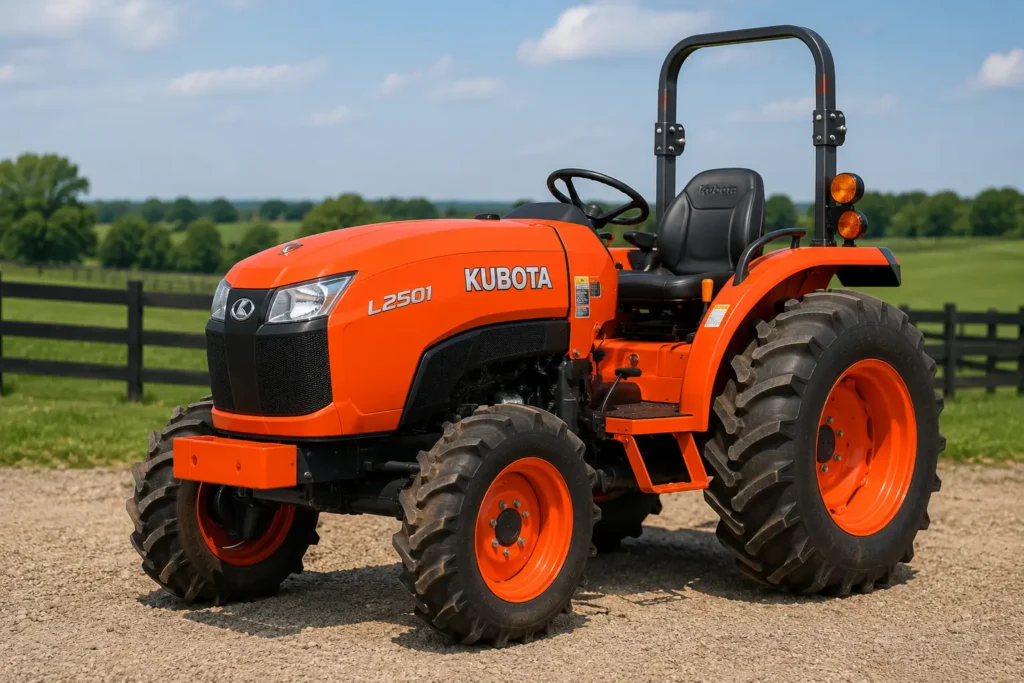


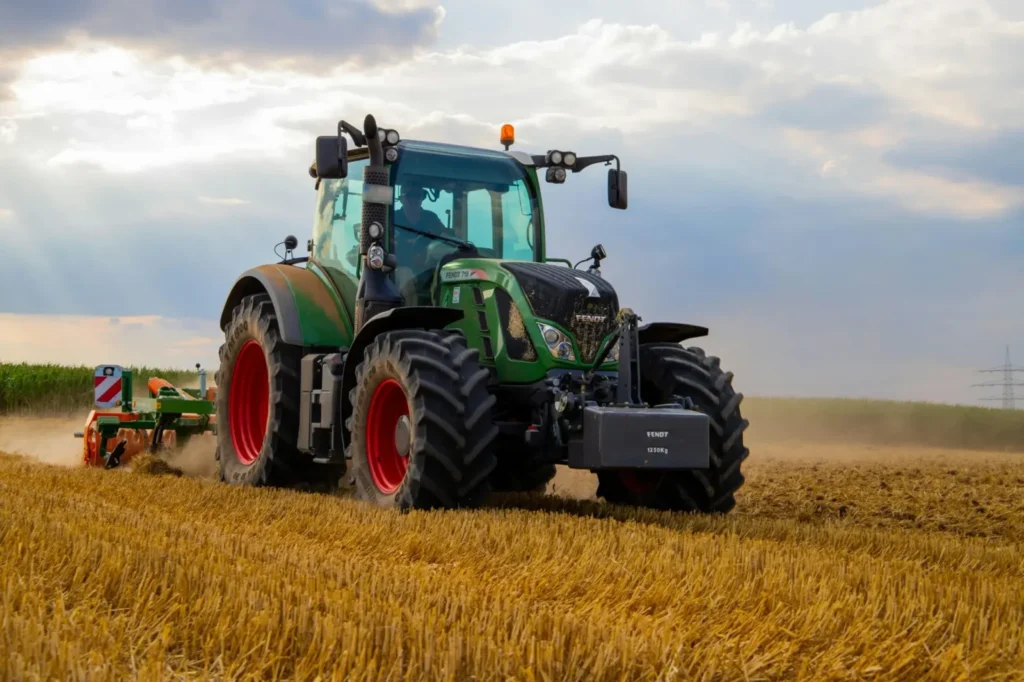
A new 75-horsepower utility tractor from a major brand will run you $60,000 to $80,000 today. Five years ago, that same spec cost $45,000. If you’re farming 50 acres of mixed vegetables or running a small cattle operation, that number doesn’t just look uncomfortable; it’s genuinely out of reach. So you do what most small farmers do: you start looking at used.
That’s how most people end up searching for used farm equipment financing. Not because they love the idea of borrowing money, but because the gap between what equipment costs and what a small farm can realistically generate in a season makes cash purchases rare. Financing fills that gap.
The problem is, financing used equipment isn’t as straightforward as financing a new machine. The rules are different. The rates are often higher. Lenders get picky about age and hours. And if you finance a tractor that breaks down three months later, you’re stuck making payments on something sitting in your shop.
This guide walks through how farm equipment financing actually works, the mechanics, the traps, and the situations where it genuinely makes sense. If you’re newer to equipment loans in general, our overview of how to finance farm equipment covers the broader landscape before you dig into the used-specific nuances here.
Quick Summary
Best for: Small farmers financing used tractors, implements, or equipment under $75,000
Watch out for: Higher rates on older equipment, lender age/hour restrictions, and repair risk after purchase
Verdict: Used equipment financing can be smart, but only if you run the numbers on the total cost of ownership first
Can You Finance Used Farm Equipment?
Yes – but not with every lender, and not for every machine. Used equipment financing is a real and well-established product. Farm Credit institutions, regional banks, credit unions, and some equipment dealers all offer it. The category exists precisely because most small farmers can’t pay cash for a $15,000 tractor, let alone a $40,000 combine attachment.
What you’ll find is that lenders treat used equipment differently from new. The older a machine, the more risk a lender sees. If the equipment breaks down or loses value faster than expected, its collateral shrinks. That caution shows up in three ways: stricter age limits, lower loan-to-value ratios, and higher interest rates.
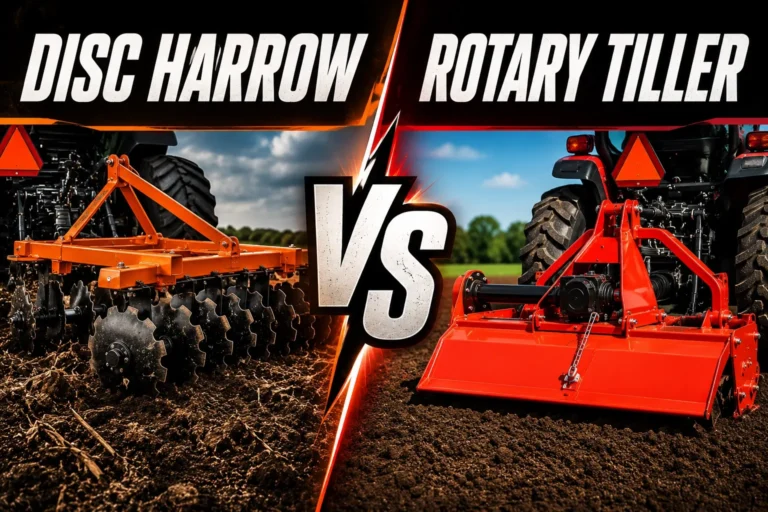
For most mainstream used equipment, a 5- to 10-year-old mid-size tractor, a quality used sprayer, and a recent model disc harrow, financing is available and relatively accessible if your credit is in decent shape. For older iron, you may need to shop harder or come in with a larger down payment.
Is Financing Used Equipment Harder Than Financing New?
Usually, yes – at least when it comes to terms. New equipment financing is often easier to get approved because the machine’s value is known, parts availability is current, and the depreciation curve is predictable. Dealers also have manufacturer-backed financing programs that can offer promotional rates (sometimes as low as 0% for qualified buyers on new machines).
With used equipment, lenders are working from estimated market value, usually based on NADA guides, auction comps, or dealer appraisal rather than a firm purchase price that anchors the loan. If the machine is appraised lower than what you’re paying, you may need to cover the cash gap.
The approval process itself isn’t necessarily harder if the machine is recent and well-documented. A 4-year-old tractor with 800 hours and a maintenance record will clear most lenders without friction. A 1975 diesel with unknown hours and a cracked manifold is a different conversation entirely.
What Are the Interest Rates on Used Farm Equipment Loans?
Expect to pay more than you would on new equipment – typically 1 to 3 percentage points higher, depending on the lender, the machine’s age, and your credit profile. In practical terms, if new equipment rates are running in the 7–9% range (which is roughly where they’ve landed post-2022), used equipment loans from banks and credit unions may come in at 9–13%.
Farm Credit, which is a lender-of-last-resort network designed specifically for agricultural borrowers, tends to be more competitive than commercial banks on farm equipment loans. If you haven’t looked at your regional Farm Credit association, that’s the first call worth making.
Dealer financing on used equipment varies widely. Some dealers work with finance companies that specialize in ag equipment and have competitive rates. Others are working with general-purpose commercial lenders that treat a tractor the same way they’d treat a used delivery van. Always ask what the APR is, not just the monthly payment, before you sign anything.
Typical Used Farm Equipment Loan Parameters (2025–2026)
|
Factor |
Typical Range |
Notes |
|
Interest Rate (APR) |
8%–14% |
Varies by credit score, machine age, and lender type |
|
Loan Term |
3–7 years |
Older machines often have a lifespan of 3–5 years |
|
Down Payment |
10%–25% |
Higher for older or high-hour equipment |
|
Loan-to-Value |
80%–90% |
Lender appraises the machine; you cover the gap |
|
Equipment Age Limit |
10–15 years (most lenders) |
Some cap at 10 years; Farm Credit is sometimes flexible |
|
Hour Restrictions |
2,000–5,000 hrs (varies) |
High-hour machines often require inspection |
What Credit Score Do You Need for Equipment Financing?
Most mainstream lenders want to see a credit score above 650 to approve a used equipment loan. For the best rates, you’re looking at 700 or higher. Below 620, you’ll find most banks and credit unions unwilling to move forward, and you’ll be limited to high-interest specialty lenders or dealer-arranged financing, which often means worse terms.
That said, credit score isn’t the only factor. Lenders, especially farm lenders, also look at your debt-to-income ratio, your farm’s revenue history (Schedule F from your taxes is often requested), and whether you have other assets or collateral. A farmer with a 640 score and three paid-off parcels of land is in a better position than a farmer with a 680 score and heavy existing debt.
If your credit is in rough shape right now, a secured loan against land or other equipment is one route. Another is buying through a Farm Credit association, which sometimes has more flexibility for agricultural borrowers than a commercial bank would. Their mandate is literally to serve farmers; they evaluate risk differently.
Will a Bank Finance a Used Tractor?
Most community banks and credit unions with an agricultural lending portfolio will finance a used tractor with conditions. The standard requirements are that the machine is not too old (most draw the line somewhere between 10 and 15 model years), that you have a reasonable down payment, and that the tractor appraises at or close to the purchase price.
Where banks get uncomfortable is with very old equipment, machines with extremely high hours, or situations where the seller is a private party with no documentation. A 1998 tractor with 4,200 hours being sold out of someone’s back field on a handshake deal is going to be a harder conversation than a 2017 machine from a licensed dealer with service records.
For a deeper look at tractor financing across different lender types, this guide on tractor financing for small farms breaks down the differences between bank loans, Farm Credit, and dealer financing programs in more detail.
Equipment Age and Hour Restrictions: The Rules Lenders Don’t Always Advertise
This is where buyers get surprised. Many lenders have internal policies about equipment age and hours that aren’t prominently published, and you may not find out until you’re already in the middle of an approval process.
A common rule of thumb: lenders are most comfortable with equipment 10 years old or newer. Between 10 and 15 years, you’ll find some lenders still willing but with stricter terms. Beyond 15 years, you’re increasingly looking at cash transactions or specialty financing, and at that age, the question of whether you should be financing at all gets more relevant.
Hours matter as much as age for tractors. A 12-year-old machine with 1,200 hours is in a very different position than a 12-year-old machine with 6,000 hours. Most lenders cap financed tractors somewhere in the 2,000–4,000-hour range before requiring an independent inspection or simply declining. High-hour machines represent high repair risk, and lenders know it.
For implements, disc harrows, seeders, and sprayers. Lenders are generally less hour-focused (those machines don’t have hour meters the same way) but will still look at age and condition. A heavily rusted implement with bent frame components isn’t going to secure a loan.
Dealer Financing vs. Bank Loans for Used Equipment
The main appeal of dealer financing is convenience. You find the machine, negotiate a price, and the dealer processes the paperwork in-house. For buyers with decent credit, dealer-arranged financing can close in a day or two.
The downside is that dealers aren’t always working with the most competitive lenders. Some used equipment dealers work with commercial finance companies that charge higher rates than a bank or Farm Credit would for the same transaction. The monthly payment might be quoted to you without a clear APR, making comparison difficult.
A practical approach: get a pre-approval from your bank or a Farm Credit association before you go shopping. Know what rate and terms you qualify for. Then, if the dealer offers financing, compare it to your pre-approval. If the dealer beats it, great. If not, you have a better option ready.
Private seller transactions are where financing gets complicated. Most banks won’t process a loan for a private party sale the same way they handle a dealer sale, and some won’t do it at all without a formal bill of sale, proof of title, and sometimes a third-party appraisal. It’s not impossible, but plan for extra steps and extra time.
Used vs. New Equipment: Is Buying Used Actually Smarter Financially?
Sometimes. Not always. The honest answer depends on your specific situation, the specific machine, and what the used market is doing at the time you’re buying.
The financial case for used equipment has three parts. First, depreciation: new equipment loses a significant portion of its value in the first three to five years. Buying a machine that’s already absorbed that depreciation hit means you’re not paying a premium for brand-new. Second, price: a well-maintained 6-year-old tractor with 800 hours can cost 30–50% less than its new equivalent, depending on brand and model. Third, simplicity: older machines are often simpler mechanically, which makes owner-maintenance and local repair more feasible.
The case against used equipment is also real. Repair costs are unpredictable. A machine that looks solid at purchase can develop major problems within a season, worn hydraulic seals, a failing transmission, injector problems. On a new machine, those are warranty problems. On a used machine, they’re your problems.
Farmers on TractorByNet and similar communities regularly point out that the true cost of used equipment isn’t just the purchase price, it’s purchase price plus what you spend keeping it running. A $15,000 tractor that costs you $4,000 in repairs in the first two years is only a bargain compared to the $50,000 new alternative if you actually needed a $50,000 tractor. If a $22,000 lightly used machine would have done the job just as well, the math looks different.
When the used market gets hot, as it did during 2021–2023, when supply chain disruptions drove up both new and used equipment prices, the discount on used narrows significantly. In those conditions, the financial case for used gets weaker. It’s worth checking auction comps before assuming used is the obvious choice.
The Real Risk: Financing a Machine That Breaks Down
This is the conversation that doesn’t happen enough before a purchase, and it shows up constantly in farming forums after the fact.
When you finance equipment, you’re committing to monthly payments regardless of whether the machine is working. If the transmission goes six months in, you’re still making payments while the tractor sits in the shop waiting on parts. Your crops don’t pause for that.
The risk is proportional to the machine’s age and hours. A 4-year-old tractor with under 500 hours is unlikely to fail catastrophically in year one. A 15-year-old machine with 3,500 hours on a hard farm history is a calculated gamble. Neither is inherently wrong, but they require different due diligence.
Before financing any used equipment, the minimum steps are: an independent pre-purchase inspection by a mechanic who works on that brand, a review of service and maintenance records if available, and an honest assessment of parts availability. Older machines, especially anything from brands that have been acquired or discontinued, can have long parts lead times that turn a simple repair into a two-month wait.
This is also why the repair vs. replace matters so much when you’re looking at older used equipment. If a machine already needs $3,000 in repairs to be field-ready, that’s real money that should factor into your offer price, not a separate problem you deal with after financing.
What Down Payment Should You Expect on Used Equipment?
Plan for 10–20% down on used equipment in good condition from a reputable seller. For older machines or high-hour equipment, lenders may push that to 25% or more. If the machine appraises lower than your purchase price, which can happen when sellers are asking top dollar for aging iron, you’ll need to cover the difference in cash on top of the down payment.
A larger down payment does several things: it reduces your monthly payment, it lowers your total interest cost over the life of the loan, and it gives you some buffer against depreciation. If the machine loses value faster than you’re paying down the loan, you can end up underwater, owing more than it’s worth, and that’s a genuinely bad position if you need to sell or trade up.
If you’re short on cash for a down payment, FSA (Farm Service Agency) loans are worth looking into. The FSA Guaranteed Farm Loan program can back loans from commercial lenders for farmers who can’t qualify for conventional financing, and it sometimes allows more flexibility on down payment requirements.
Common Mistakes Buyers Make When Financing Used Equipment
Farmers who’ve been through a bad used equipment purchase tend to identify the same patterns after the fact. Here are the ones that come up most often.
- Focusing on the monthly payment instead of the total cost. A lower payment spread over seven years on a high-rate loan can cost significantly more than a higher payment on a shorter term. Always calculate total interest paid, not just what hits your account every month.
- Skipping the pre-purchase inspection. A $300 mechanic’s inspection is cheap insurance against a $5,000 surprise. The only reason to skip it is if you genuinely know the machine and its history.
- Not checking parts availability before buying. For older or obscure equipment, parts can be hard to source, expensive, or simply unavailable domestically. A quick call to a dealer or parts distributor before you buy can save significant frustration later.
- Overbidding in a hot used market. When supply is tight, auction prices and dealer asking prices for used equipment can exceed what makes financial sense. A tractor that sold for $18,000 in 2019 is not automatically worth $28,000 in 2024 just because inventory is low.
- Financing more than you need. If you need a 50-hp tractor for your operation, financing a 90-hp machine because it was available and you qualified for the loan amount is a pattern that leads to overspending. The tractors for small farms guide walks through matching tractor size to actual operation needs.
- Ignoring the loan’s balloon payment or prepayment terms. Some equipment loans, especially from dealer-arranged finance companies, have balloon payments at the end or prepayment penalties that catch buyers off guard. Read the full loan agreement before signing.
When Used Equipment Financing Actually Makes Sense
Here’s a situation where the math works clearly: you need a specific implement that your operation requires to function, a disc harrow, a grain drill, a sprayer, and the cost of that implement new is $25,000, while used examples in good condition are consistently available in the $12,000–$15,000 range. You have a 15% down payment, your credit is around 680, and you’ve found a 7-year-old machine with 400 hours and a service history from a licensed dealer.
That’s a reasonable used equipment financing situation. The depreciation hit has already happened. The machine has enough life left to serve you well. The price gap versus new is real and meaningful. And the monthly payment fits your cash flow.
Where it gets harder to justify: a 20-year-old tractor with unknown hours, no documentation, being purchased from a private seller, on a high-rate loan with a 7-year term, the machine might work out fine, plenty of old iron runs well. But the financial structure doesn’t leave you much room if it doesn’t.
The honest test is whether you’d be comfortable with the payment if the machine needed $3,000 to $5,000 in repairs in year one. If yes, and if you have even a small equipment repair reserve, the risk is manageable. If that scenario would break your cash flow, you may need a newer machine, a smaller loan, or more time saving up.
How Small Farmers Should Actually Evaluate Affordability
The right way to evaluate a used equipment purchase isn’t “can I afford the monthly payment?” It’s “Can I afford the total cost of ownership over the time I plan to use this machine?”
Total cost of ownership for used equipment includes: purchase price minus down payment (financed amount), interest paid over the loan term, expected maintenance and repairs, insurance, and storage or shelter costs. For older machines, a realistic repair reserve, some farmers budget 2–5% of the machine’s value per year, which is not optional.
Compare that total to the value the machine generates for your operation. A tractor that gets used 100 hours a year has a very different cost-per-hour profile than one you’re running 400 hours a year. High-use applications justify newer, better-supported equipment. Low-use applications can often tolerate more repair risk on older iron.
One more thing: don’t let the excitement of a deal override the analysis. Used equipment buying can have a deal-rush feeling, good machine, right price, competing interest from other buyers. That pressure is real, but it’s also how people end up financing equipment they haven’t properly evaluated.
Frequently Asked Questions
Can you get a loan for used farm equipment?
Yes. Banks, credit unions, Farm Credit associations, and some dealers all offer loans for used farm equipment. Eligibility depends on the machine’s age and condition, your credit score, and your ability to document income. Equipment older than 10–15 years may be harder to finance through mainstream lenders.
What credit score do you need for equipment financing?
Most lenders want 650 or above for used equipment financing. To get competitive rates, aim for 700 or higher. Below 620, your options narrow to specialty lenders, FSA-backed loans, or dealer-arranged financing, all of which tend to carry higher rates.
Will a bank finance a used tractor?
Most community banks with agricultural lending departments will finance a used tractor if it’s within their age guidelines (typically 10–15 years old), the purchase price is supported by the appraisal, and you meet their credit requirements. Private party sales may require additional documentation and sometimes a formal appraisal.
Are interest rates higher on used equipment loans?
Generally, yes, typically 1 to 3 percentage points higher than comparable new equipment loans. The rate depends on the lender, machine age, your credit score, and the loan term. Farm Credit associations tend to offer more competitive rates than general commercial banks for agricultural borrowers.
What’s the maximum age for a financed tractor?
It varies by lender, but most draw the line at 10 to 15 model years. Some Farm Credit associations have more flexibility, especially if the machine is well-maintained and appraised at a strong value. High-hour machines may face additional restrictions even if they fall within the age limit.
Is it harder to finance equipment from a private seller?
Yes. Most lenders require a formal bill of sale, proof of title, and sometimes an independent appraisal for private party transactions. Some banks won’t process private party equipment loans at all. Dealer purchases go more smoothly because the paperwork chain is cleaner.
What happens if the equipment breaks down after I finance it?
You’re still responsible for the loan payments regardless of whether the machine is working. This is why pre-purchase inspections and a realistic repair reserve matter. Some buyers add a credit life or disability insurance rider to their equipment loan, but that covers the loan if you can’t pay the repair bills themselves.
Final Thought
The cheapest tractor is rarely the most affordable one. That distinction matters. A $12,000 machine that needs $4,000 in repairs and carries a 12% interest rate over five years will cost you more in real dollars than a $18,000 machine in solid shape at 9% over four years. The sticker price and the total cost of ownership are different numbers.
Used equipment financing makes sense when the gap between used and new is real and substantial, the machine is in good condition with documented history, your credit qualifies you for reasonable rates, and your cash flow can absorb some repair risk. When those conditions line up, you can save meaningful money and keep capital working elsewhere in your operation.
When they don’t line up when the machine is too old, too high-hours, or too unknown, financing used equipment is a gamble. Sometimes it works out. Sometimes it becomes the most expensive tractor you’ve ever owned, one monthly payment at a time.
Do the full math before you sign. Get an inspection. Know your lender’s terms. And be honest about what your operation can actually support if something goes wrong.