

You’ve probably already done the math in your head. The tractor you actually need costs more than you have sitting in an account right now, and tractor financing is how most small farmers bridge that gap. That’s not a bad thing by default. What gets farmers into trouble isn’t financing, it’s financing the wrong tractor, on the wrong terms, without fully running the numbers first.
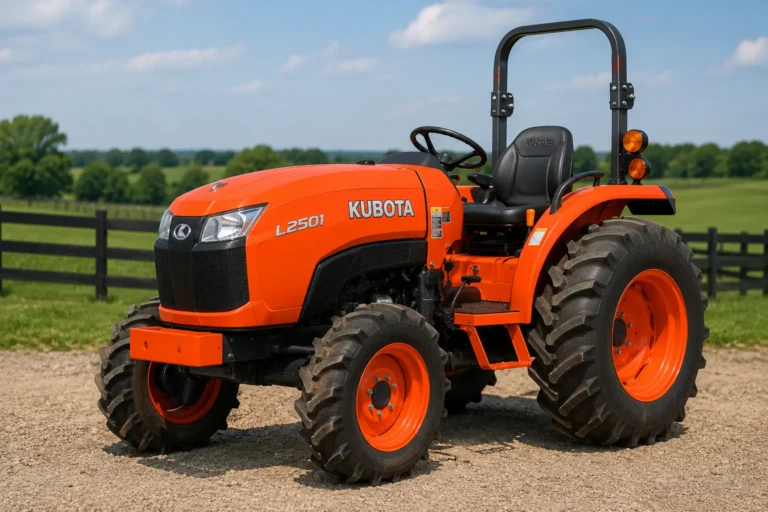
Compact tractor prices have climbed steadily over the past several years. A capable 25–35 hp machine that cost $18,000 in 2018 now often runs $25,000 or more with basic attachments. For a beginner farmer or homesteader on 5–20 acres, that’s a real number. Financing makes the purchase possible. But whether it makes the purchase smart depends entirely on the decisions you make before you sign.
This guide walks you through how tractor financing actually works, what it costs, where to get it, and just as importantly, when to walk away from a deal that looks good on paper but breaks your farm’s cash flow in practice.
Quick Summary
Best for: Small farmers and homesteaders researching how tractor financing works before signing anything.
Watch out for: Low monthly payments that hide high total costs and attachment expenses that aren’t in the loan.
Verdict: Financing a tractor can be a smart move if the numbers actually work for your farm. If they don’t, a cheaper used tractor bought outright beats a shiny new one that strains your cash flow every month.
How Tractor Financing Works
At its core, tractor financing works like most equipment loans: a lender fronts the purchase price, you repay the principal plus interest over a set term, and the tractor typically serves as collateral until the loan is paid off.
Here’s what that looks like in practice:
- Loan amount: The purchase price minus any down payment. Most lenders want 10–20% down on a new tractor, though promotional deals sometimes allow zero down.
- Interest rate (APR): The annual percentage rate applied to your loan balance.
- Loan term: The repayment period, typically 24–84 months, depending on the lender and loan size.
- Monthly payment: Calculated from the loan amount, rate, and term. A longer term lowers the monthly payment but increases the total interest paid.
We spoke with a small vegetable farmer in western Pennsylvania who financed a $22,000 compact tractor on a 60-month term at 7.9% APR. His monthly payment was $444. By the time he made the last payment, he’d paid roughly $4,600 in interest, about 21% more than the sticker. He said it was worth it for his operation. But he also knew that number going in.
How to Finance a Tractor: Your Four Main Options
Knowing how to finance a tractor means understanding where the money actually comes from because the source affects the rate, the flexibility, and the fine print.
1. Dealer Financing
Most tractor dealerships partner with manufacturer-affiliated lenders, CNH Industrial Capital for Case IH and New Holland, John Deere Financial for Deere equipment, and Kubota Credit for Kubota. Dealer financing is the most common route for first-time buyers because it’s convenient: you pick the tractor, sign the paperwork, and drive home the same day.
The upside is occasional promotional offers, including 0% APR deals on qualifying models. The downside is that you’re often comparing one financing option against nothing, which isn’t really a comparison. Always know the rate from at least one other lender before you sit down at the dealer’s finance desk.
2. Traditional Bank Loans
Your existing bank or regional agricultural bank can offer equipment loans, sometimes at competitive rates, especially if you have a long relationship and solid credit. Banks are more likely to finance used equipment than manufacturer lenders and aren’t limited to specific brands.
The trade-off: more paperwork, longer approval timelines, and less flexibility on structure. Banks also tend to require stronger credit profiles for equipment financing than for secured personal loans.
3. Credit Unions
Agricultural credit unions and farm-focused lenders like Farm Credit are worth calling before you visit a dealership. Their rates are often lower than those a manufacturer lender offers outside a promotional period, and they’re specifically designed to serve rural borrowers. Farm Credit, in particular, has programs designed for beginning farmers that include lower down payment requirements and flexible repayment structures.
4. Equipment Finance Companies
Specialty equipment lenders work outside the dealership and bank system. They can be useful if your credit situation doesn’t fit the standard bank mold: lower credit score, less credit history, or a newer farm operation without established income documentation. The trade-off is typically a higher interest rate and tighter loan terms.
How Hard Is It to Get Tractor Financing?
Tractor financing is generally accessible for most buyers with a decent credit history and some income to document. It’s not like applying for a mortgage; the approval process is faster, and the requirements are less extensive.
Lenders evaluate several factors:
- Credit score: The single biggest factor. Details below.
- Income documentation: Pay stubs, tax returns, or farm income records, depending on the lender. Self-employed farmers may need two years of tax history.
- Down payment: A larger down payment reduces lender risk and can improve approval odds or rate.
- Existing debt: Your debt-to-income ratio matters. A lender will want to see that the new payment fits comfortably.
- Collateral: The tractor itself usually serves as collateral.
For most buyers with a 650+ credit score and documented income, approval isn’t the hard part. The hard part is making sure the terms you’re approved for actually make sense for your farm.
What Credit Score Do You Need to Finance a Tractor?
Credit score requirements vary by lender, but here’s a realistic breakdown for 2026:
|
Credit Range |
Score |
Typical Outcome |
|
Excellent |
740+ |
Best available rates; strong likelihood of qualifying for promotional offers |
|
Good |
680–739 |
Solid approval odds; competitive rates; may qualify for some promotional offers |
|
Fair |
620–679 |
Approval likely, but at higher rates; may require a larger down payment |
|
Poor |
Below 620 |
Approval harder; specialty lenders or co-signer may be needed; expect higher rates |
Manufacturer-affiliated lenders sometimes have their own internal scoring models that weigh equipment-specific factors differently than a traditional bank. You may be approved through a dealer lender at a score that a bank would decline. If your credit is on the lower end, focus on bringing a solid down payment and clean income documentation before applying.
Typical Tractor Financing Rates in 2026
Interest rates in the agricultural equipment space have stayed elevated compared to the near-zero-rate era of 2020–2021. Here’s a realistic picture for 2026:
- Excellent credit (740+): Roughly 5.9% to 7.5% APR on standard loans for new equipment
- Good credit (680–739): Roughly 7.5% to 10% APR
- Fair credit (620–679): 10% to 15% APR is common
- Promotional 0% offers: Available on select new models, but require qualification
Rates also vary based on loan term, down payment, and lender. A shorter loan term often earns a lower rate. Used tractor financing typically runs 1–3 percentage points higher than new equipment rates, especially for older machines or borrowers with weaker credit profiles.
How Long Can You Finance a Tractor?
Loan term length is one of the most important and most overlooked parts of how to finance a tractor well. Here’s the range you’ll typically see:
- 24–36 months: Short-term loans. Higher monthly payments, lowest total interest. Good fit if your cash flow is strong and you want to own the machine quickly.
- 48–60 months: The most common range for compact and utility tractor purchases. Balances monthly payment with manageable total interest.
- 72–84 months: Available on larger purchases through some lenders. Lowers the monthly payment significantly, but the total interest cost can add up to thousands more.
The math matters here. On a $25,000 tractor financed at 8% APR:
|
Loan Term |
Monthly Payment |
Total Interest Paid |
|
48 months |
~$610/month |
~$4,300 |
|
60 months |
~$507/month |
~$5,400 |
|
84 months |
~$389/month |
~$7,700 |
The 84-month option looks attractive at $389 a month. But you’ll pay roughly $3,400 more in interest than the 60-month option, and you’ll still be making payments on a tractor that’s seven years older by the time you own it outright. Before agreeing to a long loan term, it helps to calculate how much extra interest you’re actually paying over the life of the tractor loan.
Rule of thumb: Borrow for as short a period as your monthly budget can handle.
New vs. Used Tractor Financing
Both paths work. The decision depends on your budget, credit situation, and how much mechanical risk you’re willing to take on.
Financing a New Tractor
New tractors come with manufacturer warranties (typically 2–3 years), lower financing rates, and access to promotional APR offers. You know the maintenance history because there isn’t one yet. The trade-off is that a new compact tractor costs substantially more than a comparable used model with a few hundred hours on it.
Financing a Used Tractor
Used tractors are where a lot of small farmers find real value, especially in the 20–40 hp range, where the market is deep. A well-maintained used machine from a reliable manufacturer can last thousands of hours with regular service.
The financing challenges: higher rates (typically), shorter loan terms offered, and less lender enthusiasm for older machines. Many lenders won’t finance equipment over 10–15 years old, or will only do so at significantly higher rates.
If you’re buying used: Get a pre-purchase inspection from an independent mechanic, not the dealer’s shop. Budget for any deferred maintenance before your first season. A used tractor priced $8,000 below a new one that needs $3,000 in repairs isn’t the deal it looks like.
What Tractors Have 0% Financing?
Zero percent financing shows up regularly in manufacturer promotional campaigns, especially in spring and fall buying seasons. Kubota, John Deere, New Holland, Mahindra, and others run 0% APR offers on qualifying compact and utility models throughout the year.
What you need to know about 0% deals:
- What they require: Strong credit (often 700+), a qualifying model (usually current-year inventory), and sometimes a minimum down payment.
- The hidden trade-off: Some dealers reduce or eliminate their standard cash discount when you take the promotional financing. Do the math both ways before you commit.
- When 0% is genuinely better: If you qualify and no cash discount is being removed, 0% financing is almost always the better option. Just make sure the required monthly payment fits your budget.
Can You Actually Afford This Tractor?
This is the section most financing guides skip. It’s also the most important one.
Match Horsepower to Acreage, Not to Ambition
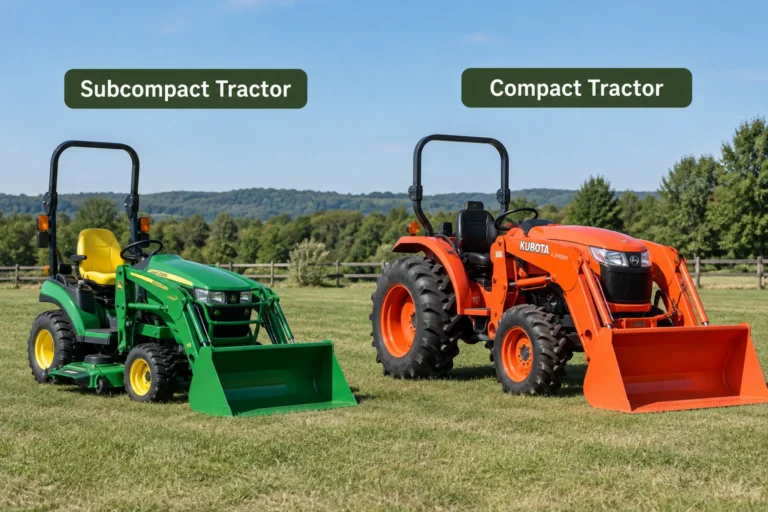
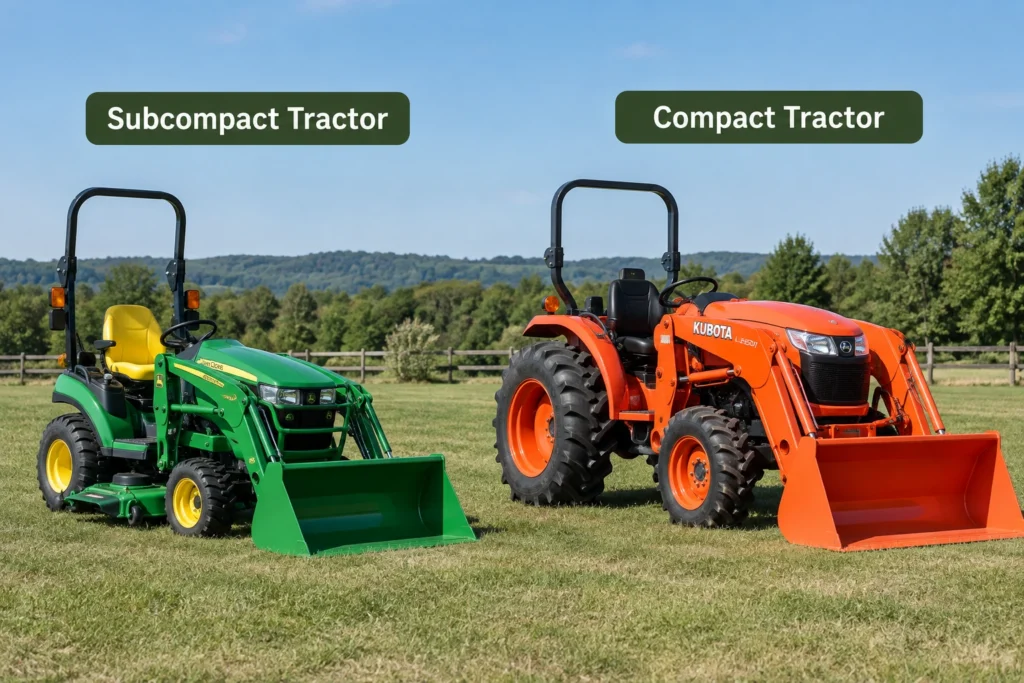
The most common financing mistake small farmers make is buying more tractors than their land actually needs. A 50 hp utility tractor sounds appealing. But if you’re managing 8 acres of vegetable production, a 25–30 hp compact tractor handles almost everything you’ll throw at it for significantly less money.
Before you shop, figure out the largest implement you realistically plan to run and size the tractor to that, not to plans that may or may not materialize.
Account for Attachment Costs
The tractor is just the starting point. Most small farm operations need:
- A loader (front-end loader): $3,000–$6,000+
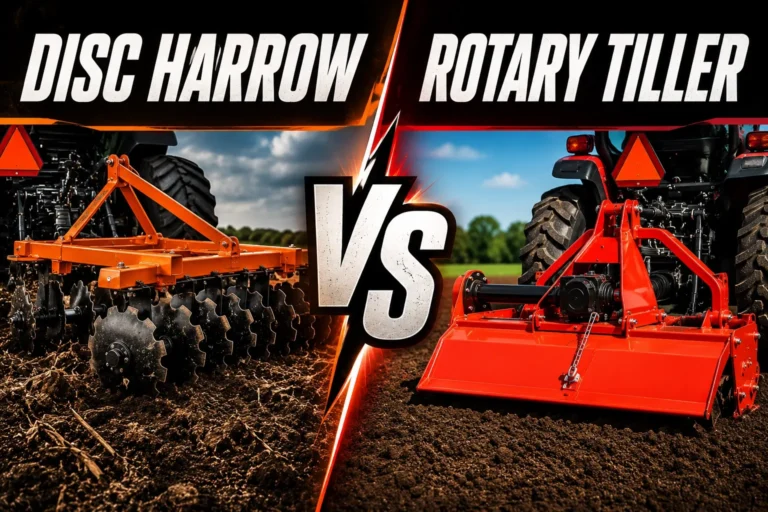
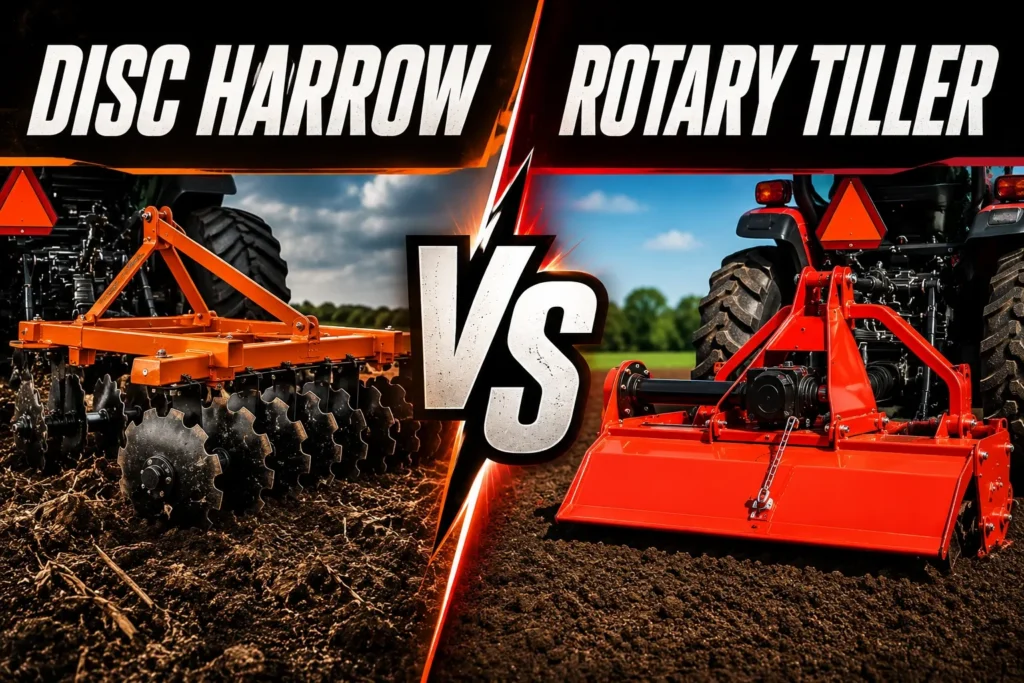
- A tiller or rotary cutter: $1,500–$4,000+
- A box blade or rear blade: $800–$2,000+
Attachments are often financed separately or paid out of pocket, but they’re not free. A $22,000 tractor with $7,000 in necessary attachments is really a $29,000 purchase. If your financing decision was based on the tractor price alone, you may find yourself short before the first season ends.
Total Ownership Cost: What the Monthly Payment Doesn’t Cover
Your loan payment is one line item. Here’s what else shows up:
- Fuel: A 35 hp tractor running 150 hours a year at 1.5 gallons per hour = 225 gallons of diesel. At current prices, that’s $700–$900/year.
- Maintenance: Oil changes, filters, grease, and hydraulic fluid. Budget $300–$600/year minimum on a properly maintained machine.
- Tires: A set of rear ag tires for a compact tractor runs $800–$1,500. They last 10–15 years with normal use, but they’re not free.
- Insurance: Farm equipment insurance costs vary widely by state, but $150–$400/year for a compact tractor is a reasonable estimate.
- Repairs: Even well-maintained tractors break. A single hydraulic hose failure can run $200–$400 in parts and labor. Budget a small repair fund every year.
If your loan payment is $450/month and total ownership costs run another $120–$150/month, your real monthly cost to operate that tractor is closer to $570–$600. That number needs to fit your operation.
For more on managing the full cost picture of farm equipment decisions, the guide to farm equipment financing for small farmers covers several practical approaches worth reading before you finalize any purchase.
Common Tractor Financing Mistakes
1. Financing Too Much Tractor
A tractor that’s 30% more horsepower than you need isn’t 30% more useful; it’s just 30% more expensive. Match the machine to your actual operation.
2. Focusing Only on the Monthly Payment
Monthly payments are a sales tool. A low monthly payment on a long loan term can still add up to thousands in unnecessary interest. Always calculate total cost over the life of the loan, not just what hits your account each month.
3. Skipping the Down Payment
Going in with zero down means you’re immediately underwater on the loan; you owe more than the machine is worth. If anything goes wrong in year one, you won’t get enough from a sale to cover what you owe.
4. Ignoring Maintenance Costs Because the Machine Is New
New tractors still need regular maintenance: oil changes every 50–100 hours, grease fittings serviced regularly, and filter replacements. Neglecting these in the early years voids warranties and shortens the machine’s life.
5. Stretching to 84 Months to Afford a Tractor That’s Already Too Expensive
If the only way to make the payment fit is to stretch to 84 months, the tractor is probably priced beyond what your operation supports right now. A less expensive machine or a used tractor bought outright may serve you better until your farm’s cash flow grows.
When Tractor Financing Makes Sense
Financing a tractor is a reasonable decision when:
- The machine will generate or save money that exceeds its cost: A market gardener who can prep ground faster, plant more beds, and take on more production may genuinely be better off financing.
- The alternative is renting or hiring at a higher total cost: If you’re currently paying $400/month for custom tractor work, a loan payment below that number is a legitimate improvement.
- Your cash flow can carry the full cost of ownership, not just the payment: Do the total cost math first. If the numbers work with real cash flow, not optimistic projections, financing is a solid option.
- A 0% promotional offer is genuinely free money: If you qualify, the cash discount isn’t being removed, and the term fits your budget, take it.
Financing doesn’t make sense when the purchase is driven by what you want rather than what your operation actually needs, or when it would strain your cash flow in a bad harvest year.
Frequently Asked Questions
How hard is it to get tractor financing?
For buyers with a 650+ credit score and documented income, tractor financing approval is generally straightforward. Manufacturer-affiliated lenders and Farm Credit institutions tend to be more accessible than traditional banks for agricultural borrowers, especially for newer farmers with limited business credit history.
What credit score do I need to finance a tractor?
A score of 680 or above puts you in solid territory for standard loan approval at competitive rates. Scores below 620 will make approval harder and rates higher. A larger down payment can help offset a lower score. 0% promotional offers typically require 700 or above.
Which is the best finance company for tractors?
There’s no single answer; it depends on what you’re buying and your credit profile. Farm Credit works well for established farm operations. Manufacturer lenders (John Deere Financial, Kubota Credit, CNH Capital) are worth exploring for promotional rate periods. Credit unions often beat both on standard rates. Get quotes from at least two sources before deciding.
What is the typical finance rate for tractors in 2026?
For buyers with good credit (680+) on new equipment, rates generally run 5.9%–10% APR, depending on term and lender. Used equipment financing runs at a higher often 8%–14% APR. 0% promotional offers are available on qualifying new models, but come with eligibility requirements.
What tractors have zero percent financing?
Kubota, John Deere, New Holland, Mahindra, and other major brands run 0% APR promotions on qualifying compact and utility models, typically during spring and fall buying seasons. Availability changes frequently. Check the manufacturer’s website or ask your local dealer about current offers. Confirm whether taking the promotional rate removes any cash discount before committing.
Can I really get a 0% interest loan on a tractor?
Yes, if you qualify. These are genuine offers, not bait-and-switch. But read the fine print. Promotional 0% APR typically requires strong credit, a specific qualifying model, and sometimes a minimum down payment. Some dealers also reduce their standard discount when promotional financing is used. Compare the total out-of-pocket cost both ways before you sign.
How long can you finance a tractor?
Typical loan terms run from 24 to 84 months (2–7 years). The most common range for compact and utility tractors is 48–60 months. Longer terms are available, but they significantly increase the total interest paid. A 7-year loan at 8% APR on a $25,000 tractor costs roughly $3,400 more in interest than a 5-year loan on the same terms.
Final Thoughts
Tractor financing isn’t complicated, but making a smart financing decision takes more thought than most buyers give it before they walk into a dealership.
The tractor that makes sense for your farm is the one your operation actually needs, priced within what your cash flow can realistically carry, including loan payment, fuel, maintenance, repairs, and attachments included. That might be a new compact tractor on a 0% promotional offer. It might be a solid used machine bought outright. It might be a mid-range utility tractor financed over 48 months at a rate you’ve compared across three lenders.
What it shouldn’t be is the tractor you can barely afford on 84 months because the monthly payment looked manageable in the showroom.