

You don’t need forty acres and a tractor to start raising livestock. Some of the most useful, most beginner-friendly farm animals thrive on a quarter-acre lot, a suburban backyard, or a small homestead with a modest fenced pen.
The mistake most new farmers make isn’t choosing the wrong species outright; it’s choosing based on what looks charming in a magazine instead of what actually fits their space, budget, and daily schedule. A family with a full-time job and a small yard who brings home a dairy goat because “goats are cute” is setting themselves up for a rough first year. The same family with two rabbit hutches or a small coop of hens would likely thrive.
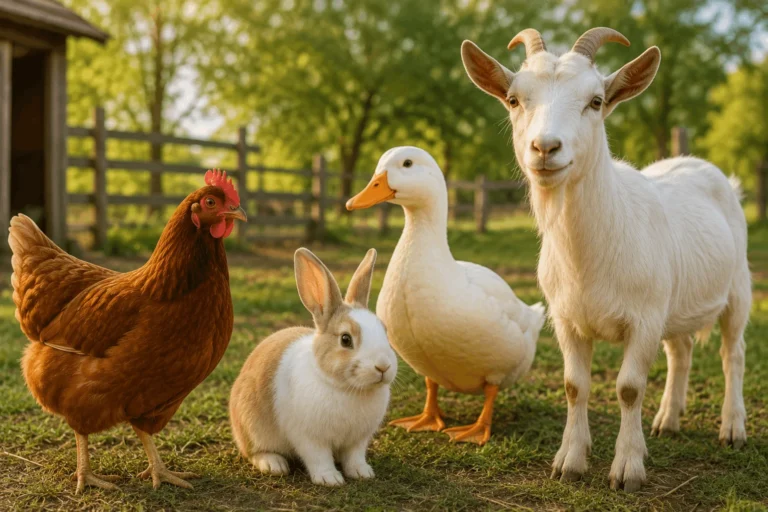
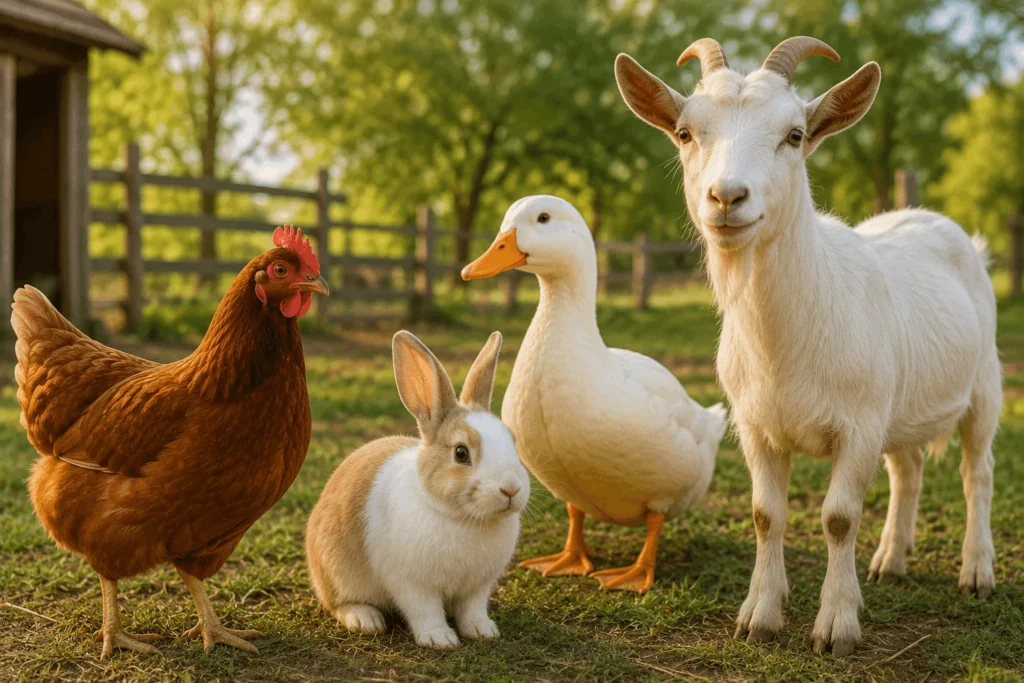
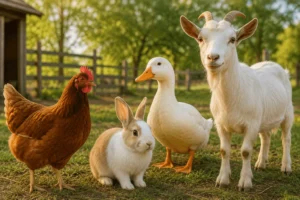
This guide walks through the best farm animals for beginners chickens, rabbits, ducks, bees, and goats, and, more importantly, helps you figure out which one actually fits your situation. You’ll get real space requirements, feed and shelter needs, startup costs, and the specific mistakes beginners make with each animal, so you can start raising livestock with your eyes open instead of learning everything the hard way.
If you haven’t yet nailed down what your land and goals can support more broadly, our guide to choosing the right farm for your land is worth reading before you commit to a specific animal; it covers how acreage, soil, and time budget interact, which applies just as much to livestock as it does to crops.
Best Farm Animals for Beginners: Quick Comparison
Here’s the short version. Each of these animals is genuinely beginner-friendly, but they’re not interchangeable; space, noise tolerance, and daily time commitment vary a lot between them.
| Animal | Difficulty | Space Needed | Startup Cost | Main Benefit |
| Chickens | Easy | 4 sq ft/bird coop + 8-10 sq ft/bird run | $400–$1000 for 4-6 hens | Fresh eggs, pest control |
| Rabbits | Easy | 0.75 sq ft per lb of body weight, per hutch | $150-$350 for a breeding pair | Fast, efficient meat production |
| Ducks | Easy-Moderate | 4-6 sq ft/bird coop + splash water daily | $350–$1000 for 4-6 ducks | Eggs, slug/pest control, cold hardiness |
| Bees | Moderate | One hive footprint (4 sq ft) + forage range | $400-$1000 for one hive, year one | Honey, pollination for your whole garden |
| Goats | Moderate-High | 200 sq ft outdoor + 15-20 sq ft shelter per goat | $600–$2000for a starter pair | Milk, brush clearing, companionship |
Chickens: The Easiest Way to Start Raising Livestock
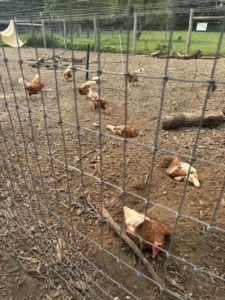
If you ask ten small farmers what the top easiest animals to take care of are, most will say chickens first, and they’re right. Chickens tolerate beginner mistakes better than almost any other livestock; they’re cheap to house, and you get a tangible payoff (fresh eggs) within about five to six months of bringing home chicks.
Who Should Choose Chickens
Best for: Anyone with a small yard, HOA-friendly setup, or beginner homestead who wants a fast, visible payoff fresh eggs within about five months.
Not for: Households with strict noise ordinances against roosters, or anyone unwilling to predator-proof a coop every single night, no exceptions.
Space, Feed, and Shelter
- Coop space: Plan on 3 to 4 square feet of indoor coop space per standard-size hen. Bantam breeds can get by on roughly half that.
- Run space: Give each bird 8 to 10 square feet of outdoor run space if they aren’t free-ranging all day. Skimping here is the single most common cause of feather-pecking and stress in a backyard flock.
- Feed: A laying hen eats roughly a quarter-pound of layer feed per day. For a flock of four to six hens, budget $25 to $35 a month for quality feed, plus grit and oyster shell for calcium.
- Shelter: A predator-proof coop with a secure latch, solid floor or buried hardware cloth, and good ventilation matters more than square footage. Raccoons and dogs are the leading cause of beginner flock losses, not disease.
Daily Care and Startup Costs
Daily care takes 10 to 15 minutes: let the flock out in the morning, check food and water, collect eggs, and lock the coop at dusk. A starter setup a small coop, feeder, waterer, and four to six pullets typically runs $400 to $1000, and most of that is a one-time cost. After that, you’re mainly paying for feed.
What Beginners Usually Get Wrong
- Buying a coop sized for the flock they want in year one, then adding birds until it’s overcrowded – build or buy for your five-year flock size, not your starter flock.
- Forgetting that hens slow down egg production significantly after age two or three; a flock that looked productive at month six may lay half as often by year three.
- Assuming a fully-fenced yard is predator-proof. Most predator losses happen because of an unlatched door at dusk, not a fence failure.
Chickens: The Verdict
Start with chickens if you want the fastest, lowest-risk entry point into raising livestock and a daily reason to walk out to the backyard. Skip them only if local rules or a genuinely predator-heavy property make it impractical.
Rabbits: Small Space, Fast Return
source:Britannica
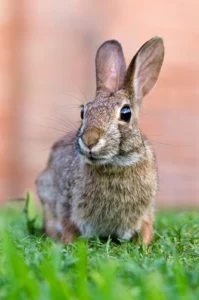
Rabbits don’t get nearly as much attention as chickens in beginner conversations, but they deserve to. A rabbit converts feed to meat more efficiently than almost any other livestock species, according to Oregon State University Extension, and a doe can produce 24 or more kits a year across several litters, all from a setup that fits in a shed corner or garage.
Who Should Choose Rabbits
Best for: Small-space homesteaders who want a reliable source of meat without needing pasture, and people who are comfortable with the realities of raising animals for food.
Not for: Anyone who wants to avoid the emotional challenge of processing an animal they have raised, or households that plan to keep rabbits as both beloved pets and meat animals. Mixing those roles can make production difficult for many people.
Space, Feed, and Shelter
- Cage size: Plan on 0.75 square feet of floor space per pound of the rabbit’s body weight, per widely used American Rabbit Breeders Association guidance. A 10-pound New Zealand doe needs a cage of at least 7.5 square feet, about 30 by 36 inches.
- Housing type: Wire-floored hutches are standard for meat rabbits because droppings fall through, which cuts disease pressure and cleaning time. Add a solid resting mat so rabbits don’t develop sore hocks from standing on wire all day.
- Feed: A breeding doe eats roughly 6 to 8 ounces of pelleted feed daily, plus hay. Feed costs vary depending on pellet prices.
- Shelter: Rabbits handle cold far better than heat. Position hutches out of direct afternoon sun and provide airflow; heat stress, not cold, is the more common killer in backyard setups.
Daily Care and Startup Costs
Daily care usually involves feeding, providing fresh water, and performing a quick visual health check. For a small backyard rabbit setup, these routine tasks often take around 10 to 15 minutes per day, with additional time needed for cage cleaning and breeding management.
What Beginners Usually Get Wrong
- Underestimating how fast a breeding pair multiplies. Two rabbits can become 30 or more within a year if you don’t have a processing or sales plan ready.
- Skipping the solid resting mat and ending up with sore hocks on wire-floor cages after a few months.
- Not separating bucks and does outside of planned breeding, which leads to unplanned litters and overcrowded hutches.
Rabbits: The Verdict
Start with rabbits if your space is genuinely tight and meat production is your goal. Skip them if you’re not ready for the realities of a fast-multiplying meat animal.
Ducks: Hardy, Friendly, and Underrated
source:woodstocks
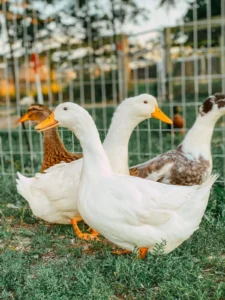
Ducks are arguably the friendliest farm animal for a beginner to bond with; they’re social, curious, and rarely aggressive, even to small children. They’re also more cold-hardy than chickens and better at controlling slugs and garden pests, which makes them a strong pick for anyone gardening alongside their livestock.
Who Should Choose Ducks
Best for: Beginners in wetter or colder climates, gardeners battling slugs, and families who want a calmer, more people-friendly bird than a chicken.
Not for: Anyone who can’t tolerate mess. Ducks turn any standing water into mud within days, and their bedding needs changing more often than a chicken coop’s.
Space, Feed, and Shelter
- Coop space: Plan on 4 to 6 square feet of indoor space per adult duck, according to NC State Extension poultry guidance, a bit more than chickens need, since ducks don’t roost and spend more time on the floor.
- Water access: Ducks don’t need a pond, but they do need enough water to submerge their whole bill and flush their nostrils while eating. A kiddie pool works, but expect to dump and refill it daily in summer.
- Feed: Ducklings need a higher-protein starter feed (around 20%), and adult ducks need supplemental niacin that standard chicken feed doesn’t provide- a nutritional gap that surprises a lot of first-time duck keepers.
- Shelter: Ducks want a dry, ground-level, well-ventilated space to sleep, not roost bars. Bedding needs changing weekly at minimum since duck droppings are wetter and more frequent than a chicken’s.
Daily Care and Startup Costs
Daily care typically takes about 15 to 20 minutes for a small flock, mostly because of water management, refilling or changing drinking water, emptying and refilling a kiddie pool or water tub if you provide one, checking that the bedding hasn’t become waterlogged, and collecting eggs.
What Beginners Usually Get Wrong
- Feeding straight chicken layer feed long-term without a niacin supplement, which can cause leg and joint problems in ducks.
- Underestimating the mud. A duck pen without drainage becomes a swamp fast, especially in wetter climates.
- Assuming ducks need a pond to be happy, most backyard ducks do fine with a shallow tub they can dunk their heads in.
Ducks: The Verdict
Start with ducks if you want a hardy, people-friendly bird and don’t mind extra water management. Skip them if you can’t commit to daily water changes
Honey Bees: Beginner-Friendly Pollinators (Not Pets)
source: Almanac
Bees are the outlier on this list; you’re not raising them for daily interaction, and there’s a genuine learning curve. But if you’re asking about eco-friendly farm animals ideal for beginners, bees are the clearest answer: a single healthy hive can meaningfully boost pollination across your whole garden or small orchard, on top of producing honey.
Who Should Choose Bees
Best for: Beginners who are patient, willing to take a course before starting, and mainly interested in pollination and honey rather than a hands-on animal.
Not for: Anyone with a severe bee-sting allergy in the household, or neighbors close enough that hive placement becomes a real conflict.
Space, Setup, and Learning Curve
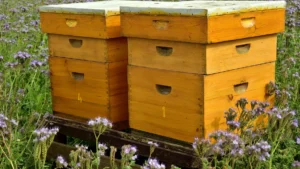
- Footprint: A single Langstroth hive takes up roughly 4 square feet of ground space, plus a few feet of clearance for you to work around it. It’s the smallest physical footprint of any animal on this list.
- Forage range: Bees will forage up to a few miles from the hive, so you don’t need acres of flowers on your own property, but a garden or orchard nearby helps your first-year colony establish faster.
- Startup cost: First-year startup costs typically range from about $400 to $1,000 for a single hive, including the hive itself, a package or nucleus colony of bees, protective gear, a smoker, and other basic tools. While the initial investment can be significant, ongoing costs are generally much lower after the first year since most of the equipment is a one-time purchase.
- Education first: Penn State Extension, UF/IFAS, and most land-grant universities offer beginner beekeeping courses; take one before your bees arrive. Bee biology and disease management have a real learning curve that a weekend of YouTube videos won’t replace.
What to Expect and What Beginners Get Wrong
Don’t expect a honey harvest in year one; most of a new colony’s energy goes into building comb and establishing the hive. A healthy, established colony typically produces 30 to 60 pounds of surplus honey a year starting in year two.
- Expecting a big honey harvest in the first season and getting discouraged when there isn’t one.
- Placing the hive too close to a walkway, property line, or neighbor’s yard without checking local ordinances first; some cities require permits or registration.
- Skipping mentorship. New beekeepers who join a local association or find a mentor lose far fewer colonies than those who go it entirely alone.
Bees: The Verdict
Start with bees if you’re patient, willing to take a course first, and mainly want pollination and honey rather than a hands-on animal. Skip them your first year if you haven’t yet found a local mentor or association.
Goats: More Commitment, Bigger Reward
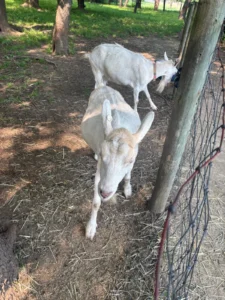
Goats are the animal beginners most often romanticize and the one most likely to humble a first-time owner. They’re genuinely rewarding for milk, brush clearing, and companionship, but they need more space, sturdier fencing, and more daily commitment than any other animal on this list.
Who Should Choose Goats
Best for: Farmers with at least a quarter-acre of fenced space, a realistic budget for sturdy fencing, and the willingness to milk twice a day if raising a dairy breed.
Not for: Anyone hoping for a low-maintenance animal, or a property without room for real fencing; a goat that gets loose becomes a neighborhood problem fast.
Space, Feed, and Shelter
- Outdoor space: Plan for at least 200 square feet of browsing space per goat. Goats need enough room to graze, explore, and exercise, while preventing overcrowding that can lead to stress and health issues.
- Shelter space: Provide 15 to 20 square feet of dry, draft-free shelter per goat. A three-sided shed works in mild climates, but fully enclosed shelter is safer almost everywhere else.
- Fencing: Budget for sturdy woven-wire or cattle-panel fencing at least 4 feet tall. Goats are relentless escape artists, and flimsy fencing is the single most common reason beginner goat-keeping goes wrong.
- Feed: Goats need to eat roughly 3% of their body weight in forage daily, about 3 pounds a day for a 100-pound goat, plus quality hay and a mineral supplement. Never feed on the ground; use an elevated feeder to reduce parasite exposure.
- Companionship: Goats are herd animals and shouldn’t be kept alone. Plan for at least two from the start; a lonely goat is a stressed, loud, escape-prone goat.
Daily Care and Startup Costs
Daily care for non-dairy goats runs 20 to 30 minutes: feeding, water, and a health check. Dairy goats add milking twice a day, roughly 10 to 15 minutes per session once you’re practiced. A starter pair with basic shelter and fencing typically runs $600 to $1,200, with fencing usually the single largest line item.
What Beginners Usually Get Wrong
- Underbuilding the fence. A fence that would easily contain a dog often won’t hold a determined goat.
- Buying a single goat instead of a pair, then dealing with a stressed, constantly vocal animal.
- Committing to a dairy breed without accounting for twice-daily milking, seven days a week, for months at a stretch.
Goats: The Verdict
Start with goats if you have real fenced space and are ready for a genuine daily commitment. Hold off if you’re still building your fencing budget or aren’t ready for twice-daily milking.
Which Beginner Farm Animal Fits Your Goal?
Instead of asking which animal is generally “best,” ask what you actually want out of it. What is the most useful animal on a farm depends entirely on your goal; here’s how the five stack up against common beginner priorities.
| If Your Goal Is… | Best Animal | Why |
| Fresh eggs | Chickens or ducks | Both lay reliably; ducks tolerate cold and wet better, chickens need less water management |
| Meat production | Rabbits | Fastest turnaround and most efficient feed-to-meat conversion of any animal on this list |
| Milk production | Goats | The only realistic beginner dairy animal at small-farm scale |
| Pollination | Bees | One hive can meaningfully lift fruit and vegetable yields across a whole garden |
| Lowest daily maintenance | Chickens | 10–15 minutes a day, minimal mess, highly forgiving of schedule gaps |
| Smallest footprint | Rabbits or bees | A hutch or hive fits in a shed corner or small yard where a coop or goat pen won’t |
How Beginner Livestock Supports a Healthier Farm
None of these animals require a sustainability-first mindset to be worth raising, but each one quietly supports a healthier small farm if you let it. Chicken and rabbit manure compost into strong garden fertilizer. Ducks and chickens both help with natural pest control, working through slugs, beetles, and ticks in ways that reduce your need for chemical controls. Bees improve pollination for anything you’re growing nearby, often boosting fruit and vegetable set. And rotational grazing with goats moving them between small paddocks improves soil health and keeps brush in check without a mower. These are side benefits, not the main event, but they add up.
Frequently Asked
What are the best farm animals for beginners?
Chickens, rabbits, ducks, bees, and goats are among the best farm animals for beginners. The right choice depends on your budget, available space, and farming goals.
What are the top easiest animals to take care of?
Chickens and rabbits are the easiest animals for most beginners. They require simple housing, basic daily care, and relatively low startup costs.
What is the most useful animal on a farm?
The most useful farm animal depends on your goals. Chickens provide eggs, rabbits produce meat, goats give milk, ducks control pests, and bees improve pollination.
What is the friendliest farm animal?
Ducks are often considered the friendliest farm animal for beginners because they’re social, curious, and easy to handle. Goats can also be very friendly with regular interaction.
Are there eco-friendly farm animals ideal for beginners?
Yes. Bees improve pollination, ducks and chickens help control pests, rabbit and chicken manure make excellent compost, and goats can help manage vegetation through rotational grazing.
What’s the easiest farm to start?
A small chicken or rabbit farm is usually the easiest to start. Both require less space, lower startup costs, and are well suited to first-time farmers.
How much land do you need to raise livestock?
You can start raising chickens, rabbits, ducks, or bees on a small property. Goats need more space and secure fencing to thrive.
Which farm animal is the most profitable for beginners?
It depends on your goals. Chickens provide eggs, rabbits produce meat efficiently, bees produce honey, and goats can generate income through milk or breeding. Choose the animal that best fits your resources and local market.
How to Choose Your First Farm Animal: A Decision Guide
So what’s the easiest farm to start? It’s the one where your animal choice matches your actual constraints, not your Pinterest board. Walk through these five factors honestly before you buy anything.
- Budget: Under $400 to start chickens or rabbits. Ready to spend $1000 or more upfront, goats or bees become realistic.
- Available space: A small yard or patio rabbits or bees. A standard suburban lot: chickens or ducks. A quarter-acre or more, securely fenced, goats.
- Time commitment: 10 to 15 minutes a day chickens or rabbits. 20 minutes or more, including water management ducks. 30-plus minutes with twice-daily milking dairy goats.
- Farming goals: Eggs – chickens or ducks. Meat – rabbits. Milk – goats. Pollination and honey – bees.
- Confidence level: First-ever livestock chickens or rabbits. Some animal experience and ready for more commitment, ducks or bees. Confident, with real fencing and time to give goats.
Whatever you choose, treat the first year as a learning year, not a profit year; most beginner livestock enterprises break even on time and effort before they break even on cash. Our broader look at whether farming still makes money for small and new farmers covers how to think about that timeline realistically, which applies just as much to a small flock or hive as it does to row crops.
Final Thought
Raising livestock doesn’t require a large farm or years of experience; it starts with choosing the right animal for your space, budget, and goals. Chickens and rabbits are the easiest entry point for most beginners, while ducks, bees, and goats become excellent options as your confidence and resources grow.
The key is to start small, master one species, and gain experience before expanding. A well-managed flock, hutch, hive, or herd will teach you far more than trying to raise several animals at once. With realistic expectations and consistent daily care, your first year can lay the foundation for a productive and rewarding small farm.